
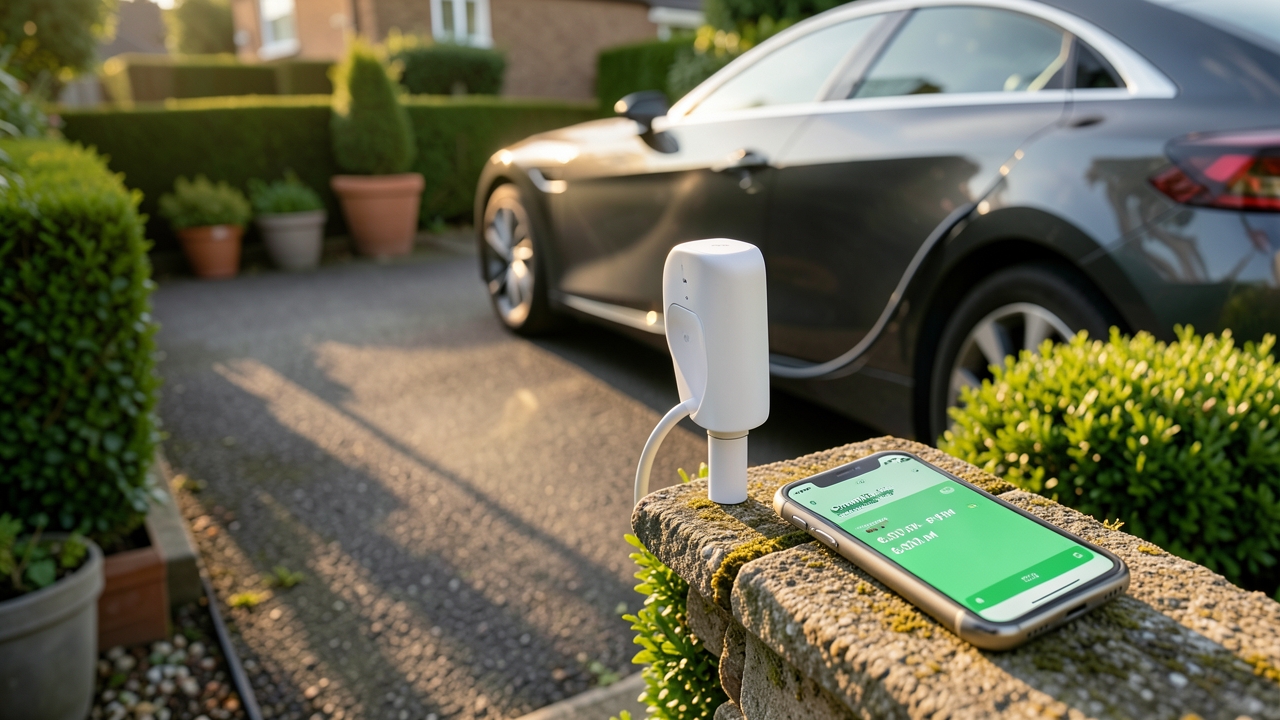
With UK electricity prices projected to climb again in 2026, EV owners are searching for smarter ways to charge their vehicles without breaking the bank. EV charging smart plugs offer a surprisingly simple and affordable solution. By scheduling your car to charge only during off-peak hours, you can slash your energy bills by hundreds of pounds each year. In this guide, we break down exactly how these devices work, which ones to buy, and how much you could realistically save in the current UK market.
What Are EV Charging Smart Plugs?
A smart plug sits between your wall socket and your EV charger (or your portable granny charger). It connects to your home Wi-Fi network and lets you control the power supply through a smartphone app. You can turn the plug on or off remotely, set schedules, and monitor energy usage in real time.
For EV owners without a dedicated smart wallbox charger, smart plugs are a game-changer. They effectively add smart scheduling to even the most basic charging setup. Furthermore, many smart plugs now support energy monitoring, so you can track exactly how many kilowatt-hours (kWh) your car consumes overnight.
Unlike a full smart charger installation — which can cost between £800 and £1,500 including wiring — a quality smart plug retails for just £15 to £45. That makes EV charging smart plugs one of the most cost-effective upgrades you can make.
Why UK Electricity Tariffs Make Smart Plugs Essential in 2026
The UK energy market runs on time-of-use (TOU) tariffs. These give you significantly cheaper electricity during off-peak hours, typically overnight between 11:00 PM and 6:00 AM. The price difference can be dramatic.
For example, as of early 2026, the standard UK energy price cap sits at approximately 27.4p per kWh for electricity. However, popular EV tariffs offer off-peak rates as low as 7.5p to 10p per kWh. Providers like Octopus Energy, British Gas, and EDF all run dedicated EV tariff structures.
UK EV Tariff Rates Compared (2026)
- Standard rate (price cap): approximately 27.4p/kWh
- Octopus Intelligent Go: approximately 7.5p/kWh (off-peak)
- British Gas EV Tariff: approximately 8.5p/kWh (off-peak)
- EDF EV tariff: approximately 9.0p/kWh (off-peak)
Without a smart plug or smart charger, you might forget to plug in at the right time. Or worse, you might charge during peak hours without realising. Consequently, smart plugs remove the guesswork entirely. They switch on automatically when your cheap rate kicks in and switch off when it ends.
How Much Can You Save With EV Charging Smart Plugs?
Let us work through a realistic example. The average UK EV driver covers around 7,400 miles per year. Most electric cars consume roughly 3.5 miles per kWh in mixed driving conditions.
That means you need approximately 2,115 kWh of electricity annually to keep your EV on the road.
Cost Comparison: Peak vs Off-Peak Charging
- Charging at standard rate (27.4p/kWh): 2,115 kWh x £0.274 = £579.51 per year
- Charging at off-peak rate (7.5p/kWh): 2,115 kWh x £0.075 = £158.63 per year
- Potential annual saving: approximately £420.88
That is over £420 saved each year simply by using a £25 smart plug to schedule your charging. In other words, the device pays for itself within the first month. Furthermore, if you drive a larger EV or cover more miles, your savings will be even higher.
Meanwhile, if you pair your EV charging with home solar panels, you can reduce costs even further. Our guide on balcony solar panels in the UK explores how small-scale solar can offset household energy use, freeing up cheap tariff capacity for your EV.
Best EV Charging Smart Plugs for UK Homes in 2026
Not all smart plugs are created equal. When choosing EV charging smart plugs, look for high load capacity, reliable Wi-Fi connectivity, and a well-designed app. Here are our top picks for UK households.
1. TP-Link Tapo P110 (approximately £14.99)
The Tapo P110 is a budget champion. It supports up to 3,200W, which covers most 2.3kW granny chargers with ease. Its app includes energy monitoring, scheduling, and even a holiday mode. For basic EV charging smart plugs, this is hard to beat.
2. Amazon Smart Plug (approximately £24.99)
If you already use Alexa, this plug integrates seamlessly. You can voice-command your charger on or off and set routines to match your tariff windows. It handles up to 2,990W continuously.
3. Hive Active Plug (approximately £29.99)
Hive offers solid UK customer support and integrates with the broader Hive smart home ecosystem. The app is straightforward and reliable, making it ideal for less tech-savvy users.
4. Shelly Plug S (approximately £19.99)
The Shelly Plug S stands out for its built-in energy monitoring and its ability to work with Home Assistant. Tech-savvy users love its flexibility. It also supports local control without cloud dependency, which improves reliability.
For a deeper look at choosing the right charging equipment for your EV, check out our comprehensive guide to EV chargers available in the UK.
How to Set Up Your Smart Plug for Off-Peak EV Charging
Setting up EV charging smart plugs takes about ten minutes. Follow these steps to start saving immediately.
- Plug the smart plug into your outdoor-rated wall socket.
- Connect your EV charger to the smart plug.
- Download the manufacturer’s app and pair the plug to your Wi-Fi.
- Check your EV tariff’s off-peak window (usually 11:30 PM to 6:30 AM).
- Create a schedule in the app to switch on and off at those times.
- Test the schedule for two or three nights before relying on it daily.
Furthermore, most smart plug apps let you view energy consumption data. Use this feature for the first few weeks. It helps you understand exactly how much power your car draws each night and whether you need to adjust the schedule.
Important Safety Considerations
Smart plugs are perfectly safe for EV charging when used correctly. However, you must respect the wattage limits. A standard three-pin granny charger draws around 2.3kW (10A at 230V). Most quality smart plugs handle this without issue.
On the other hand, a untethered 7kW wallbox charger draws over 30A. This exceeds what any smart plug can handle. Smart plugs are designed for portable or slower chargers, not for high-powered dedicated units. For wallbox chargers, you should use the charger’s built-in scheduling features or install a proper smart home energy management system.
In addition, always use an outdoor-rated smart plug if your socket is external. Exposure to rain and moisture can damage indoor-rated plugs. Look for IP44 or higher ratings for outdoor use.
The UK Government’s EV Homecharge Scheme provides guidance on safe home charging practices. It is worth reviewing their recommendations before setting up any new charging equipment.
Smart Plugs vs Dedicated Smart Chargers
You might wonder whether a smart plug is enough, or whether you should invest in a dedicated smart charger. Here is a quick comparison.
Smart Plug Advantages
- Extremely affordable (£15 to £45)
- No installation required
- Easy to move between sockets
- Works with existing granny chargers
Dedicated Smart Charger Advantages
- Faster charging speeds (7kW to 22kW)
- Built-in scheduling and energy monitoring
- OZEV-approved models qualify for government grants
- Better integration with solar and battery systems
For many drivers, EV charging smart plugs provide everything they need at a fraction of the cost. However, if you drive a high-mileage EV or need rapid overnight top-ups, a smart wallbox remains the better long-term investment.
Can You Use Smart Plugs With Solar Energy?
Yes, and this is where things get really clever. Some advanced smart plugs and home energy management systems allow you to combine solar generation data with your charging schedule. For instance, if you have solar panels installed, you can prioritise charging from your own free solar electricity during the day.
Then, when solar production drops in the evening, the smart plug switches on at the off-peak tariff window to top up. As a result, you minimise grid electricity use throughout the entire day. Our article on balcony solar panels explains how even small solar setups can contribute to this strategy.
The Bottom Line: Smart Plugs Are a No-Brainer for UK EV Owners
EV charging smart plugs deliver genuine, measurable savings for UK electric vehicle drivers. With electricity prices still volatile in 2026, the ability to lock in off-peak rates is more valuable than ever. For an outlay of under £30, you could save over £400 per year on your EV charging costs.
Furthermore, setup requires no specialist knowledge or expensive installation. Anyone with a smartphone and a wall socket can get started in minutes. The technology is mature, reliable, and widely available from UK retailers.
If you have not yet explored how smart home technology can reduce your energy bills, now is the perfect time to start. Have you tried using EV charging smart plugs at home? What tariff are you currently on? Share your experience in the comments below — we would love to hear from you.
Smart Plug Energy Savings Calculator
Find out how much standby power costs you — and what a smart plug could save.