
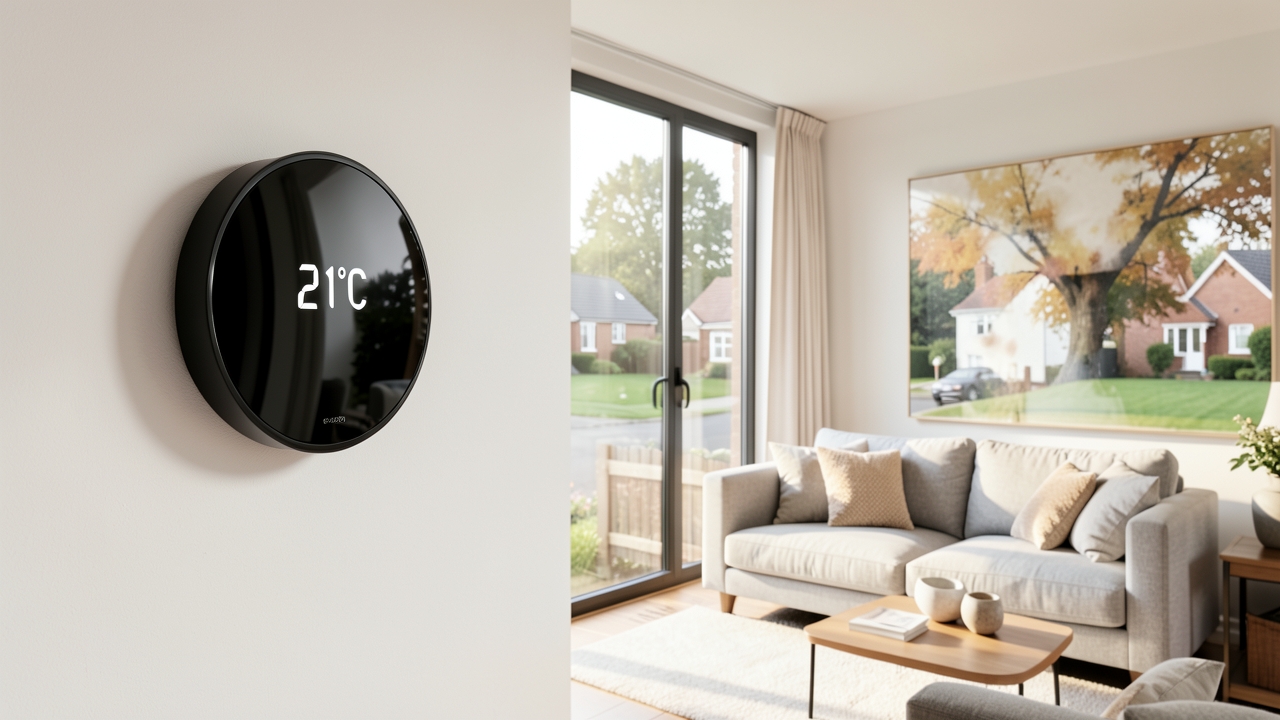
With energy prices remaining a central concern for households across the nation, the quest to smart thermostat savings UK has never been more relevant. As we move through 2026, installing a smart thermostat is no longer a mere luxury; it’s a strategic financial decision. This article provides a detailed cost-benefit analysis of three leading models—the Nest Learning Thermostat, Tado Smart Thermostat, and Hive Active Heating—to help you understand the real return on investment for your home.
Understanding the 2026 UK Energy Price Landscape
Before diving into specific devices, we must establish the cost baseline. The Ofgem energy price cap for the second quarter of 2026 (April-June) stands at an average of 24.50p per kilowatt-hour (kWh) for electricity and 6.04p per kWh for gas, alongside daily standing charges. For a typical three-bedroom UK home using 12,000 kWh of gas and 2,900 kWh of electricity annually, the total energy bill hovers around £1,180.
Consequently, even a modest percentage reduction in consumption translates into tangible monetary savings. According to the Energy Saving Trust, a smart thermostat, when used correctly, can save a typical household approximately 12% on heating bills. In our example, that equates to an annual saving of roughly £80-£90 on gas alone.
Comparing Upfront Costs: Nest, Tado, and Hive
The initial investment varies between manufacturers and systems. Here is a breakdown of the typical upfront costs for the base systems in 2026, including VAT:
- Nest Learning Thermostat (3rd Gen): Typically retails between £219 and £239. This price often includes the thermostat, hub, and necessary installation accessories.
- Tado Smart Thermostat Starter Kit V3+: Generally found between £199 and £219. The starter kit includes the smart thermostat, internet bridge, and hardware for most boiler types.
- Hive Active Heating Thermostat: Usually priced from £179 to £199 for the standalone thermostat. However, for new customers without the Hive Hub, a full heating control kit including the hub is required, pushing the cost to £249-£279.
Professional installation is an additional cost to consider. While many handy homeowners install these devices themselves, a certified engineer might charge between £100 and £150 for a straightforward installation. Therefore, the total initial outlay can range from approximately £180 for a DIY Hive setup to over £380 for a professionally installed Nest system.
Annual Savings Breakdown: The Real Return
The core promise of smart thermostat savings UK lies in their efficiency. Let’s analyse the potential annual savings against the upfront cost, assuming the widely cited 12% saving on gas heating bills (approx. £85 per year at 2026 prices).
Payback Period Calculation
The payback period is calculated by dividing the total upfront cost by the annual saving. This shows how long it takes for the device to pay for itself.
- Nest (DIY install @ £230): £230 / £85 per year = Approximately 2.7 years to pay back.
- Tado (DIY install @ £210): £210 / £85 per year = Approximately 2.5 years to pay back.
- Hive (Full Kit, DIY install @ £260): £260 / £85 per year = Approximately 3.1 years to pay back.
However, the 12% figure is an average. Tech-savvy users who actively engage with geofencing, schedules, and open-window detection can see savings up to 16-18%. Conversely, simply replacing a basic programmer with a smart thermostat and not adjusting behaviour may yield minimal benefit.
Key Features That Drive Smart Thermostat Savings UK
The financial return is directly linked to how effectively the technology reduces unnecessary heating. Each brand has a unique approach to achieving smart thermostat savings UK.
Learning & Auto-Schedule (Nest)
The Nest Learning Thermostat programs itself. It learns your household’s routines over a week and creates a custom schedule. Furthermore, its ‘Nest Leaf’ feature provides real-time feedback on your temperature setting, nudging you towards more efficient choices.
Geofencing & Weather Adaptation (Tado)
Tado excels with its intelligent geofencing. It uses your smartphone’s location to detect when the last person has left the house or when someone is heading home, adjusting heating accordingly. In addition, it uses real-time local weather data to pre-heat or pre-cool your home optimally, avoiding energy waste.
Scheduler & Multi-Zone Control (Hive)
Hive offers a highly intuitive app and a robust manual scheduler. While it has a simpler learning function, its strength lies in its ecosystem. When paired with Hive Radiator Thermostats, it enables precise multi-zone control, allowing you to heat only the rooms you are using—a massive factor in boosting savings.
Beyond the Bill: Additional Considerations
The analysis extends beyond direct energy savings. Consider these factors:
Installation Complexity: The complexity of your existing wiring can affect installation difficulty. For instance, older UK properties may require an additional “C-wire” or power adapter, potentially increasing professional installation costs.
Compatibility: All three systems work with the vast majority of UK combi and system boilers. However, always check compatibility with your specific boiler model on the manufacturer’s website. For complex installations or if you’re considering other green tech, our guide on home energy monitoring systems provides a broader perspective.
Ongoing Costs: Some features, like Hive’s multi-zone control with additional thermostats, require further investment. Furthermore, while the core apps are free, advanced features from third-party services integrated with these platforms might carry a subscription. There are typically no ongoing fees for the core smart functionality.
Maximising Your Savings: Practical Tips
To ensure you achieve the best possible return, follow these UK-centric tips:
- Optimise Your Schedule: Be honest about your routines. Set a lower temperature during work hours and overnight (16-17°C is often sufficient for sleeping).
- Leverage Geofencing: Ensure all household members have the app installed and location services enabled for the “everyone has left” and “someone is on their way” features to work.
- Combine with Insulation: A smart thermostat is most effective in a well-insulated home. Check your loft and cavity wall insulation; government schemes like the ECO4 scheme may offer support. Details can be found on the GOV.UK Great British Insulation Scheme page.
- Use Tado’s Open Window Detection: Manually trigger this feature in the app if you open a window for ventilation to prevent the system from heating a room that is rapidly cooling.
Conclusion: Is a Smart Thermostat a Wise Investment in 2026?
The numbers suggest a clear yes. With a typical payback period of between 2.5 and 3.5 years, a smart thermostat offers a solid return, especially when UK energy prices remain volatile. The Nest, Tado, and Hive all deliver on the promise of smart thermostat savings UK, but their strengths differ.
The Nest is ideal for those who want a truly ‘set and forget’ system that learns automatically. Tado is perfect for tech-forward households who want maximum control via geofencing and weather intelligence. Meanwhile, Hive offers a user-friendly entry point with excellent potential for multi-zone expansion.
Ultimately, the best device is the one you will use effectively. By pairing the right technology with conscious energy use, you can take control of your bills and enhance your home comfort. Have you already made the switch? What savings have you noticed? Share your experience in the comments below!