
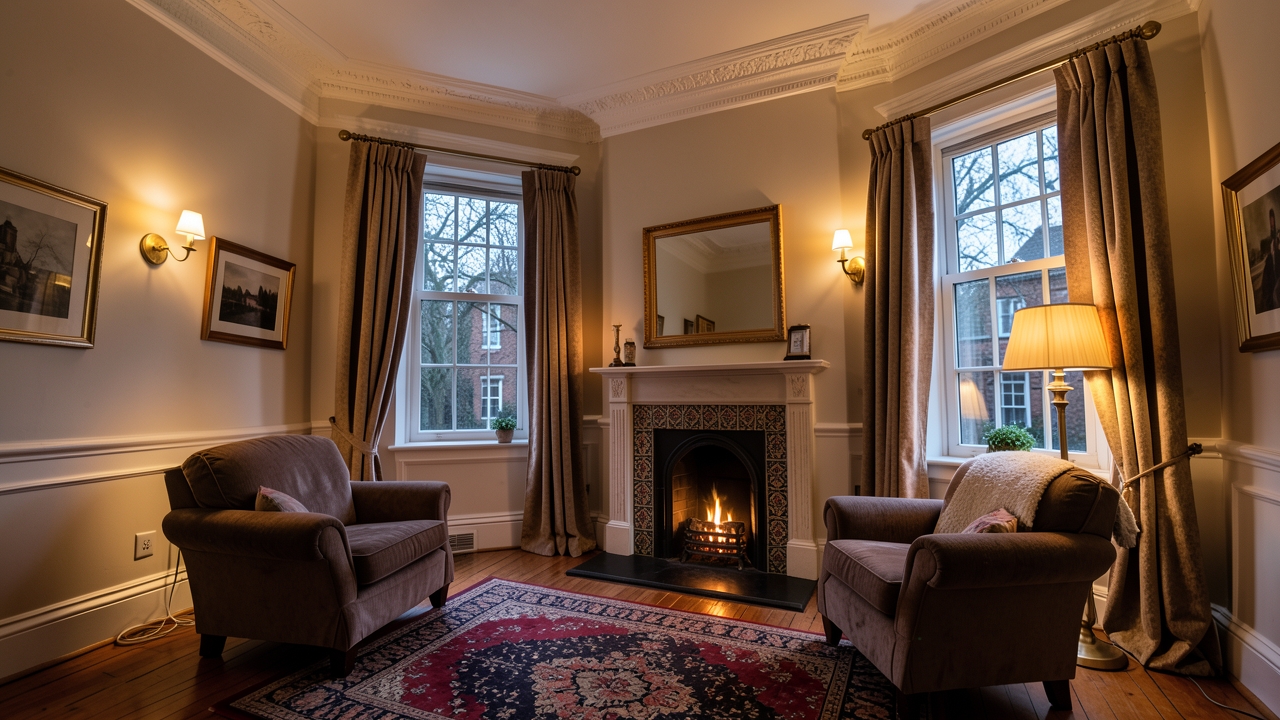
So you live in a listed building and you want the convenience of smart lighting. It sounds like a simple upgrade, right? However, listed building smart lighting UK projects come with a unique set of challenges. Historic properties carry legal protections that affect even the smallest alterations. This guide walks you through everything you need to know before you pick up a screwdriver.
Whether your home is a Grade I, Grade II*, or Grade II listed property, the rules differ from a standard renovation. Furthermore, getting it wrong can lead to fines or even criminal prosecution. The good news is that modern smart lighting technology offers several non-invasive options that respect your building’s heritage. Let’s explore how to do it properly.
Understanding Listed Building Status in the UK
A listed building is one that has been placed on the National Heritage List for England (NHLE) by Historic England. In Scotland, Wales, and Northern Ireland, the equivalent bodies handle listings separately. As of 2026, there are over 500,000 listed buildings across England alone.
Listed buildings fall into three grades:
- Grade I — Buildings of exceptional interest. Roughly 2% of all listed buildings.
- Grade II* — Particularly important buildings of more than special interest. Around 5.8% of listings.
- Grade II — Buildings of special interest, warranting every effort to preserve them. This accounts for roughly 91.7% of all listed buildings.
Furthermore, some properties sit within Conservation Areas, which add another layer of restrictions. Therefore, before making any changes, you must first check your building’s listing status and any additional local constraints.
You can check whether a property is listed by searching the Historic England listing database. This is an essential first step for any listed building smart lighting UK project.
Why Smart Lighting Requires Special Consideration
Smart lighting involves more than just swapping a bulb. Most systems require wiring, mounting hardware, or smart switches installed into walls. In a standard home, that is straightforward. However, in a listed building, drilling into original plasterwork, exposed beams, or period fixtures can constitute unauthorised alteration.
For example, chasing cables into original lath-and-plaster walls could damage irreplaceable historic fabric. Similarly, replacing period light switches with modern smart alternatives might alter the building’s character. As a result, even well-intentioned DIY upgrades can breach the law without proper consent.
The key issue is that listed building legislation protects not just the exterior but the interior and fixed contents as well. This means the original cornicing, ceiling roses, dado rails, and even certain fixtures may all fall under protection.
Do You Need Listed Building Consent for Smart Lighting?
In most cases, yes. Listed Building Consent (LBC) is a separate process from standard planning permission. You must obtain LBC before making any works to a listed building that could affect its character. This includes both external and internal alterations.
However, the rules are not always black and white. Some minor works may fall outside the scope of LBC. For instance, simply screwing a battery-powered smart light to a modern skirting board would typically not require consent. On the other hand, wiring a new smart lighting circuit through original walls almost certainly would.
When Listed Building Consent Is Likely Required
- Running new cables through original walls, floors, or ceilings
- Replacing period light switches or dimmer plates with smart switches
- Fitting new ceiling roses or pendants that alter the room’s appearance
- Removing or modifying original light fittings
- Installing surface-mounted trunking that is visible from the street
When Consent May Not Be Needed
- Replacing bulbs within existing fittings (provided the fitting itself remains unchanged)
- Using battery-powered or plug-in smart lamps in freestanding furniture
- Adding smart plugs to existing socket circuits
- Using adhesive-mounted smart sensors that do not penetrate surfaces
Furthermore, GOV.UK provides clear guidance on when Listed Building Consent applies. We strongly recommend consulting your local planning authority before starting any listed building smart lighting UK installation.
Non-Invasive Smart Lighting Solutions for Listed Buildings
Fortunately, the smart lighting market has evolved considerably by 2026. Many modern systems now cater specifically to heritage properties. These solutions deliver full smart home functionality without damaging historic fabric.
Smart Bulbs and Lamp Converters
The simplest approach involves smart bulbs that fit into existing light fittings. Philips Hue, for example, offers a wide range of bulb types including E27, E14, B22, and GU10. These connect via Zigbee or Bluetooth and require zero installation work.
Prices for smart bulbs in the UK typically range from £15 to £50 per bulb in 2026. A starter kit with a bridge hub costs between £50 and £130. Therefore, upgrading a single room can cost as little as £65. This is the least invasive option available and never requires Listed Building Consent.
Smart Plugs and Lamps
Freestanding lamps connected to smart plugs offer another consent-free route. Products like the TP-Link Tapo P110 smart plug (£12–£18) or the Amazon Smart Plug (£25) allow you to control traditional lamps via voice assistants or apps.
In addition, smart floor lamps and table lamps from brands like IKEA (TRÅDFRI range, starting at £25) and Dyson integrate directly with home automation without any wiring changes. Meanwhile, these solutions give you full scheduling, dimming, and colour control.
Battery-Powered Smart Sensors and Lights
Battery-powered motion sensors and ambient lights provide additional convenience. The Philips Hue Motion Sensor (£40) mounts with adhesive pads and requires no wiring. Similarly, LED strip lights with adhesive backing can highlight architectural features without drilling.
Consequently, you can create a fully automated lighting environment using entirely removable, non-invasive components. This approach is ideal for listed building smart lighting UK projects where minimal intervention is essential.
Invasive Solutions: When You Need Professional Help
Sometimes, a more integrated solution is necessary. Perhaps you want smart dimmer switches in every room. Or maybe you need a concealed lighting circuit behind original panelling. In these cases, professional involvement becomes essential.
A qualified electrician experienced with heritage properties can advise on sympathetic installation methods. For example, they may route cables through existing voids rather than chasing new channels. They might also use surface-mounted brass trunking that complements period features.
Furthermore, the Energy Saving Trust recommends upgrading to smart lighting as part of broader energy efficiency improvements. However, in a listed building, this must always be balanced against heritage preservation requirements.
Typical Costs for Professional Installation
- Smart dimmer switch installation (per room): £80–£150 including the switch
- Full smart lighting circuit for a period home: £500–£2,000+
- Listed Building Consent application fee: Free (as of 2026, local authorities do not charge for LBC applications)
- Heritage lighting consultant assessment: £150–£400
Although these costs seem higher than a standard installation, they protect both your investment and the building’s heritage value. Consequently, skimping on professional advice can prove far more expensive if enforcement action follows.
Step-by-Step: The Listed Building Smart Lighting UK Compliance Process
Follow these steps to ensure your project stays on the right side of the law.
Step 1: Check your listing. Search the Historic England database or contact your local authority conservation officer. Understand exactly what your listing covers.
Step 2: Assess the impact. Determine whether your proposed changes affect the building’s character. Minor, reversible changes are less likely to require consent.
Step 3: Contact your conservation officer. Have an informal conversation before submitting any application. Conservation officers can often guide you toward acceptable solutions.
Step 4: Submit a Listed Building Consent application if required. This is free of charge in England. Include detailed plans, photographs, and a heritage statement explaining your rationale.
Step 5: Implement approved works. Once consent is granted, carry out the work exactly as approved. Do not deviate from the plans without further consent.
Step 6: Enjoy your smart lighting. Commission your system, set up schedules, and reap the energy and convenience benefits of smart technology.
Common Mistakes to Avoid
Many homeowners underestimate the scope of listed building protections. Here are the most frequent errors we see with listed building smart lighting UK projects.
- Assuming interior works do not need consent. Listed Building Consent covers internal alterations too.
- Proceeding without checking the listing. You may not realise your home is listed until it is too late.
- Using adhesive hooks on historic surfaces. Even sticky pads can damage sensitive plasterwork or paint.
- Ignoring Conservation Area rules. These add restrictions beyond the listing itself.
- Not retaining removed items. If you remove a period light fitting, keep it safe for future reinstatement.
Furthermore, unauthorised works to a listed building can result in criminal prosecution. Under the Planning (Listed Buildings and Conservation Areas) Act 1990, penalties include unlimited fines and even imprisonment in serious cases.
The Future of Smart Lighting in Heritage Properties
The market for heritage-friendly smart lighting continues to grow in 2026. Manufacturers increasingly recognise the demand from owners of older properties. As a result, we are seeing more products designed with removable, surface-mounted, and period-appropriate aesthetics.
Wireless technology is also advancing rapidly. Matter, the new smart home standard, promises even greater compatibility between devices. Consequently, future smart lighting systems will require even less physical infrastructure to function.
If you are planning a broader smart home upgrade, you might also consider integrating smart lighting with other green technologies. For instance, pairing your lighting with balcony solar panels can reduce your energy bills further while maintaining your building’s heritage character.
“Always seek advice from your local conservation officer before making any changes to a listed building. Prevention is far better than cure when it comes to heritage compliance.”
Final Thoughts
Installing smart lighting in a listed building does not have to be a minefield. With the right approach, you can enjoy modern convenience while preserving your home’s historic character. The key is understanding the rules and choosing non-invasive solutions wherever possible.
In summary, always check your listing status, consult your conservation officer, and consider plug-in or battery-powered alternatives first. If you need a more invasive installation, invest in professional help from someone experienced with heritage properties.
Have you installed smart lighting in a listed property? What challenges did you face? Share your experience in the comments below — we would love to hear how other homeowners have navigated the process.