
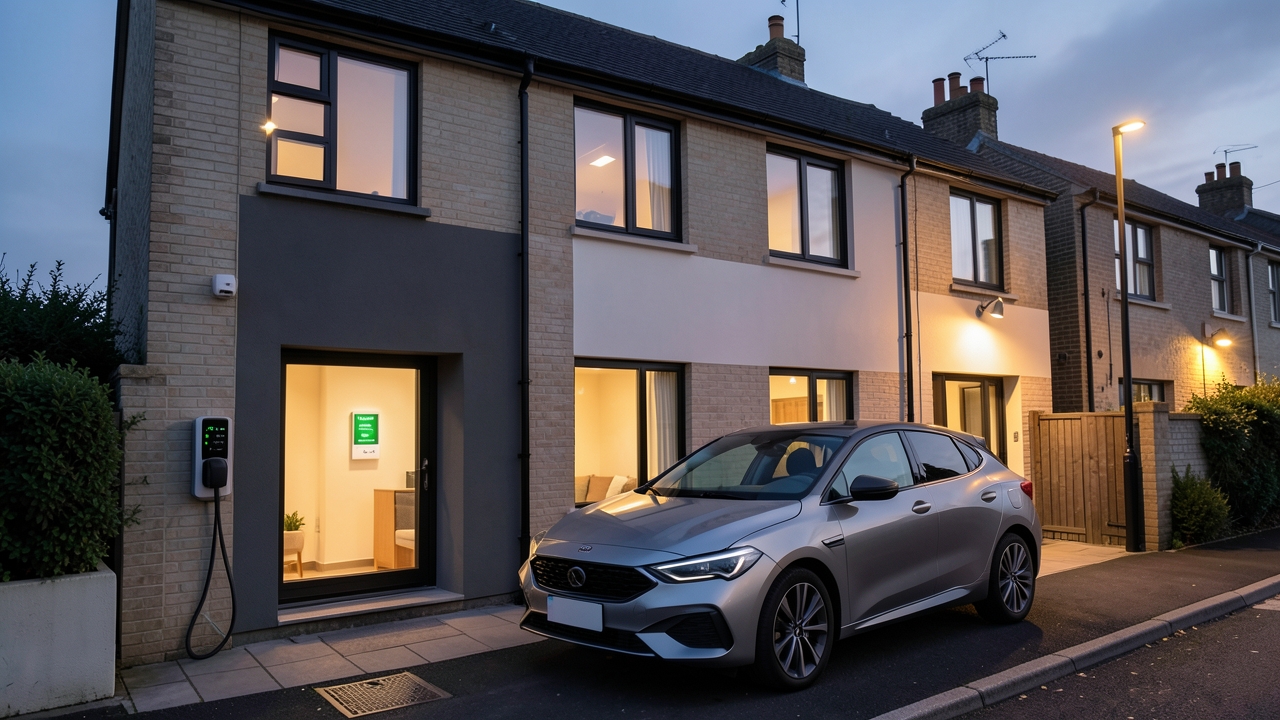
With energy prices remaining a key household concern in 2026, UK electric vehicle owners are seeking smarter ways to charge. One of the most effective strategies is smart tariff EV charging, a method that can reduce your overnight charging costs by a remarkable 50% or more. This approach moves beyond simply plugging in your car; it involves syncing your EV with dynamic electricity pricing to charge when power is cheapest and greenest.
What Are Smart Tariffs for EV Charging?
A smart tariff, often called a time-of-use tariff, varies the price of electricity throughout the day. Unlike a standard flat-rate tariff, it offers ultra-low rates during off-peak periods—typically overnight—and higher prices during peak evening hours. For EV owners, this presents a perfect opportunity.
Providers like Octopus Energy, OVO Energy, and British Gas have popularised these tariffs. For example, Octopus Energy’s Agile tariff tracks wholesale market prices every 30 minutes, while their Go tariff provides a fixed low rate from 12:30 am to 4:30 am. The core principle is the same: electricity is much cheaper when demand from the grid is low.
The Financial Benefit: A Clear Calculation
Let’s look at a practical example. A standard UK electricity tariff might cost around 24p per kWh in 2026. A well-optimised smart tariff could offer an off-peak rate of just 8-10p per kWh.
If your EV has a 60kWh battery and you charge it from 10% to 80% (a 42kWh charge), the difference is stark:
- Standard tariff: 42kWh x 24p = £10.08
- Smart tariff (at 9p): 42kWh x 9p = £3.78
As a result, you save over £6 per full charge. For a driver covering 8,000 miles a year, this smart tariff EV charging strategy can save hundreds of pounds annually.
How to Integrate Smart Tariff EV Charging in 2026
Making the switch is simpler than many drivers think. The process involves three key components: a compatible smart tariff, a suitable EV charger, and the right vehicle settings.
Step 1: Switch to a Smart Tariff
First, you must be on a compatible smart tariff. Your energy provider must offer one with distinct off-peak rates. You will need a smart meter, which is now standard in most UK homes, to enable this switch. Contact your provider to discuss options like OVO’s ORIGEN or EDF’s Zog Energy tariff.
For the latest independent advice on switching, the Which? guide to EV electricity tariffs is an invaluable resource.
Step 2: Ensure Your Charger is Smart-Ready
A basic, uncontrolled charger simply delivers power when plugged in. To benefit from smart tariff EV charging, you need a smart or “app-controlled” EV charger. These devices connect to your home Wi-Fi and communicate with your tariff schedule.
Popular 2026 models like the Zappi v2, Pod Point Solo 3, or Anderson A2 all have scheduling functions. You can set them to only draw power during the pre-defined cheap rate window (e.g., 1 am to 4 am). The cost for a professionally installed smart charger typically ranges from £800 to £1,200, though the UK Government’s EV chargepoint grant may offer £350 towards the cost for eligible households.
Step 3: Use Your Vehicle’s Built-in Scheduling
Alternatively, many modern EVs allow you to schedule charging directly via the car’s own onboard system or its companion app. You set a charging schedule in the vehicle, and it will wait to draw power until the scheduled cheap rate period, even if left plugged in continuously. This is a perfectly viable solution if your charger lacks advanced scheduling features.
Beyond Basic Scheduling: Optimising with Solar and AI
The true power of smart tariff EV charging emerges when integrated with other home energy technology. If you have solar panels, for instance, you can prioritise charging your EV with your own free solar electricity first, then use the smart tariff for any additional overnight top-up.
Furthermore, emerging AI-powered home energy management systems can now automate this optimisation. These systems analyse your tariff rates, your solar generation forecast, your EV’s state of charge, and your household’s general energy usage. They then create a dynamic charging schedule to minimise costs automatically. While a more advanced setup, it represents the cutting edge of domestic energy management in 2026.
Important Considerations for UK Drivers
However, smart tariff EV charging isn’t without its nuances. A few key points are worth noting.
- Grid Dependency: You are reliant on the charger’s app or your car’s software working correctly. A missed schedule means paying peak rates.
- Higher Daytime Rates: The trade-off for cheap night-time power is often slightly higher daytime rates. Households that use a lot of electricity during the day must calculate their overall net saving.
- Green Credentials: Night-time electricity in the UK grid is often greener, with higher proportions of nuclear and wind power. Consequently, smart charging can also reduce your carbon footprint.
The Future of Smart Charging
The landscape is evolving rapidly. Vehicle-to-Grid (V2G) technology, which allows your EV to feed power back to the grid during peak demand for a payment, is becoming commercially available for UK drivers in 2026. This could soon turn your car from a cost into a small revenue generator, further enhancing the value proposition of smart tariff EV charging.
In summary, actively managing when your EV charges is no longer a niche hobby but a mainstream financial strategy. By selecting the right tariff and a compatible charger, UK households can achieve significant savings, reduce grid strain, and drive a greener future.
Are you already using a smart tariff for your EV? Share your experiences with different providers and your average cost-per-kmile in the comments below!
EV Charger Cost Calculator
Estimate your installation cost and annual charging bill — free, no sign-up.