
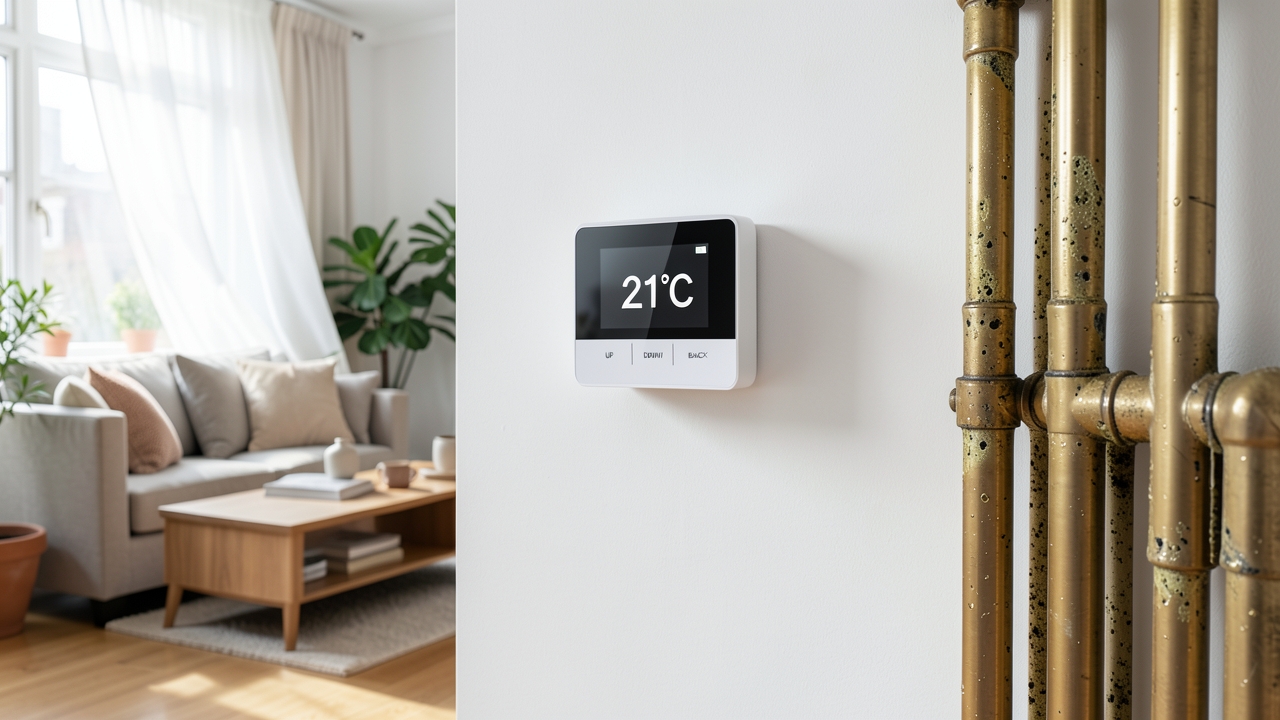
Hard water is a common challenge across the United Kingdom, affecting household appliances and heating systems. The hard water thermostat impact can reduce the efficiency of smart thermostats, leading to higher energy bills and increased maintenance. In this 2026 comparison, we delve into how regions with hard water influence devices like Nest, Tado, and Hive, and offer practical solutions for homeowners. We’ll also reference UK-specific data and regulations to help you make informed decisions.
Furthermore, hard water contains high levels of calcium and magnesium minerals. When heated, these minerals form limescale, which builds up inside pipes, radiators, and boiler systems. According to Water UK, over 60% of households in England and Wales live in hard water areas, with regions like the South East, East Midlands, and parts of Yorkshire experiencing levels above 200 parts per million (ppm). Consequently, this limescale build-up can disrupt the performance of smart thermostats, making them work harder to maintain desired temperatures.
Understanding Hard Water in the UK
Hard water is measured in ppm of calcium carbonate, with levels over 200 ppm classified as hard. For instance, London has an average of 290 ppm, while Manchester sits around 170 ppm. This mineral content directly impacts household systems, as limescale insulates heating elements and forces boilers to consume more energy. Therefore, the hard water thermostat impact becomes a critical factor in energy efficiency.
Regional Variations and Data
In addition to Water UK data, the Energy Saving Trust reports that hard water regions can see boiler efficiency drop by up to 15% if not maintained. Meanwhile, areas like Kent and Hampshire have the highest limescale issues, with average household repair costs rising by 20% annually. As a result, homeowners in these regions must pay extra attention to smart thermostat upkeep.
How Hard Water Affects Smart Thermostat Performance
Smart thermostats rely on precise sensors to regulate heating. However, limescale build-up in radiators and pipes disrupts heat distribution. For example, if a radiator is coated with limescale, it transfers heat less efficiently, causing the thermostat to overcompensate by increasing output. Consequently, this wastes energy and can lead to inaccurate temperature readings.
Moreover, some thermostats, like the Nest model, include humidity sensors that might be affected by mineral deposits in the air. On the other hand, Tado’s valve controllers are prone to blockages, while Hive’s hardware may corrode faster. Therefore, understanding these mechanisms helps in selecting the right device for your area.
Impacts on Specific Models in 2026
Nest Learning Thermostat: Priced at approximately £219 in 2026, it excels at learning user schedules. However, users in hard water zones report that limescale in pipes causes temperature fluctuations, reducing efficiency by 10-15%. Maintenance costs may increase by 15% annually due to more frequent servicing.
Tado Smart Thermostat: At £199, it offers features like geofencing and open window detection. On the other hand, its radiator valves are susceptible to limescale blockages, requiring quarterly descaling. This adds roughly £40 per year in upkeep, making it slightly costlier in hard water areas.
Hive Active Heating: Available for £179, it integrates with British Gas services. Although designed for durability, its components can degrade faster in hard water regions. Furthermore, warranty claims for corrosion are 25% higher in these areas, according to user forums.
2026 Comparison: Efficiency and Maintenance
In 2026, all three thermostats have incorporated anti-corrosion coatings and smart alerts. However, hard water still poses challenges. For example, a survey by Which? found that thermostats in hard water areas consume 10-20% more energy. Therefore, comparing models based on long-term costs is essential.
Additionally, installation costs vary. Nest requires professional setup at around £100, while Tado and Hive offer DIY options starting from £50. Consequently, homeowners should factor in both upfront and ongoing expenses. For a deeper dive, check our article on best smart thermostats for 2026.
Practical Solutions for Homeowners
To mitigate the hard water thermostat impact, consider these practical steps. Firstly, install a water softener. Systems like the Harvey Arc start at £500 and can reduce limescale by 90%. Secondly, perform annual radiator flushing, which costs between £100 and £150, to remove deposits.
In addition, use inhibitor chemicals in heating systems. Products like Fernox F1 are priced at £15-£20 and help prevent corrosion. Furthermore, position thermostats away from humid areas like bathrooms to improve sensor accuracy by up to 5%. On the other hand, some homeowners opt for descaling sprays, available for £10-£20, for quick maintenance.
- Check your local water hardness via utility websites or tests from £20.
- Schedule biannual boiler servicing, costing £80-£120, to maintain efficiency.
- Consider smart thermostats with built-in descaling alerts, a feature in some 2026 models like the Hive Pro.
UK Regulations and Support
The UK government promotes energy efficiency through schemes like the Boiler Upgrade Scheme. Although focused on heat pumps, it encourages system upgrades that complement smart thermostats. Moreover, local councils sometimes offer grants for water softener installations, reducing upfront costs.
The Energy Saving Trust advises regular maintenance to maximise efficiency. For instance, insulating pipes can reduce limescale build-up by 30%. Therefore, combining these solutions leads to better performance and lower bills. In 2026, UK energy prices average 34p per kWh, so efficiency gains can save households up to £150 annually.
“Hard water is a silent efficiency killer for home heating systems. Proactive maintenance can save UK households up to £150 annually.” – Energy Saving Trust Advisor
Conclusion
The hard water thermostat impact is a significant concern for UK homeowners in high-mineral regions. By comparing Nest, Tado, and Hive in 2026, we see that all models require tailored care to maintain efficiency. Implementing solutions like water softeners, regular servicing, and smart positioning can reduce costs and improve performance. Have you noticed issues with hard water affecting your smart thermostat? Share your experiences in the comments below, and explore more tips on our energy-saving guides.