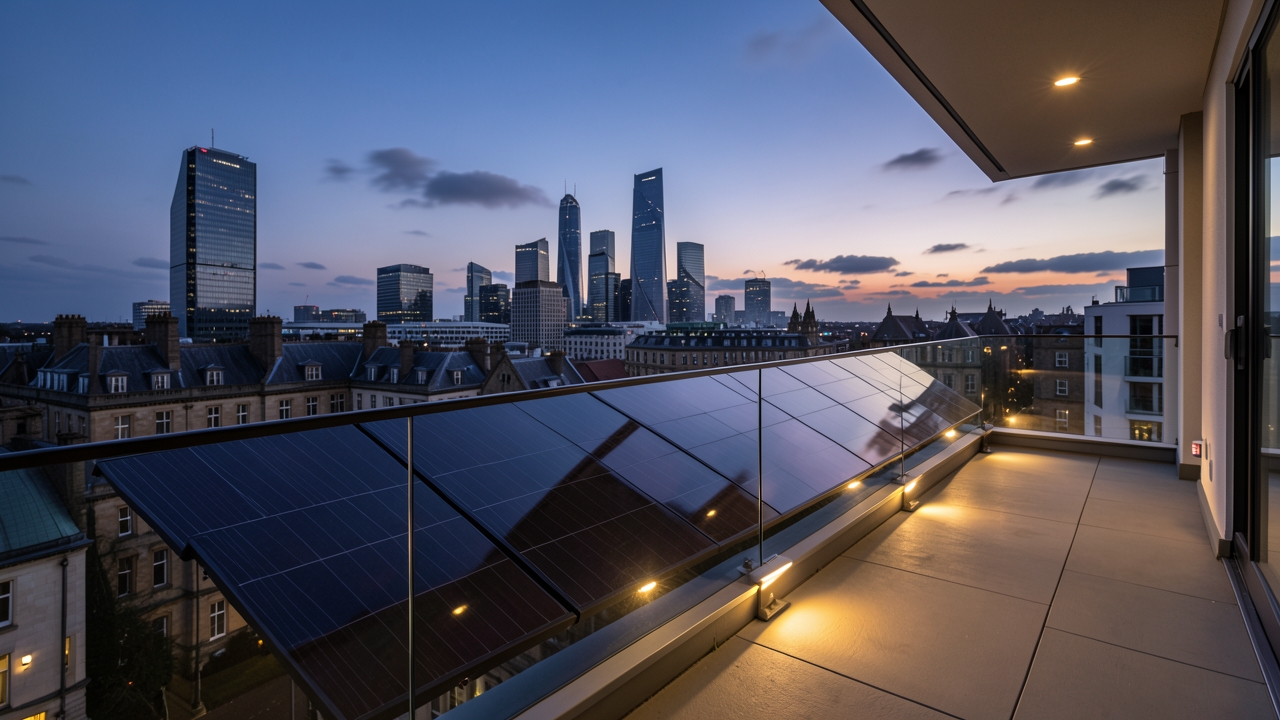
Imagine powering your entire Philips Hue system without relying on the grid. In the UK, where urban homes often lack outdoor space, solar-powered smart lighting UK solutions are gaining traction. This approach uses balcony solar panels to charge smart light batteries, offering energy independence and lower bills. For city dwellers in flats or apartments, it’s a practical way to embrace green technology. In this guide, we’ll explore how to set up this system, covering costs, regulations, and benefits tailored to UK homes.
Furthermore, with rising energy prices in 2026, generating your own electricity makes financial sense. According to Energy Saving Trust, household energy costs have increased by 15% since 2025. Balcony solar panels offer a scalable solution for those in rental properties or with limited roof access. They integrate seamlessly with smart lighting brands like Philips Hue, creating a flexible off-grid setup.
Benefits of Solar-Powered Smart Lighting in the UK
First, let’s look at why this setup is ideal for British urban homes. Solar-powered smart lighting UK systems provide multiple advantages, from cost savings to environmental impact. They align with the UK’s push towards net-zero carbon emissions by 2050.
Energy Independence and Cost Savings
One key benefit is reduced reliance on the National Grid. By using balcony solar panels, you can charge batteries during daylight hours. For example, a typical UK urban home might save up to £150 annually on electricity bills, depending on usage. In addition, smart lighting systems like Philips Hue consume minimal power—around 9 watts per bulb. Therefore, even small solar setups can cover daily lighting needs.
Moreover, energy independence means protection against future price hikes. The UK government’s Energy Price Guarantee scheme ended in 2025, leaving households exposed to market fluctuations. Generating your own power mitigates this risk. For instance, a 100W balcony solar panel can produce about 0.4 kWh per day in UK conditions, enough to power several smart lights for hours.
Ideal for UK Urban Homes with Limited Space
UK cities like London, Manchester, and Birmingham have high-density housing. Many residents live in flats with small balconies or no garden. Solar-powered smart lighting UK setups use compact panels that fit railings or walls. They don’t require planning permission in most cases, as long as they’re under certain dimensions. According to the UK Government’s planning portal, minor solar installations on residential properties are often permitted development.
Furthermore, these systems are renter-friendly. You can install and remove them without structural changes. For example, a set of two 50W panels costs between £200 and £400, providing a quick return on investment. This makes solar-powered lighting accessible to a wide range of UK households.
How Balcony Solar Panels Work with Philips Hue
Now, let’s dive into the technical side. Integrating balcony solar panels with Philips Hue involves a few key components. The process is straightforward, even for beginners. Here’s a step-by-step overview.
Key Components Needed
To build this system, you’ll need solar panels, a charge controller, a battery, and an inverter. For Philips Hue, which operates on low-voltage DC power, you can often skip the inverter and use direct DC connections. Here’s a typical setup:
- Balcony Solar Panels: Look for monocrystalline panels for higher efficiency. Brands like EcoFlow or Anker offer UK-compatible models. A 100W panel costs around £250.
- Battery Pack: A portable power station with at least 200Wh capacity. This stores energy for cloudy days or nighttime use. Prices range from £150 to £300.
- Charge Controller: Prevents overcharging and optimises power flow. Many batteries include this feature.
- Philips Hue Bridge and Bulbs: Ensure you have a Zigbee-based system for compatibility. A starter kit with three bulbs costs about £130.
Consequently, the total initial investment can be between £500 and £800, depending on the scale. However, with energy savings, payback can occur within 3-5 years.
Step-by-Step Setup Guide
First, mount the solar panels on your balcony railing using adjustable brackets. Angle them towards the south for maximum sun exposure in the UK. Next, connect the panels to the charge controller or battery. Then, plug in your Philips Hue bulbs to the battery’s DC output ports. Finally, pair the Hue Bridge with your Wi-Fi and app as usual.
In addition, monitor performance via the Philips Hue app. You can set schedules for lights to use stored solar energy during peak times. For example, programme outdoor balcony lights to turn on at dusk, drawing from the battery. This optimises energy use and extends battery life.
Furthermore, for a more advanced setup, consider adding smart plugs or energy monitors. These devices help track solar generation and consumption. They integrate with apps like Apple HomeKit or Google Home, enhancing your smart home ecosystem.
UK Regulations and Considerations
Before installing, it’s crucial to understand UK rules. Balcony solar panels are generally straightforward, but some factors apply.
First, check your lease agreement if you’re renting. Many landlords allow minor alterations, but it’s best to get written consent. Second, ensure panels don’t block fire escapes or violate building regulations. The UK’s Microgeneration Certification Scheme (MCS) certifies safe installations. Although MCS isn’t mandatory for small systems, it adds credibility.
Additionally, consider weather conditions. The UK has variable sunlight, with average solar irradiance of 900-1200 kWh/m² annually. Therefore, battery storage is essential for consistent power. On cloudy days, panels may produce only 20-30% of their rated capacity. A larger battery, like a 500Wh unit, can buffer these fluctuations.
Moreover, local councils may have guidelines on aesthetics. For instance, some urban areas restrict panel visibility from public spaces. However, most balcony installations comply without issues.
Cost Breakdown and ROI in 2026
Let’s talk numbers. In 2026, prices for balcony solar components have stabilised. Here’s a typical cost breakdown for a UK urban home:
- Solar Panels (2x 50W): £200-£350
- Battery (300Wh): £200-£300
- Charge Controller and Wiring: £50-£100
- Philips Hue Bulbs (3-pack): £100-£150
- Installation DIY or Professional: £0-£200
Total upfront cost: £550-£1,100. However, savings accrue from reduced grid electricity use. If you save £10 monthly on bills, the system pays for itself in 4-9 years. Furthermore, government incentives like the Smart Export Guarantee (SEG) may apply. You can sell excess energy back to the grid, earning additional income. For details, visit Energy Saving Trust’s solar PV page.
Additionally, factor in long-term benefits. Solar panels last 25-30 years, with minimal maintenance. Batteries may need replacement every 5-10 years, but costs are declining. In contrast, grid electricity prices are projected to rise by 10% annually in the UK. Consequently, solar-powered smart lighting becomes increasingly economical.
Practical Tips for UK Users
To maximise your setup, follow these practical tips. First, clean panels regularly to remove dust or bird droppings, which can reduce efficiency by 15%. In the UK, rain often helps, but occasional wiping with a damp cloth is recommended.
Second, optimise light placement. Use Philips Hue bulbs in outdoor or high-traffic areas to make the most of solar power. For example, balcony lights that run from dusk to dawn consume about 0.5kWh per night. With a 300Wh battery, this covers usage easily.
Third, explore expandability. Start with a small system and add more panels or batteries as needed. Brands like Philips offer ecosystems that grow with you. For more ideas on smart home expansions, check out our guide on smart lighting in the UK.
Meanwhile, consider combining with other renewable tech. For instance, if you own an EV, link solar charging for your car. Our article on home EV charger setups provides insights.
Case Study: London Flat Owner’s Experience
Let’s look at a real-world example. Sarah, a London-based renter, installed a solar-powered smart lighting system in 2025. She used two 50W panels on her balcony, a 250Wh battery, and Philips Hue outdoor lights. Total cost: £700. Within 18 months, she saved £180 on electricity bills and earned £30 via SEG.
Furthermore, Sarah reported increased comfort. Her balcony lights now operate independently, enhancing evening ambiance. She shared that the setup required minimal maintenance and no landlord issues. This case illustrates the feasibility for UK urban dwellers.
“I was sceptical about solar on a small balcony, but it’s transformed my energy use. The savings are real, and I feel more in control.” – Sarah, London
Future Outlook and Conclusion
Looking ahead, solar-powered smart lighting UK solutions are set to grow. With advances in panel efficiency and battery tech, costs will continue falling. The UK’s commitment to renewable energy supports this trend, making off-grid systems more viable.
In summary, powering your Philips Hue with balcony solar panels is a smart move for UK urban homes. It offers energy independence, cost savings, and environmental benefits. By following the steps outlined, you can create a reliable off-grid setup tailored to limited spaces.
Have you considered solar-powered smart lighting for your home? Share your thoughts or questions in the comments below—we’d love to hear about your experiences!