
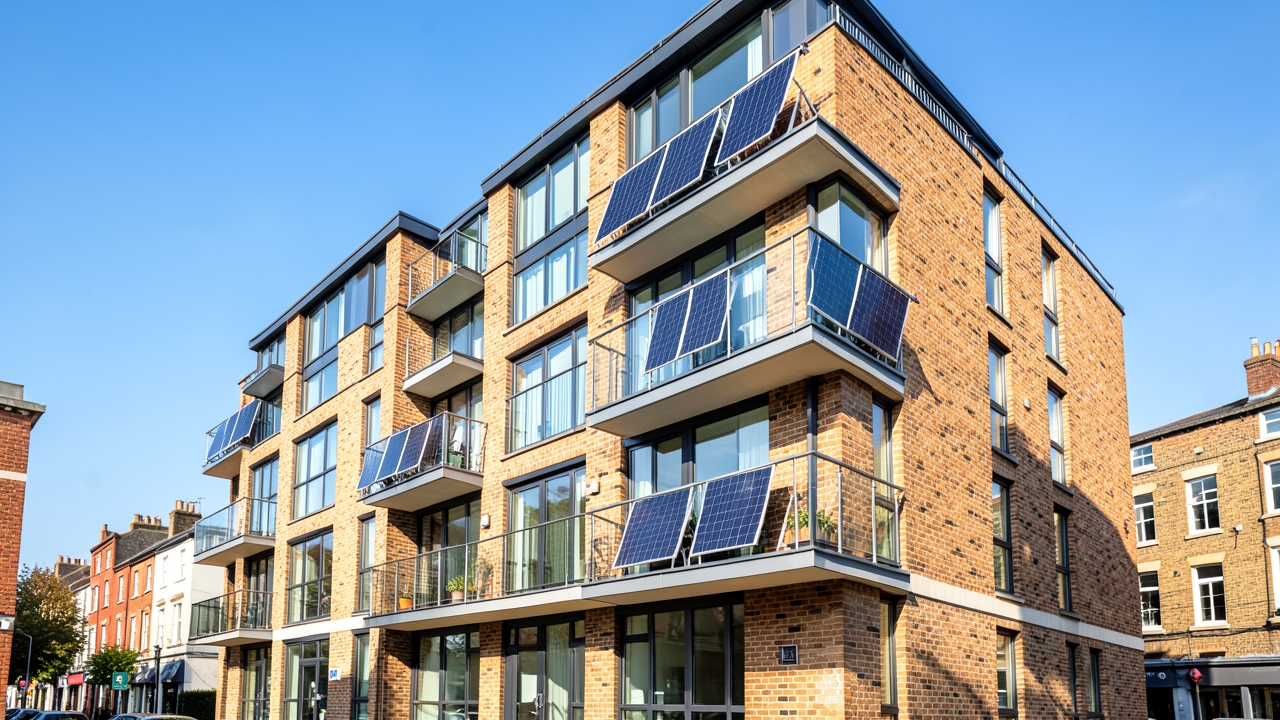
Installing balcony solar panels in a flat is a brilliant way to cut energy bills and reduce your carbon footprint. However, for leaseholders, the path to clean energy is often filled with legal questions. This guide provides a comprehensive look at the permissions required for a successful leasehold solar installation in the UK as of 2026, covering freeholder consent and the latest planning law updates.
While the benefits are clear, the process requires careful navigation. We will break down the steps, costs, and recent legislative changes to help you understand exactly what is needed to power your flat with sunshine.
Understanding the Leasehold Agreement for Solar Panels
Your lease is the foundational document that governs what you can and cannot do with your property. Before making any physical changes, you must review it thoroughly. Key clauses to look for relate to alterations, improvements, and the use of common parts. Balconies are often classified as common parts or limited-use areas, not private interior space.
Many older leases contain restrictive clauses that were drafted long before small-scale solar technology existed. Consequently, they may not explicitly mention solar panels, but they will likely require the landlord’s or freeholder’s written consent for any external modification.
The Role of the Freeholder or Managing Agent
In a leasehold setup, you own the leasehold interest in your flat, but the freeholder owns the building and its structure. Therefore, any installation on the exterior, including your balcony, is considered a change to the building. You must formally request their permission. This is typically done through their managing agent.
A freeholder cannot unreasonably withhold or delay consent under the Landlord and Tenant Act 1988. However, “reasonable” grounds for objection can include concerns about structural integrity, water ingress, or visual impact on the building’s facade.
Navigating Permissions: Freeholder and Council
Securing approval involves a two-pronged approach: internal consent within your building and external validation from the local authority.
1. Freeholder / Management Company Consent
Prepare a professional proposal for your freeholder. This should include: technical specifications of the panels, a detailed installation plan showing no penetrations into the building fabric, and a risk assessment. For balcony kits, the latter is often straightforward as they clamp to railings.
Some management companies may charge an administration fee to process your application, typically ranging from £50 to £250. In 2026, a growing number of freeholders are developing standardised solar policies to streamline this process for multiple leaseholders.
2. Local Planning Authority (Council) Rules
This is where recent UK law updates are most significant. Prior to June 2024, balcony solar panels often required full planning permission, a costly and lengthy barrier. However, the UK Government introduced new permitted development rights.
As of 2026, Class D permitted development rights now cover the installation of solar equipment on the exterior of residential buildings. For most balcony solar panel systems, this means you no longer need to submit a full planning application to your council, provided the installation meets specific conditions.
The 2026 Permitted Development Rules for Balcony Solar
The expanded permitted development rights are a game-changer for flat-dwellers. However, they come with strict guidelines that must be followed. Installation must not:
- Be on a listed building or within its curtilage.
- Alter the building’s character in a Conservation Area.
- Extend more than 200mm from the wall or balcony surface.
- Be installed above the highest part of the roof (not applicable for most balcony systems).
- Be on the front elevation if it faces a highway.
Furthermore, you must inform your local planning authority of the installation using a “Prior Approval” process. This is not a full application but a notification. The council has 56 days to raise objections if the installation violates the permitted conditions. This is a critical step in your leasehold solar installation project.
The updated permitted development rights for solar panels were designed to accelerate the UK’s net zero goals. They remove a major red-tape hurdle for apartment dwellers, making renewable energy more accessible.
A Step-by-Step Guide for Leaseholders
Follow this practical checklist to ensure a smooth process.
Step 1: Review Your Lease and Consult the Freeholder
Identify the relevant clauses and contact your managing agent. Gauge their initial willingness before investing in a detailed plan. Ask if they have a policy for renewable energy installations.
Step 2: Choose a Suitable System
Select a balcony solar kit designed for low-weight, non-penetrative installation. Systems from providers like our balcony solar panel range are ideal, as they typically weigh under 15kg per panel and use secure, non-damaging clamps.
Step 3: Submit a Formal Application
Provide your freeholder with the technical details and a copy of the planned Prior Approval submission to the council. This demonstrates transparency and professionalism.
Step 4: Submit Prior Approval to the Council
Complete the council’s online form, often found via the GOV.UK portal. Pay the relevant fee (usually £120 for householder prior approval). You must wait for the 56-day determination period to end before starting work.
Step 5: Installation and Notification
Once you have freeholder consent and the council has not objected, proceed with a professional installation. Afterwards, you may need to notify your freeholder that the work is complete, along with any certification like an MCS certificate.
Common Pitfalls and How to Avoid Them
Even with clear rules, pitfalls exist. Firstly, never install before receiving all consents. Doing so risks enforcement action from the council or a costly removal order from your freeholder.
Secondly, be mindful of your neighbours. While not a legal requirement, informing them of the plans can prevent disputes over appearance or perceived shadowing. Furthermore, consider a collective approach. If multiple flat owners in a building want solar, presenting a unified proposal to the freeholder is often more successful.
Costs and Financial Considerations
Beyond the panel costs (typically £300-£600 per 300W panel for a full balcony kit), budget for:
- Freeholder administration fee: £50 – £250.
- Council Prior Approval fee: £120 (typical).
- Potential legal or surveyor fees if your freeholder requests an independent assessment: £200+.
Despite these upfront costs, the long-term savings on electricity bills, coupled with the Smart Export Guarantee (SEG), make it a worthwhile investment. A well-sited balcony system can generate £100-£200 worth of electricity annually for a flat.
The Future is Bright for Leasehold Solar
The landscape for leasehold solar installation has transformed dramatically in recent years. The combination of streamlined permitted development rights and growing pressure on freeholders to support green initiatives makes 2026 an excellent time to consider balcony solar panels.
By understanding your lease, engaging proactively with your freeholder, and following the official planning channels, you can successfully navigate the process. The power to generate your own clean energy is increasingly within reach, even for those in flats.
Have you successfully navigated a leasehold solar installation? Share your experience or questions in the comments below to help fellow flat owners on their journey to energy independence.
Balcony Solar Savings Calculator
See your annual savings, export income and payback time — free, no sign-up.