
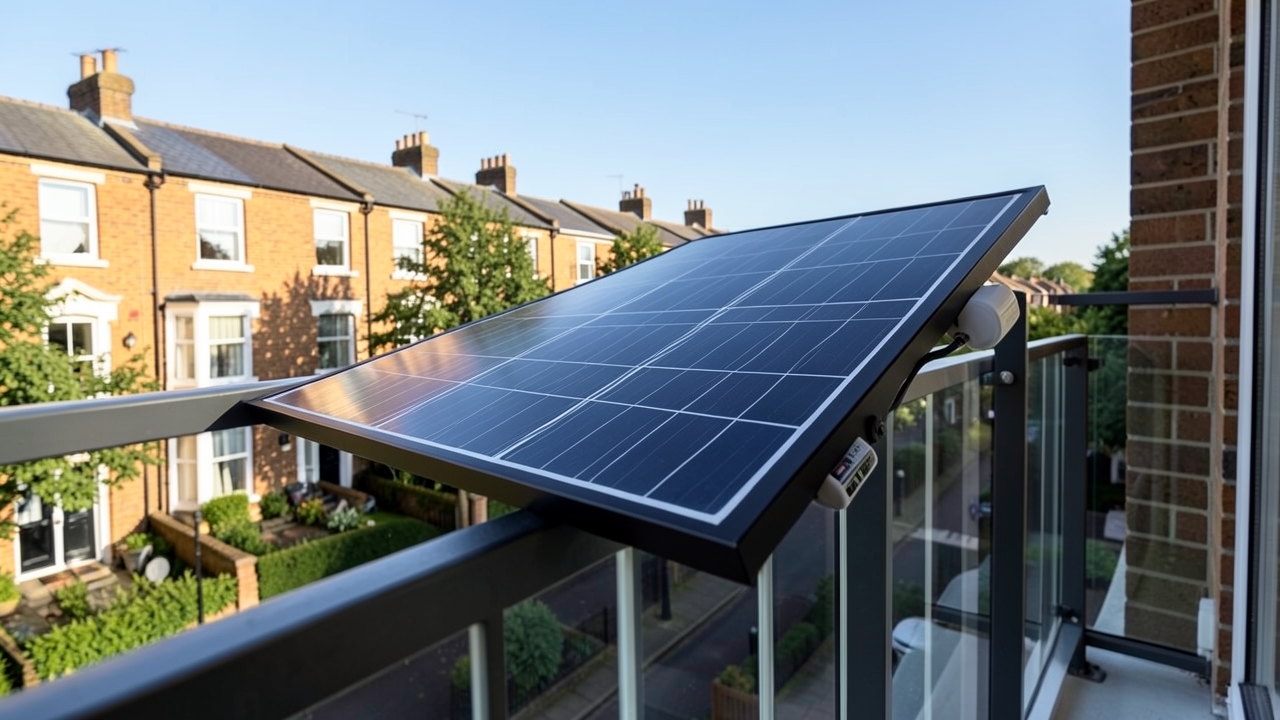
Thinking of harnessing solar power on your flat or house balcony? You’re likely wondering if you need balcony solar planning permission. The good news is that, for most residential installations in the UK, you don’t. This guide delves into the 2026 regulations, permitted development rights, and the specific scenarios where you might need to seek approval.
Understanding Permitted Development Rights for Solar Panels
The primary reason you can install most balcony solar kits without planning permission lies in ‘permitted development’ (PD) rights. These rights, established under the Town and Country Planning (General Permitted Development) (England) Order 2015 and its subsequent amendments, allow certain types of work to proceed without a full planning application.
For the installation of solar equipment, including balcony solar panels, permitted development rights apply to domestic properties, such as houses and flats. This means, in general terms, you do not need to apply to your local council for planning permission. However, these rights come with specific conditions and limitations that you must follow.
Key Rules for Balcony Solar Under Permitted Development
To ensure your installation falls within permitted development, adhere to these core principles:
- Positioning: The equipment must be fixed to the building and not project more than 200mm from the wall or roof slope it’s attached to. Balcony railings are generally considered part of the building envelope for this purpose.
- Height: If ground mounted (not applicable for balconies), it should not exceed 4 metres. For wall-mounted systems, there is no specific height restriction as long as it is below the highest part of the roof.
- Area Limit: The solar panels must not cover more than the equivalent area of the roof or wall they are installed on. For a balcony installation, this usually means the area of the railing or wall you’re using.
- Heritage and Conservation: Permitted development rights are often removed in Areas of Outstanding Natural Beauty (AONBs), World Heritage Sites, Conservation Areas, and for listed buildings. You must check your local council’s rules if you live in one of these zones.
When Might You Need Planning Permission?
While the majority of plug-and-play balcony solar kits are covered by permitted development, certain circumstances will require you to apply for planning permission:
- Listed Buildings: Installing solar panels on a listed building or within its curtilage requires Listed Building Consent, which is a separate and stricter process.
- Conservation Areas: In a Conservation Area, the rules on materials and appearance can be more restrictive. Your council might require a planning application if they deem the panels could harm the character of the area.
- Flats and Maisonettes: This is a crucial nuance. For a flat, your rights as a leaseholder may differ. You often require the freeholder’s or management company’s permission. While planning permission from the council may not be needed under PD rules, breaching your lease is a separate legal matter.
- Article 4 Directions: Some councils issue Article 4 Directions to remove permitted development rights in specific areas. This is common in town centres or historic streets. You must check your local authority’s website for such directions affecting your address.
Furthermore, if your proposed installation does not comply with the size, position, or material conditions listed above, you will need to submit a planning application. For example, a very large, oversized panel system might exceed the ‘equivalent area’ rule.
The Flat Dilemma: Leaseholder Permissions
For apartment dwellers, the journey to balcony solar involves two key approvals: the formal planning process and internal property permissions.
As noted, planning permission from the council is typically not required. However, you must secure written consent from the freeholder, landlord, or management company. They may have concerns about:
- Aesthetics: Uniformity of the building’s appearance.
- Structural Integrity: Safe attachment to the balcony railing or wall without causing damage.
- Safety: Ensuring cables do not create trip hazards and are properly weatherproofed.
- Fire Safety: Compliance with building regulations regarding electrical installations.
It’s advisable to approach your management company with a clear plan and product specifications. Choosing a certified, low-profile kit like those available on ocentrum.com can help reassure them of the system’s safety and quality.
Building Regulations and Electrical Safety
It’s vital to distinguish between planning permission and Building Regulations. While most plug-in balcony solar systems are designed for easy DIY installation, any electrical work must comply with Part P of the Building Regulations.
Most reputable balcony solar kits are sold as ‘plug and play’, connecting via a standard 13A socket. This design often means they do not require formal Building Regulations approval, as they are treated as a removable appliance. However, the wiring from the socket to the inverter must be safe. It is highly recommended to have a qualified electrician check your setup, especially for older properties or if any hardwiring is involved.
Practical Steps: Your 2026 Checklist
Follow this step-by-step guide to ensure you’re fully compliant before purchasing your system:
1. Check Your Council’s Website: Use the Planning Portal’s ‘Application for planning permission’ service or your local council’s website to search for ‘Article 4 Direction’ and your address. This is the most definitive source.
2. Review Your Lease or Tenancy Agreement: Look for clauses on alterations or external fixtures. Contact the management company or freeholder early in the process.
3. Choose a Compliant System: Select a balcony solar panel kit that adheres to the size limits. A typical 300W-600W system with a panel size around 1.8m² will usually comply.
4. Ensure Safe Installation: Follow manufacturer instructions for secure mounting. Prioritise electrical safety. Consider a professional installation for peace of mind.
5. Understand the Smart Export Guarantee (SEG): Once installed, you can earn money for excess energy you export. For 2026, rates vary between suppliers but can be up to 15p/kWh for a good tariff. Our SEG guide explains how to sign up.
The Cost-Benefit: Why the Process is Worth It
The absence of planning permission fees makes balcony solar extremely accessible. A typical 600W balcony solar kit costs between £300 and £500 in 2026. With the Smart Export Guarantee and reduced electricity bills, most systems pay for themselves within 3-5 years.
Furthermore, the environmental impact is significant. Over a year, a 600W system can generate enough clean electricity to power a laptop for over 300 days or offset about 300kg of CO2, according to the Energy Saving Trust.
Final Verdict: In Most Cases, No Permission Needed
To conclude, for the vast majority of homeowners and leaseholders (with freeholder consent), balcony solar planning permission is not required thanks to permitted development rights. The key is to stay within the defined rules and, crucially, to secure any necessary internal property permissions.
By following the checklist above, you can navigate the regulations with confidence and start generating your own clean, renewable energy right from your balcony. It’s a simple way to cut costs and carbon in 2026.
Have you installed a balcony solar panel or are you considering it? Share your experiences or questions in the comments below!
Balcony Solar Savings Calculator
See your annual savings, export income and payback time — free, no sign-up.