
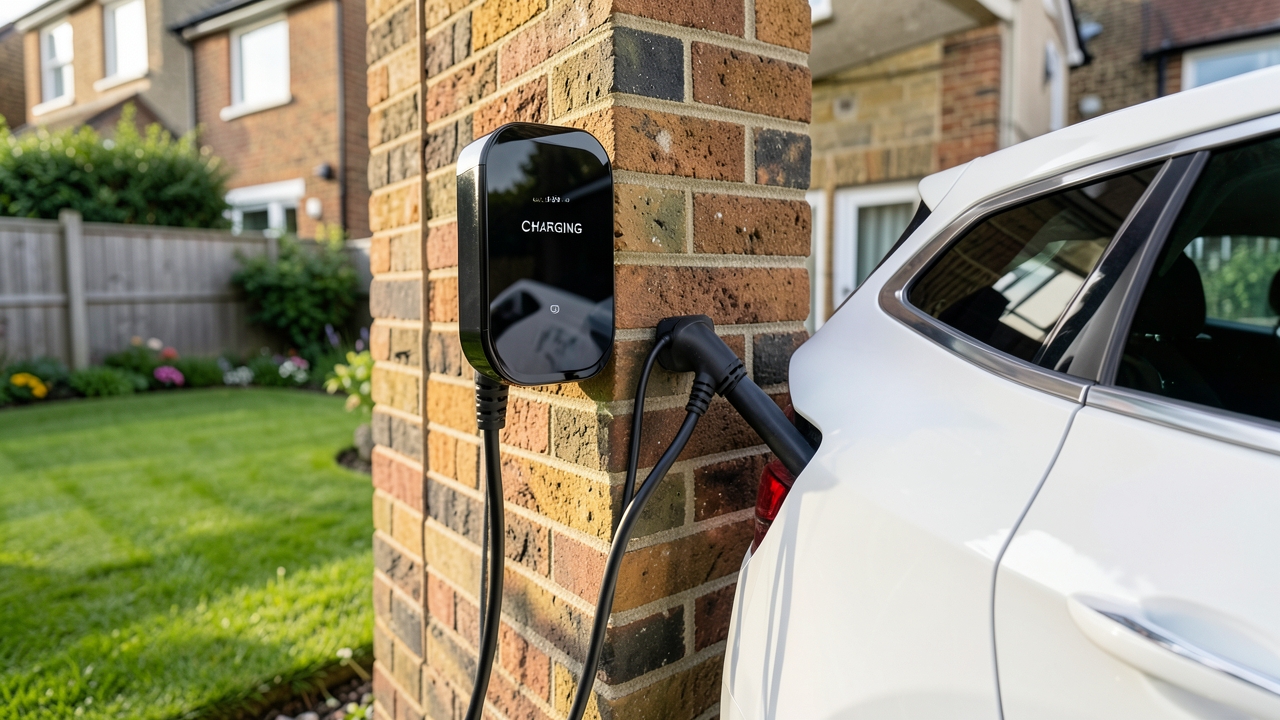
The EV charger grant uk for 2026 offers a fantastic opportunity for homeowners to reduce the cost of installing an electric vehicle (EV) charger. Managed by the Office for Zero Emission Vehicles (OZEV), this grant helps make home charging more affordable and accessible. In this complete guide, we will walk you through everything you need to know to claim your grant this year.
What is the OZEV EV Charger Grant?
The OZEV grant, officially known as the Electric Vehicle Homecharge Scheme (EVHS), provides financial support towards the cost of purchasing and installing a home EV charger. It was introduced to encourage the uptake of electric vehicles by making home charging more affordable. For 2026, the scheme continues with some updated rules to broaden its reach, particularly for those in flats and rental properties.
Furthermore, the grant aims to support the UK’s transition to net zero by 2050. As more drivers switch to EVs, convenient home charging becomes essential. Therefore, understanding the ev charger grant uk details can save you hundreds of pounds.
Who Qualifies for the EV Charger Grant UK in 2026?
Eligibility criteria are crucial to check before applying. For 2026, the basic requirements remain similar, but with expanded options for certain groups.
Homeowners and Private Renters
You must be the owner of a private property, or a private renter with permission from your landlord. The property should have off-street parking, such as a driveway or garage. Additionally, you need to own or lease an eligible electric vehicle, or have ordered one. For example, the vehicle must be on the OZEV-approved list, which includes most pure EVs and some plug-in hybrids.
However, there are changes for 2026. Flat owners and leaseholders can now apply through a new streamlined process, which we will cover later. Moreover, the grant is available in England, Scotland, Wales, and Northern Ireland, though slightly different schemes may apply in devolved administrations.
Landlords and Businesses
Landlords can also benefit. If you own a residential property and rent it out, you can claim the grant to install chargers for your tenants. This is part of the government’s push to improve EV infrastructure in the rental market. Businesses may qualify for other schemes, but for home use, the EVHS applies.
How Much Can You Claim from the EV Charger Grant UK?
The grant provides a fixed amount towards the cost of your charger and installation. For 2026, the standard grant is £350 per eligible property. This amount is deducted directly from your invoice by the installer, so you only pay the remaining balance.
In addition, there are enhanced rates for certain properties. For example, properties in rural areas or those with accessibility needs may qualify for up to £500. This helps cover additional costs for complex installations. Consequently, it’s worth checking if you fall into these categories.
The grant covers the charger unit and installation labour. However, it does not cover electrical upgrades if needed, such as a new consumer unit. On average, a typical home EV charger costs between £800 and £1,200 installed, so the grant can cover 30% to 50% of the total cost.
Eligible Chargers and Installers
To claim the grant, you must use an OZEV-approved installer and choose an eligible charger. The charger must be smart, meaning it can connect to the internet and be managed via an app. This helps with load balancing and energy efficiency.
Approved Charger Models
There are several popular models in the UK market. For instance, the Hypervolt Home 2.0 or the Zappi v2 are common choices. These typically offer 7kW charging for home use, which adds about 30 miles of range per hour of charging. Prices range from £700 to £1,000 for the unit alone.
Furthermore, all eligible chargers must be installed by a certified electrician who is registered with an OZEV-approved scheme, like the Office for Low Emission Vehicles (OLEV) authorised installers. You can find a list on the government website.
What to Look for in a Charger
When choosing a charger, consider features like solar compatibility if you have panels. For example, balcony solar panels can pair with smart chargers to use free solar energy. Also, check the warranty—most offer 3 years as standard.
Application Process: Step-by-Step Guide for 2026
Claiming the EV charger grant UK is straightforward if you follow these steps. The process is online and managed through the OZEV portal.
1. Check Eligibility: Use the online tool on the GOV.UK website to confirm you qualify. This takes about 5 minutes.
2. Get a Quote: Contact an OZEV-approved installer for a survey and quote. They will assess your property and recommend a charger.
3. Apply Online: Once you have a quote, complete the application on the OZEV portal. You will need your vehicle details, proof of ownership, and the installer’s quote.
4. Installation: After approval, the installer will schedule the fitting. The grant is applied directly, so you pay only the balance.
The entire process typically takes 2-4 weeks from application to installation. However, during peak times, it might take longer. Therefore, plan ahead if you need the charger urgently.
For more details on the application, refer to the official OZEV EVHS guidance on GOV.UK.
Changes for Flat Owners and Renters in 2026
One of the biggest updates for 2026 is the simplified process for flat owners and renters. Previously, these groups faced challenges due to landlord permissions and leasehold agreements. Now, the government has introduced a new scheme called the EV Chargepoint Grant for flats.
Furthermore, flat owners can apply for up to £300 per charger in shared car parks. Landlords can also claim for multiple units, making it easier to provide charging for tenants. This change is a result of feedback from the EV community and aims to boost adoption in urban areas.
On the other hand, renters still need landlord consent, but the grant now covers the administrative costs for landlords, reducing friction. Consequently, more rental properties are expected to install chargers in 2026.
Practical Advice and Tips
To make the most of the EV charger grant UK, here are some practical tips:
- Plan Your Electrical Setup: Ensure your home’s wiring can handle a 7kW charger. An electrician can assess this during the survey.
- Compare Installers: Get quotes from at least two OZEV-approved installers. Prices and service can vary.
- Consider Future Needs: If you plan to get a second EV, a dual-port charger might be worth it, though the grant is per property.
- Maintain Your Charger: Regular checks ensure safety and efficiency. Most installers offer maintenance packages.
In addition, look into smart charging features that can help you save money by charging during off-peak hours. For example, some tariffs offer electricity at 10p per kWh overnight, compared to 30p per kWh during the day. This can reduce your charging costs by up to 70%.
Frequently Asked Questions
Here are some common questions about the 2026 grant:
Can I claim the grant if I already have a charger?
No, the grant is for new installations only. However, if you replace an old charger with a new eligible one, you might qualify under certain conditions.
How long does the grant last?
The OZEV scheme is ongoing until 2028, but funding is subject to review. Therefore, it’s advisable to apply as soon as possible.
What if I move house?
The grant is tied to the property, not the person. If you move, you cannot transfer it. But you can claim again at your new property if eligible.
Conclusion
The EV charger grant UK for 2026 is a valuable incentive to switch to electric driving. By covering up to £350 of the cost, it makes home charging more accessible for homeowners, flat owners, and renters alike. Remember to check eligibility, use approved installers, and follow the application steps carefully. For further reading, explore our guide on e-bike conversion kits to expand your green transport options.
Have you applied for the EV charger grant UK this year? Share your experience or ask questions in the comments below!
EV Charger Cost Calculator
Estimate your installation cost and annual charging bill — free, no sign-up.