
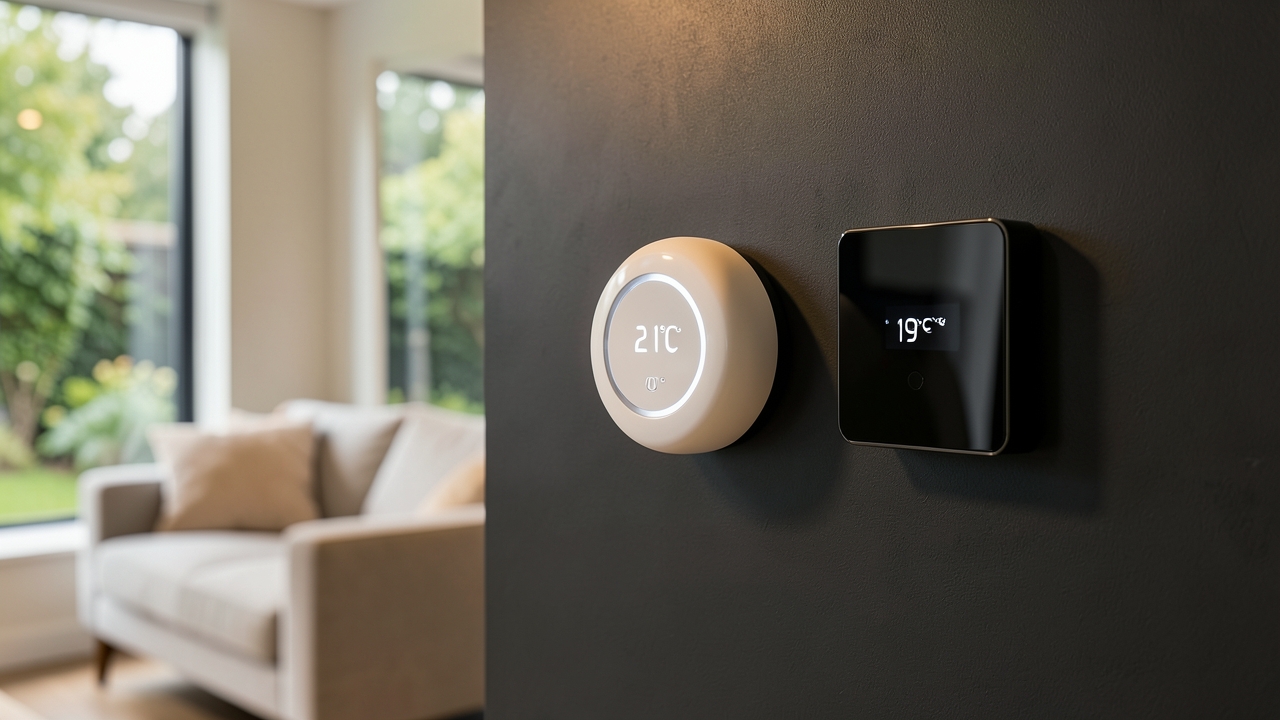
Choosing the right smart thermostat in 2026 can feel overwhelming. With rising energy bills and the UK’s push towards net-zero, a smart system is no longer a luxury. It’s a practical tool for cutting costs and reducing your carbon footprint. The three giants dominating the UK market are British Gas’s Hive, Google’s Nest, and the German-engineered Tado. So, when it comes to hive vs nest vs tado, which one truly reigns supreme for British homeowners? This deep-dive comparison will settle the debate.
Core Thermostats: What Do You Get in the Box?
Before diving into advanced features, let’s look at the fundamental hardware. All three systems typically include a smart thermostat and a receiver for your boiler.
Hive Active Heating
The Hive thermostat features a clean, circular design with a simple analogue-style dial and a backlit LCD screen. It’s straightforward and robust. The system is known for its reliability and is widely available through British Gas engineers, which can simplify installation for many. The latest Hive Active Heating kit typically retails between £180 and £220.
Google Nest Learning Thermostat
The Nest Learning Thermostat (3rd Gen) boasts a premium stainless steel and glass design. Its colour screen adjusts to the room’s ambient light. It famously ‘learns’ your schedule over the first week, creating a programme automatically. You can expect to pay around £220 to £250 for the thermostat and heat link.
Tado Smart Thermostat
Tado offers a minimalist, sleek white or black rectangular unit. Its stand-out feature is its sophisticated geofencing, which uses your smartphone’s location to detect when you’re home or away. The Tado Smart Thermostat Starter Kit V3+ is competitively priced, often found between £180 and £210.
Heating Control: TRVs and Multi-Zone Potential
This is where the hive vs nest vs tado battle heats up. True smart heating means controlling different rooms to different temperatures. This is achieved with smart Thermostatic Radiator Valves (TRVs).
Hive introduced its Active Radiator Valve in recent years. While a welcome addition, it has had a slower rollout and some users report connectivity can be less consistent than the core thermostat. Compatibility with third-party TRVs is limited.
Google Nest took a different approach. It does not sell its own smart TRVs. Instead, it partners with third-party manufacturers like Tado and Drayton Wiser. This gives you more choice but can add complexity to setup.
Tado excels here. Their Smart Radiator Thermostat is a core part of their ecosystem. Setting up multi-zone heating is intuitive and seamless. Furthermore, Tado’s system is open to integrating with other TRV brands via the openTRV project, offering fantastic flexibility for tech-savvy users.
Subscription Costs: The Hidden Annual Fee
A critical factor in the UK market is whether the manufacturer charges an ongoing subscription for advanced features. This can significantly affect the long-term value.
Hive: Core scheduling and remote control are free. However, to access advanced energy reports and features like ‘Hive Actions’ (automations), you need a ‘Hive Heating Plus’ subscription, which costs approximately £5.99 per month or £59.99 annually.
Google Nest: The Nest Learning Thermostat works fully without a subscription. You can view your energy history and use all its learning features in the free Nest app. There is no mandatory fee.
Tado: The Smart Thermostat is fully operational without a subscription. However, an optional ‘Tado° Auto-Assist’ subscription (around £2.99/month) enables features like ‘Geofencing with Open Window Detection’ and intelligent frost protection. These are helpful but not essential.
Boiler Compatibility and Installation
All three thermostats are designed to work with the vast majority of UK domestic boilers, including combi, system, and regular boilers. However, there are nuances.
Hive‘s biggest advantage is its installation network. British Gas can fit it, often during a service visit. For complex systems, professional installation is recommended and can be arranged through Hive directly.
Nest and Tado are also DIY-friendly for basic installations. However, if you have an older, more complex boiler system or require a wiring centre update, you should use a certified installer. Both companies can recommend local professionals.
Always check the manufacturer’s compatibility checker online. This is a crucial step before purchasing, as it confirms your boiler model will work with the chosen system.
Energy Saving Features and Insights
The core promise of these devices is to save energy and money. Let’s see how each delivers.
Hive offers ‘Eco Mode’ and detailed energy usage reports (behind its subscription wall). Its integration with other Hive products like smart lights can create broader home automations.
Nest‘s key feature is its learning algorithm. It builds a schedule for you and adjusts for seasons. The ‘Leaf’ icon encourages energy-saving behaviour. Its ‘Home/Away Assist’ uses phone sensors to lower the heat when the house is empty.
Tado is a powerhouse for data-driven saving. Its geofencing is arguably the most accurate. It also uses your smartphone’s location to pre-heat the home precisely when you’re on your way back. Furthermore, Tado integrates with weather compensation data to adjust heating based on the local forecast, a feature highly valued by energy experts.
Our Verdict: Which One Should You Choose in 2026?
The best choice depends entirely on your priorities. There is no single ‘winner’ in the hive vs nest vs tado competition.
Choose Hive if: You value simplicity and a proven track record. The availability of British Gas support and installation is a major plus. The subscription model is acceptable for the added features.
Choose Nest if: You want a hands-off, learning thermostat that sets itself. You dislike the idea of subscriptions and appreciate a premium design. It’s an excellent standalone thermostat.
Choose Tado if: You are serious about multi-room zoning and energy efficiency. Its advanced geofencing and weather compensation are best-in-class. The optional subscription is affordable and the system is highly flexible.
For the most comprehensive multi-zone setup in a UK home, Tado often has the edge. For the simplest, most robust single-zone smart upgrade, Hive remains a top contender. Remember to check the latest offers, as prices fluctuate. You can explore more about smart home energy on our guide to smart home devices. For official energy-saving advice, the Energy Saving Trust is an invaluable resource.
Have you already switched to one of these systems? What has your experience been with subscription fees or TRV compatibility? Share your thoughts in the comments below!