
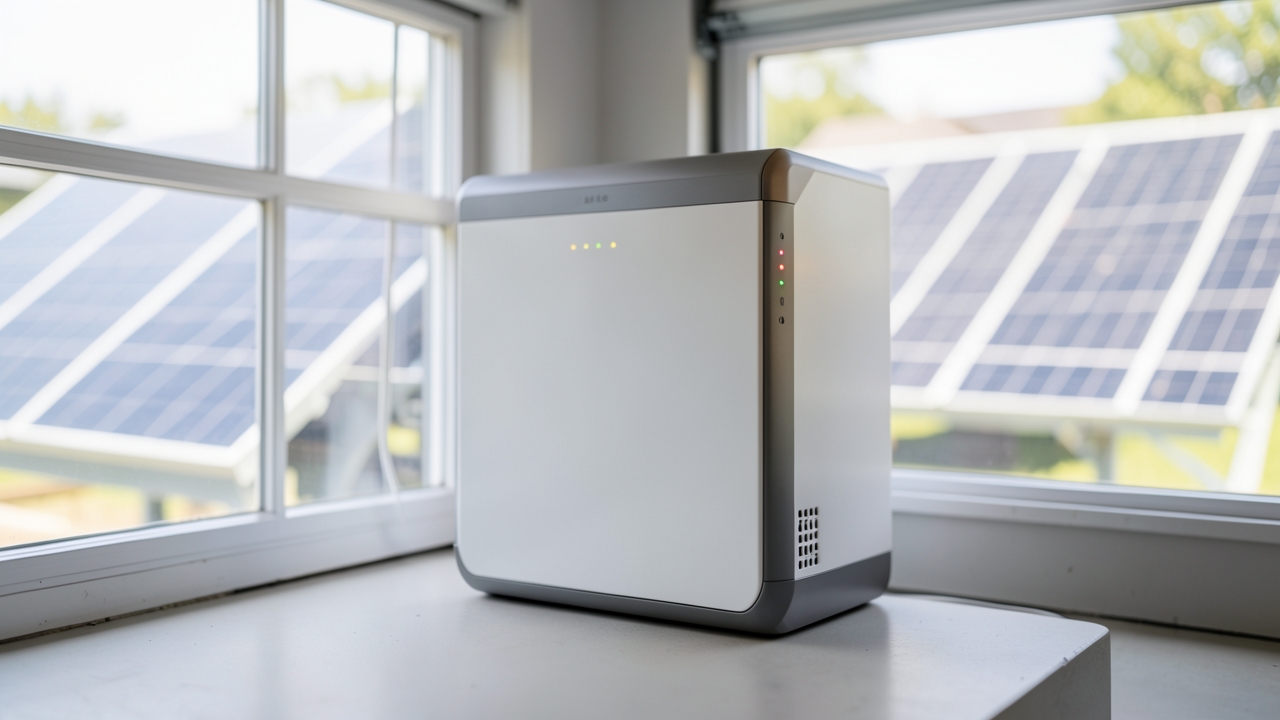
Many UK homeowners with solar panels now want to store their own electricity. A solar panel battery storage UK system lets you keep solar power for later use. This guide for 2026 explains how home batteries work, what they cost, and when you’ll see a return on your investment.
How Does a Solar Battery System Work?
Without a battery, any solar electricity you don’t use immediately goes to the grid. A home battery captures this excess power. You can then use it during the evening or on cloudy days.
The system has three main parts. First, your solar panels generate direct current (DC) electricity. Second, an inverter changes this to alternating current (AC) for your home. Third, the battery stores the DC power and converts it back to AC when needed.
Furthermore, modern batteries often include smart software. This software learns your energy habits. It decides the best time to charge and discharge to save you the most money.
How Much Does a Solar Battery Cost in the UK? (2026)
The price for solar panel battery storage UK systems has fallen significantly. However, it still represents a major investment. For a standalone battery addition to an existing solar panel system, you can expect to pay between £2,000 and £6,000.
Key Cost Factors
- Battery Capacity (kWh): This is the most important factor. A small 5kWh battery might cost around £2,500. A large 15kWh unit can exceed £6,000.
- Brand and Technology: Premium brands like Tesla and BYD cost more. Newer LFP (lithium iron phosphate) batteries are often safer and last longer.
- Installation Complexity: Adding a battery to an existing system is simpler. A full new solar and battery install costs £7,000 to £12,000+.
- Hybrid Inverter: You may need a new hybrid inverter if your current one isn’t compatible. This adds £800 to £1,500 to the bill.
It’s crucial to get quotes from multiple installers. The Energy Saving Trust recommends using certified professionals for any electrical work.
What is the Payback Period for a Home Battery?
Calculating the payback period depends on your specific situation. It’s based on how much you use your stored solar power instead of importing grid electricity.
Key Factors Affecting Payback
- Energy Usage Pattern: Families home in the evening benefit most. You’ll use more stored solar power.
- Grid Electricity Price: With UK energy prices still volatile, the value of avoided imports is high. Every kWh you don’t buy saves you 25p-30p+.
- Smart Export Guarantee (SEG): You earn a small amount for exporting excess solar. A battery lets you control when you export, potentially timing it for better SEG rates.
- Battery Cost and Size: A cheaper, appropriately sized battery will pay back faster.
For example, a typical 10kWh battery costing £4,000 might save a household £800 per year. In this scenario, the simple payback period would be around 5 years. Many manufacturers now offer 10-year warranties, so you enjoy free power for years afterwards.
Best Solar Battery Brands in the UK (2026)
The market is maturing, with several reliable brands. Your installer should help you choose a system that meets your needs.
Tesla Powerwall 3
The Powerwall remains a market leader. The latest version offers 13.5kWh of usable capacity. It integrates seamlessly with Tesla’s app. It’s known for its sleek design and high performance. Expect an installed cost of around £9,000 – £11,000.
GivEnergy
GivEnergy is a popular, modular British option. You can start with a smaller system and add more batteries later. Their All-in-One system is a compact choice. They offer a 10-year warranty and competitive pricing. Typical installed cost: £5,500 – £7,500 for a 10kWh system.
BYD BatteryBox
BYD is a major global player. Their BatteryBox series uses LFP technology. This is known for safety and long cycle life. It’s a robust and reliable workhorse. Cost: Approximately £4,500 – £6,500 for a 10kWh unit.
UK Grants and Financial Support
Direct grants for battery storage are limited in 2026. However, some schemes can help:
- ECO4 Scheme: The Energy Company Obligation focuses on insulation and heating. It rarely covers standalone batteries for most households.
- Smart Export Guarantee (SEG): This is essential. You get paid for excess solar you export. A battery helps you maximise this income by storing cheap daytime solar to sell during peak price windows, if your tariff allows.
- 0% VAT on Energy Saving Materials: The UK government has extended the 0% VAT rate for solar panels and batteries until 2027. This saves you 20% on the installation cost.
Therefore, while upfront grants are scarce, the VAT saving and ongoing SEG income improve the overall financial picture.
Is a Solar Battery Right for You?
A solar panel battery storage UK system is a brilliant upgrade. It maximises self-consumption and energy independence. However, it’s not for everyone.
You’re a strong candidate if you have existing solar panels, use lots of electricity in the evening, or are concerned about grid power cuts. You should also consider battery storage if you plan to add an EV charger. You can charge your car with your own solar power. Check out our guide on home EV charger installation.
On the other hand, if you’re always out during the day and use little evening power, the payback will be longer. Also, consider if your roof space is limited. A balcony solar panel kit might be a simpler first step for apartment dwellers.
The best next step is to get a home energy survey. A qualified installer can analyse your electricity bills and usage patterns. They will provide a tailored recommendation and a precise quote.
Have you already installed a home battery, or are you considering one? Share your experiences or questions in the comments below!
Balcony Solar Savings Calculator
See your annual savings, export income and payback time — free, no sign-up.