
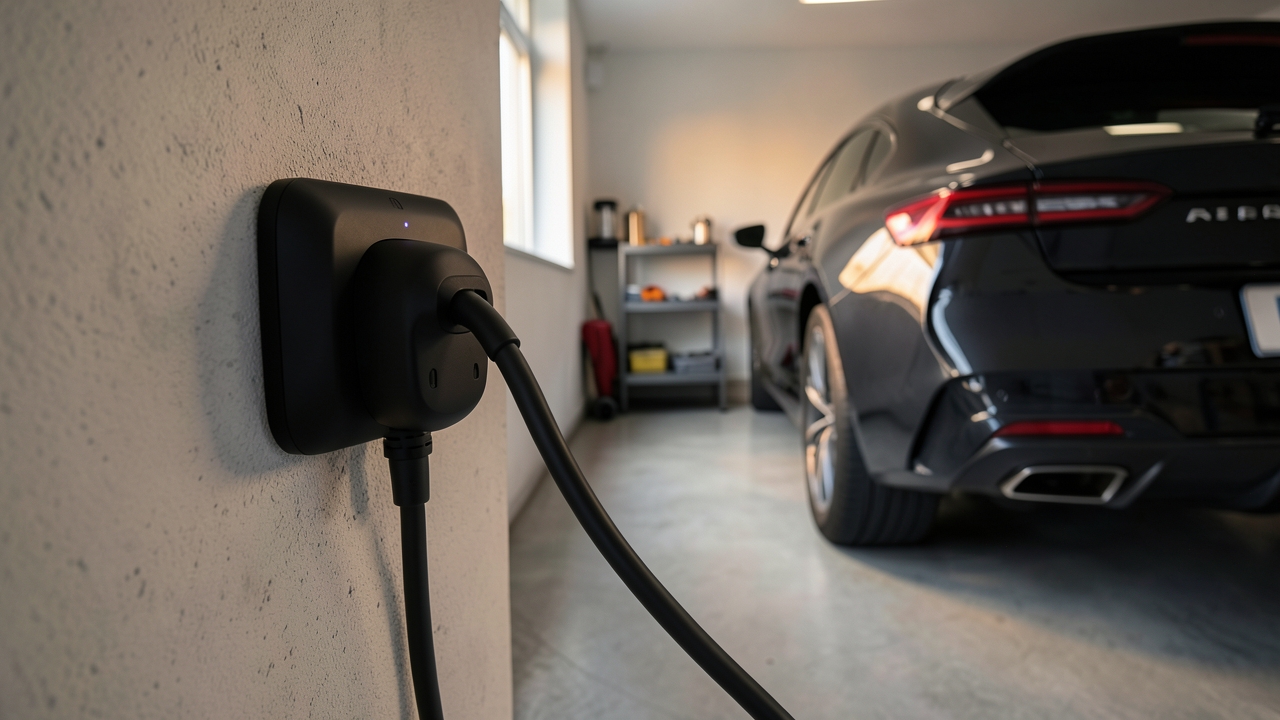
Rising energy prices have put UK drivers on high alert. Charging an electric vehicle at home offers a clear advantage over petrol, yet costs can still sting. This is where an EV charging smart plug becomes your most valuable accessory. It puts you in control, scheduling your car to power up only when electricity is at its cheapest. By pairing a simple smart plug with the right energy tariff, many UK households are now slashing their charging bills by up to 40%.
Understanding the Core Problem: Peak vs. Off-Peak EV Charging
Most of us pay a standard variable rate for electricity. However, smart EV charging relies on Time-of-Use (TOU) tariffs. These tariffs offer extremely cheap electricity during off-peak hours, typically overnight. The UK grid is less stressed when demand is low, and suppliers pass those savings on.
For example, a standard tariff might cost 24.5p per kWh. In contrast, a specialist EV tariff could offer electricity for just 8.5p per kWh between 11 pm and 6 am. For a typical EV requiring 30 kWh for a week’s commute, that’s a difference from £7.35 down to £2.55. Therefore, an EV charging smart plug ensures your car only draws power during these ultra-low-cost windows.
How an EV Charging Smart Plug Works with Your Tariff
A basic EV charger simply turns on when you plug in. A smart plug introduces scheduling and remote control. You can set it via an app on your phone to begin charging at your off-peak start time (e.g., 11:30 pm) and finish by your wake-up time.
Key Features That Drive Savings
- Scheduling: The most critical feature. You program the exact on/off times to match your cheap electricity window.
- Energy Monitoring: The app shows you exactly how much energy your car has consumed in each session, in kWh and pence. This transparency helps you track costs precisely.
- Remote Control: Forgot to plug in? You can check the status and start a session from anywhere via your phone.
- Automation & Integrations: Some advanced plugs can work with solar panels or respond to grid signals, further optimising your usage.
UK Time-of-Use Tariffs: The Fuel for Your Savings
To use a smart plug effectively, you need a TOU tariff. The UK market has several excellent options. Remember, you must switch your energy supplier to one of these tariffs.
Popular UK EV Tariffs (2026 examples):
- Octopus Energy – Intelligent Octopus Go: Offers 7.5p per kWh for 6 hours overnight (8 pm-11 am). It requires a compatible smart charger but works brilliantly with scheduling.
- Octopus Energy – Octopus Go: A simpler tariff at 9.5p per kWh for 5 hours (12 am-5 am). This is perfect for a smart plug setup.
- British Gas – EV Optimiser: Provides cheap electricity for 4 hours overnight, typically at 8.99p per kWh.
- OVO Energy – Charge Anytime: Offers 10p per kWh for 9 hours of off-peak use. Their system is designed for flexibility.
According to the Energy Saving Trust, switching to a dedicated EV tariff is the single most effective way to reduce home charging costs, with potential annual savings of over £400 compared to standard rates.
Step-by-Step: Setting Up Your EV Charging Smart Plug
Getting started is straightforward. Here’s a practical guide to begin saving.
1. Audit Your Driving Needs
First, estimate your weekly mileage and your EV’s efficiency (e.g., 3.5 miles per kWh). This tells you how many kWh you need to schedule for. For a 100-mile weekly commute at 3.5 mi/kWh, you need about 28.5 kWh of off-peak energy.
2. Choose a Compatible Smart Plug
Ensure the plug can handle the load of your EV charger. Most UK home chargers draw 2.3 kW (from a 10A plug) or 3.6 kW (from a 16A commando socket). A standard 13A smart plug is sufficient for the slower rate, while a heavy-duty model is needed for faster charging.
3. Switch to a Time-of-Use Tariff
Use a comparison tool like Uswitch to find the best EV tariff for you. Check the off-peak hours and rate carefully. The £50-100 you might save in the first month alone covers any minor inconvenience of switching.
4. Program and Schedule
Download the smart plug’s app, connect it to your home Wi-Fi, and set the schedule. For a tariff with off-peak from 11 pm to 6 am, you might set the plug to turn on at 11:15 pm and off at 5:45 am as a buffer.
Real-World Savings: A Cost Breakdown
Let’s look at a concrete example for 2026. Assume you drive 8,000 miles annually, and your EV uses 3.2 miles per kWh.
Total Annual Energy Need: 8,000 miles / 3.2 mi/kWh = 2,500 kWh
Cost on a Standard Tariff (24.5p/kWh): 2,500 kWh x £0.245 = £612.50
Cost on an EV Tariff (8.5p/kWh average off-peak): 2,500 kWh x £0.085 = £212.50
Annual Saving: £400.00
Consequently, a smart plug costing between £20 and £40 pays for itself in the first month. This calculation doesn’t even include the additional benefit of monitoring your overall home energy usage, which can reveal further savings.
Choosing the Right EV Charging Smart Plug in 2026
The market offers various options. Here are top considerations for a UK buyer.
- Load Capacity: Match the plug’s amperage (10A, 13A, or 16A) to your charger. Never overload a socket.
- App Ecosystem: Is the app intuitive? Does it integrate with other smart home systems like Google Home or Alexa?
- Energy Monitoring: This is non-negotiable. Real-time kWh tracking is essential for verifying your savings.
- Safety Certifications: Look for UKCA and CE marks. Brands like TP-Link, Hive, and Wiz offer reliable models. For higher loads, consider a dedicated home EV charger with built-in scheduling as an alternative.
The Verdict: Is an EV Charging Smart Plug Worth It?
Absolutely. For any UK EV owner on a standard tariff, the answer is a definitive yes. It’s a low-cost, high-impact upgrade. You gain granular control over when your car charges, directly targeting the biggest cost variable: the electricity rate. Furthermore, the energy monitoring provides valuable insights into your household consumption patterns.
By combining a simple EV charging smart plug with a modern Time-of-Use tariff, you transform your EV from a simple transport device into a clever part of a cost-effective home energy system. The technology is affordable, the setup is simple, and the savings are tangible and immediate.
Have you already made the switch to an EV tariff? Share your experiences and savings figures in the comments below! Your insights could help other drivers make an informed decision.
Smart Plug Energy Savings Calculator
Find out how much standby power costs you — and what a smart plug could save.