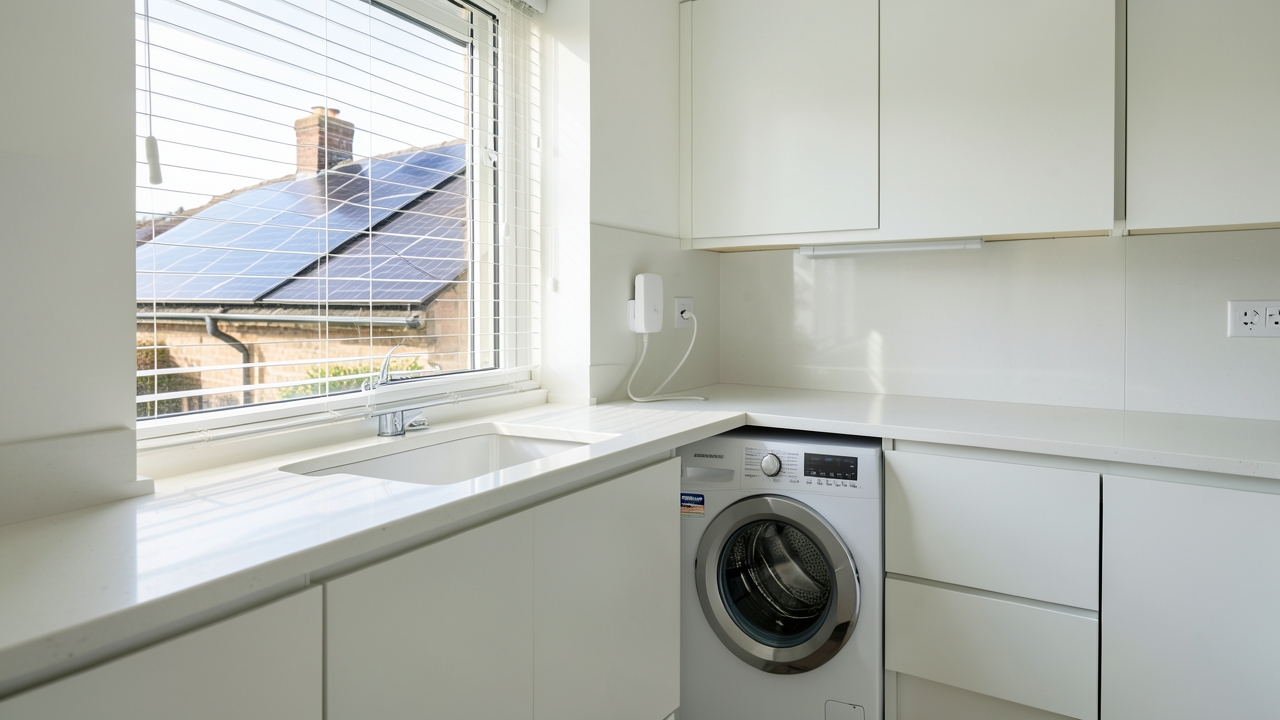
Solar self-consumption is key to maximising the benefits of home solar panels in the UK. However, without careful management, much of the generated electricity goes to waste. That is where solar smart plugs UK come in, offering an automated way to use solar power during peak generation times. In 2026, these devices have become more sophisticated and accessible, helping homeowners cut bills and carbon footprints.
What Are Solar Smart Plugs?
Solar smart plugs are intelligent devices that connect high-draw appliances to your solar system. They monitor real-time solar generation data from your inverter. For example, when solar output exceeds a certain level, the plug automatically switches on connected devices like washing machines or immersion heaters. This process ensures surplus energy is used on-site rather than exported to the grid.
Furthermore, these plugs often integrate with smart home ecosystems such as Apple HomeKit, Google Home, or Amazon Alexa. You can control them remotely via smartphone apps. Consequently, you gain flexibility to schedule appliances or adjust settings based on weather forecasts. In essence, they act as a bridge between solar generation and household consumption.
How Solar Smart Plugs Integrate with Inverters
The magic lies in communication between the plug and your solar inverter. Most modern inverters, like those from SolarEdge or Huawei, offer APIs or data ports. Solar smart plugs use Wi-Fi or Zigbee to access this data. For instance, if your system generates over 2kW of surplus power, the plug can trigger an appliance. This integration is crucial for optimal self-consumption.
Moreover, some advanced models use machine learning to predict generation patterns. They learn your household’s usage habits and solar output over time. As a result, they make smarter decisions about when to activate devices. For UK homes, where sunlight can be variable, this adaptability is particularly valuable.
Benefits for UK Homes in 2026
Using solar smart plugs UK offers several advantages. Firstly, they increase solar self-consumption rates, often from around 40% to over 70%. This means you rely less on grid electricity, which in 2026 costs approximately 28p per kWh under the Ofgem price cap. Consequently, you save money on energy bills.
Secondly, they extend the lifespan of your solar investment. By using more of the energy you generate, you reduce payback periods. For a typical 4kW solar system costing £5,000-£8,000, enhanced self-consumption can save an extra £100-£200 annually. Furthermore, they support the UK’s net-zero goals by lowering household carbon emissions.
In addition, these plugs are useful for time-of-use tariffs. If you have an export tariff, like the Smart Export Guarantee (SEG), maximizing self-consumption might not always be optimal. However, for homes without SEG or with low export rates, solar smart plugs ensure every unit of solar energy is used effectively. Therefore, they are a smart choice for many households.
Top Solar Smart Plugs in 2026: A Comparison
Several models stand out in the UK market. Here is a comparison based on features, price, and compatibility.
1. Smappee Infinity Solar Plug
The Smappee Infinity is a premium option priced around £89. It works with most solar inverters via Modbus or Wi-Fi. For example, it can monitor consumption and generation in real-time. Additionally, it offers app control with detailed energy insights. This plug is ideal for tech-savvy users who want comprehensive data.
2. Shelly Plug S with Solar Control
The Shelly Plug S costs approximately £20 and is a budget-friendly choice. It integrates with solar systems through the Shelly app or Home Assistant. For instance, you can set rules based on solar generation thresholds. Furthermore, it supports up to 2.3kW loads, suitable for most household appliances. This plug is perfect for DIY enthusiasts.
3. TP-Link Tapo P110 with Energy Monitoring
Priced at £15, the Tapo P110 offers basic solar integration via third-party platforms like IFTTT. It includes energy monitoring to track appliance usage. However, it lacks direct inverter communication, so you may need a hub. Despite this, its affordability makes it accessible for beginners exploring solar smart plugs UK.
4. GivEnergy Smart Plug
The GivEnergy plug, around £50, is designed for the GivEnergy ecosystem. If you have a GivEnergy inverter, it seamlessly integrates for automated control. For example, it can sync with battery storage to optimise usage. Additionally, it offers UK-based support and compliance with BS 7671 wiring standards.
Key Features to Look For
When choosing solar smart plugs UK, consider these factors:
- Inverter Compatibility: Ensure the plug works with your specific inverter brand. Check for Modbus, API, or Wi-Fi support.
- Load Capacity: Verify the maximum wattage. For example, immersion heaters may require 3kW plugs.
- App and Smart Home Integration: Look for compatibility with your existing setup, such as Google Home or Alexa.
- Energy Monitoring: Features like real-time data help you track savings. For instance, the Smappee app provides detailed graphs.
- UK Certifications: Ensure the plug is CE or UKCA marked and complies with British electrical standards.
Furthermore, consider future-proofing. As the UK moves towards more smart grid interactions, plugs that support vehicle-to-grid (V2G) or dynamic tariffs could be beneficial. For example, if you own an EV, linking it with solar might be possible through advanced plugs.
Installation and Setup Tips
Installing a solar smart plug is straightforward but requires attention to safety. First, choose the right appliance. High-draw devices like washing machines, dishwashers, or tumble dryers are ideal. For instance, a washing cycle during solar peak can use 1-2kWh of energy.
Next, connect the plug to your Wi-Fi network. Then, link it to your solar inverter via the manufacturer’s app. For example, with the Shelly Plug S, you might use the Shelly app to set solar thresholds. Always follow the user manual and ensure the plug is rated for the appliance’s current. If unsure, consult a qualified electrician.
Moreover, test the automation during sunny periods. Monitor how the plug responds to changing solar output. For example, adjust thresholds based on your system’s average generation. Over time, fine-tune settings for optimal performance.
UK Regulations and Safety Considerations
In the UK, electrical safety is paramount. All solar smart plugs must comply with BS 1363 for plugs and sockets. Furthermore, for hardwired appliances, ensure installation meets BS 7671 (IET Wiring Regulations). It is advisable to use devices that are UKCA marked, as this indicates conformity with UK standards.
Regarding solar systems, check with your local council for planning permissions. Although most residential solar panels under 4kW do not require approval, it is wise to verify. Additionally, the Energy Saving Trust recommends regular maintenance for solar setups. For more information, visit Energy Saving Trust.
Furthermore, if you are on a SEG tariff, be aware that excessive self-consumption might affect export earnings. However, for many households, the savings from reduced grid import outweigh this. Therefore, assess your specific situation.
Real-World Savings in the UK
Let us consider a case study. A UK home in 2026 with a 4kW solar system generates about 3,400kWh annually. Without solar smart plugs, self-consumption might be 40%, using 1,360kWh on-site. With these plugs, self-consumption can rise to 70%, using 2,380kWh. At a grid electricity rate of 28p/kWh, this saves approximately £286 per year. Over 10 years, that is £2,860 in savings.
Consequently, the investment in solar smart plugs, which typically costs £20-£100 each, pays for itself quickly. Moreover, you contribute to reducing peak demand on the UK grid. For example, using solar energy during the day lowers strain on power stations, which is beneficial for energy security.
Conclusion
Solar smart plugs UK are a practical solution for optimising home solar systems in 2026. They automate energy use, boost savings, and support sustainability. With various models available, from budget options like the Tapo P110 to premium choices like the Smappee Infinity, there is something for every household. As the UK continues its push towards renewable energy, these devices will play a growing role in smart homes.
Are you considering solar smart plugs for your home? Share your thoughts or questions in the comments below. For more on solar technology, explore our guides on balcony solar panels and EV chargers to create a fully integrated green energy system.
Smart Plug Energy Savings Calculator
Find out how much standby power costs you — and what a smart plug could save.