
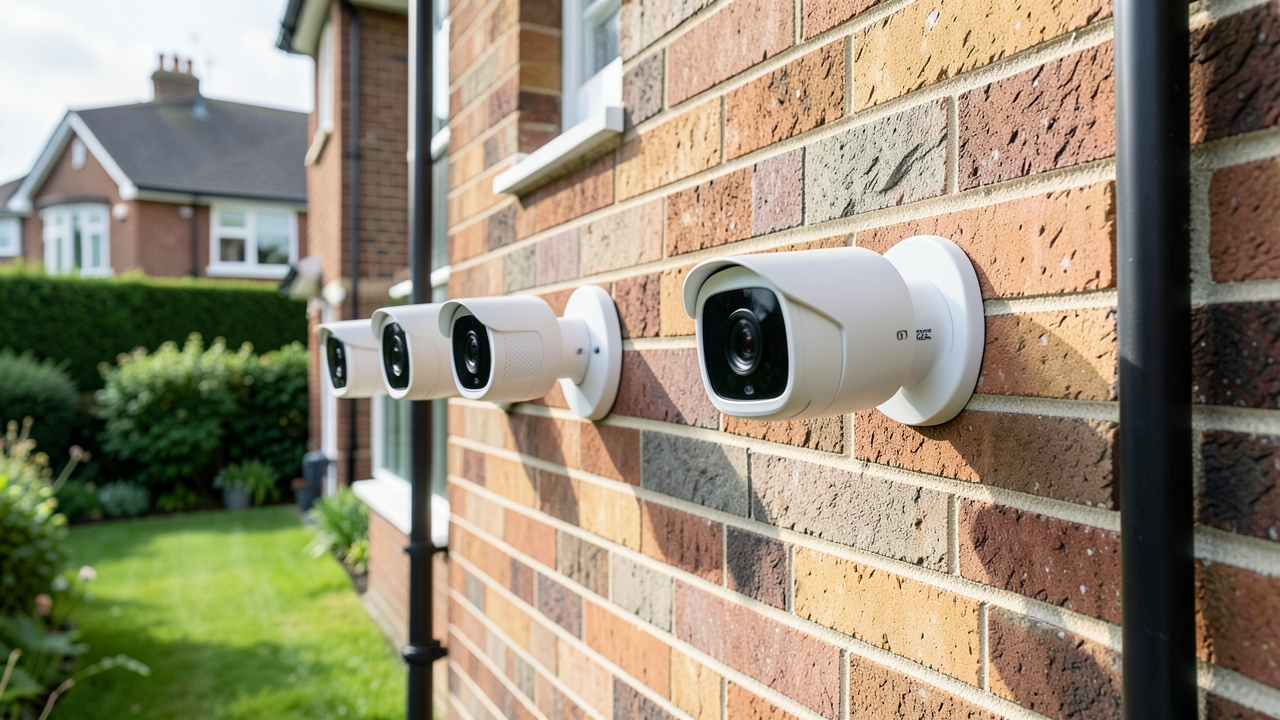
Choosing the right smart security camera involves more than just video quality and night vision. In 2026, GDPR smart cameras UK compliance has become a critical factor for privacy-conscious homeowners. After all, these devices continuously capture footage of your family, neighbours, and visitors. Understanding how Ring, Eufy, Arlo, and Hive handle your personal data under UK data protection law is essential before you buy.
This guide breaks down each brand’s GDPR compliance, data handling practices, and privacy settings. Furthermore, we provide actionable tips to help you make an informed decision for your smart home security setup.
What Is GDPR and Why Does It Matter for Smart Cameras in the UK?
The UK General Data Protection Regulation (UK GDPR) governs how organisations collect, store, and process personal data. Smart security cameras fall squarely within this framework because they record identifiable individuals. The Information Commissioner’s Office (ICO) enforces these rules in the UK, and violations can result in fines up to £17.5 million or 4% of annual turnover.
For homeowners, this matters on two levels. First, camera manufacturers must process your data lawfully and transparently. Second, you have responsibilities when filming public spaces from your property. Therefore, understanding both manufacturer compliance and personal obligations is vital.
According to the ICO’s guidance on domestic CCTV, homeowners recording areas beyond their property boundary must follow specific rules. These include notifying neighbours and conducting a proportionality assessment.
GDPR Smart Cameras UK: How Ring Handles Your Data
Ring, owned by Amazon, is one of the most popular smart camera brands in the UK. However, it has also faced significant scrutiny regarding data privacy. In 2022, Ring paid £5.7 million in fines to the US Federal Trade Commission over data retention practices.
Ring Data Collection and Storage
Ring cameras store video footage on Amazon’s cloud servers by default. The company collects substantial metadata alongside video, including motion events, audio recordings, and device identifiers. Ring’s privacy policy states that it may share data with third-party service providers and law enforcement agencies when legally required.
Ring offers a Ring Video Doorbell 4 starting at approximately £179 and the Spotlight Cam at around £189. Both require a Ring Protect subscription for cloud storage, priced from £3.49 per month.
Ring Privacy Settings and Controls
Ring provides several GDPR-related controls. You can enable end-to-end encryption for video recordings. Additionally, you can disable the sharing of data with law enforcement. However, Ring’s default settings tend to favour data collection, meaning users must actively adjust privacy options.
- Enable Two-Factor Authentication (2FA) immediately
- Review and limit data sharing permissions in the Ring app
- Set video retention periods to the minimum you need
- Use motion zones to avoid filming neighbouring properties
GDPR Smart Cameras UK: How Eufy Protects Your Privacy
Eufy, manufactured by Anker, positions itself as a privacy-focused alternative. The brand’s core selling point is local storage, which means your footage stays in your home rather than on remote cloud servers. This approach aligns strongly with GDPR’s data minimisation principle.
Eufy’s Local Storage Approach
Eufy cameras use either a HomeBase hub with local storage or onboard microSD card slots. The Eufy SoloCam S340 retails at approximately £199 and stores all footage locally. This means no monthly subscription fees and no video data leaving your network.
However, Eufy faced controversy in 2022 when researchers discovered that some cloud features were uploading data despite marketing claims. Eufy subsequently addressed these issues and introduced third-party security audits. In 2024, Eufy launched its Enhanced Privacy Mode with end-to-end encryption as standard.
Eufy Privacy Settings and Controls
Eufy’s privacy settings reflect its local-first philosophy. You can completely disable cloud connectivity. Furthermore, the system encrypts all locally stored footage with 256-bit AES encryption. For UK homeowners serious about GDPR compliance, Eufy offers arguably the strongest baseline privacy posture.
- Disable cloud features entirely for maximum privacy
- Enable AI-powered local detection to reduce unnecessary recordings
- Regularly update firmware to patch security vulnerabilities
- Use the privacy zone feature to mask sensitive areas
GDPR Smart Cameras UK: How Arlo Manages Data Protection
Arlo occupies a middle ground between Ring’s cloud-heavy approach and Eufy’s local-first model. The brand offers both cloud and local storage options, giving users flexibility. Arlo cameras typically command premium prices, with the Arlo Pro 5S 2K starting at around £229.
Arlo Data Collection and Storage
Arlo stores encrypted footage on its cloud servers with an Arlo Secure subscription, which costs from £2.99 per month for single-camera plans. The company processes data in US data centres, which raises additional GDPR considerations around international data transfers. Nevertheless, Arlo maintains EU and UK data processing agreements.
For users preferring local storage, Arlo SmartHubs support USB drives for on-device recording. This hybrid approach means you can reduce cloud dependency while retaining smart features. Additionally, Arlo’s privacy policy is generally clearer and more transparent than Ring’s.
Arlo Privacy Settings and Controls
Arlo provides robust privacy controls. You can enable activity zones to restrict monitoring areas. Furthermore, Arlo offers a privacy shutter that physically covers the camera lens when you disable recording. The system also supports end-to-end encryption for cloud-stored footage on premium plans.
- Use the physical privacy shutter when cameras are not needed
- Choose the Arlo Secure Plus plan for end-to-end encryption
- Configure activity zones to avoid filming public footpaths
- Review data retention settings monthly
GDPR Smart Cameras UK: How Hive Handles Your Data
Hive, owned by Centrica (British Gas), offers an integrated smart home ecosystem. Its cameras tie into the broader Hive system alongside thermostats, sensors, and lighting. The Hive View camera retails at approximately £179, making it competitively priced within the UK market.
Hive Data Collection and Storage
Hive stores camera footage on UK-based cloud servers, which simplifies GDPR compliance compared to brands using US data centres. This domestic data residency is a genuine advantage for UK homeowners. Furthermore, as a British company with regulated financial services operations, Hive maintains strict data governance policies.
Hive does not currently offer local storage options for its camera range. This means cloud connectivity is mandatory for video recording. However, Hive’s UK-based infrastructure means data does not cross international borders, reducing jurisdictional complexity under GDPR.
Hive Privacy Settings and Controls
Hive provides standard privacy controls through its app. You can set recording schedules and define motion detection zones. On the other hand, Hive’s privacy features are less granular than Eufy or Arlo. The platform focuses more on ease of use than advanced privacy customisation.
- Set recording schedules to limit filming to specific hours
- Use motion zones to reduce unnecessary data capture
- Enable two-factor authentication on your Hive account
- Link cameras with Hive sensors for smarter, less invasive detection
Ring vs Eufy vs Arlo vs Hive: GDPR Compliance Comparison
The following comparison highlights the key GDPR-relevant differences between these four brands. Consequently, you can quickly identify which option best suits your privacy requirements.
Data Storage Location: Ring and Arlo primarily use US cloud servers. Eufy defaults to local home storage. Hive uses UK-based servers exclusively.
End-to-End Encryption: Ring offers optional E2EE on select plans. Eufy provides E2EE as standard on newer devices. Arlo includes E2EE on premium subscriptions. Hive uses encryption in transit and at rest but not full end-to-end.
Local Storage Option: Ring offers no local storage alternative. Eufy is built around local storage. Arlo supports USB local storage via SmartHub. Hive offers no local storage option.
Monthly Cost for Cloud: Ring starts at £3.49/month. Eufy has no mandatory subscription. Arlo begins at £2.99/month. Hive’s camera features are included in existing Hive Active plans from £5.99/month.
Law Enforcement Data Sharing: Ring has a published law enforcement request process. Eufy has no cloud data to share with authorities. Arlo responds to valid legal requests. Hive cooperates with UK law enforcement under proper legal authority.
Privacy Track Record: Ring has faced regulatory action in multiple jurisdictions. Eufy addressed its 2022 cloud upload controversy. Arlo has maintained a relatively clean record. Hive benefits from Centrica’s regulated operations.
Practical GDPR Tips for UK Smart Camera Owners
Regardless of which brand you choose, following GDPR best practices is essential. The GOV.UK data protection guidance outlines both individual and business obligations. Here are actionable steps for every UK homeowner with smart cameras.
Minimise Data Collection
Only record areas that genuinely require monitoring. Avoid filming public pavements, neighbouring gardens, or other people’s property. Use privacy zones and motion detection areas to focus your camera precisely where needed. Furthermore, reduce video resolution if 2K footage is unnecessary for your security requirements.
Inform Your Neighbours
The ICO recommends informing neighbours about your CCTV or camera system. While not always legally required for domestic cameras, transparency builds goodwill and demonstrates GDPR compliance. A simple conversation or written notice suffices in most cases.
Secure Your Camera Network
Treat your smart camera as a critical security device. Change default passwords immediately. Enable two-factor authentication without exception. Keep firmware updated to patch vulnerabilities. Additionally, place your cameras on a separate Wi-Fi network from your primary devices for added isolation.
Review Data Retention Policies
Set your cameras to delete footage after the shortest period that meets your security needs. Seven to thirty days is generally sufficient for domestic use. Storing months of footage is rarely justified and increases your GDPR liability. Consequently, review and adjust these settings quarterly.
Exercise Your Data Rights
Under UK GDPR, you have the right to request copies of personal data held about you. If a camera manufacturer captures your data, you can submit a Subject Access Request (SAR). Furthermore, you can request deletion of data that is no longer necessary for its original purpose.
Our Recommendation for Privacy-Conscious Homeowners
If GDPR compliance is your primary concern, Eufy offers the strongest out-of-the-box privacy posture. Its local-first approach means your data never leaves your home by default. The absence of subscription fees makes it an economical choice as well, with systems starting from around £99.
However, if you prefer the convenience of cloud storage with UK data residency, Hive provides a solid alternative. Its British infrastructure and Centrica’s regulatory oversight offer reassurance. For users wanting premium features and flexibility, Arlo’s hybrid approach strikes a reasonable balance between cloud convenience and local privacy.
Ring remains a viable option for those already invested in Amazon’s ecosystem. Nevertheless, users must actively configure privacy settings to achieve acceptable GDPR compliance levels. The latest smart home security systems available in the UK offer increasingly strong privacy protections across all brands.
Final Thoughts
GDPR compliance in smart cameras is not just a manufacturer responsibility. As a homeowner, you share the obligation to protect the privacy of everyone captured by your devices. By choosing the right brand and configuring it thoughtfully, you can enjoy robust home security without compromising data protection principles.
Which smart camera brand do you trust most for GDPR compliance? Have you adjusted your camera’s privacy settings recently? Share your experiences in the comments below, or explore our full range of smart home products to find the perfect privacy-focused security solution for your UK home.