
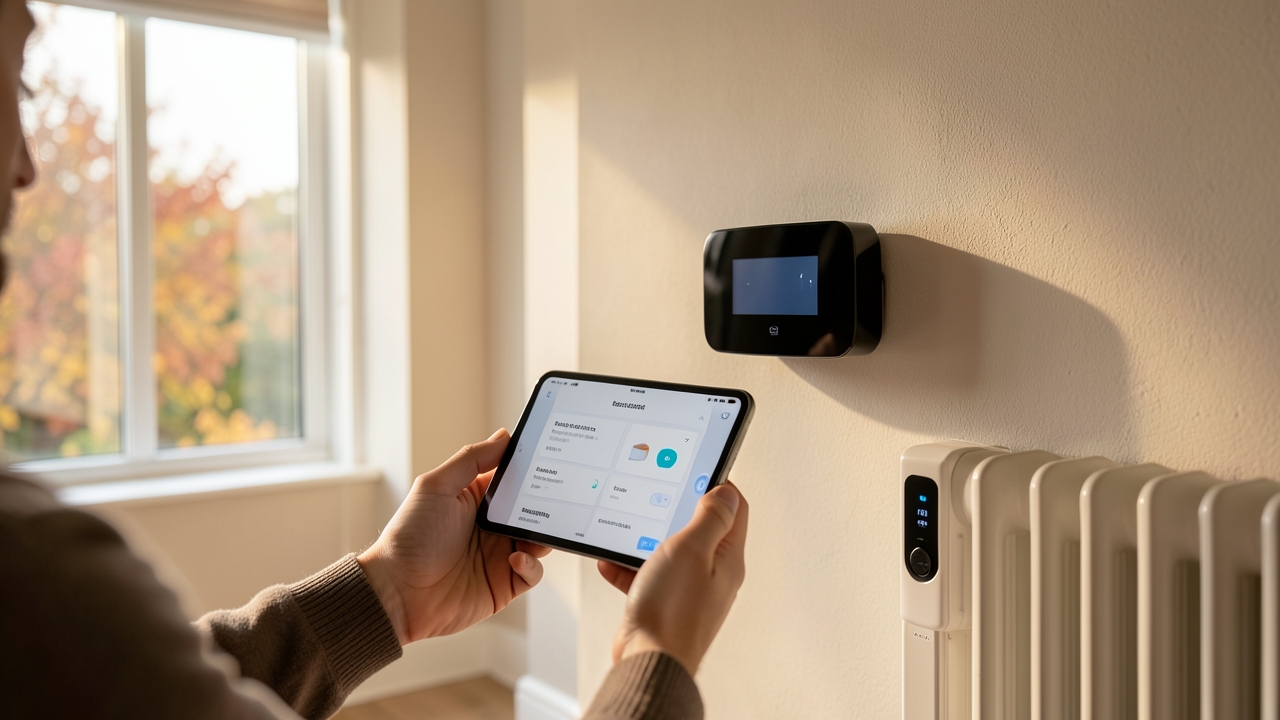
Getting Hive Matter Home Assistant control working is trickier than the spec sheets suggest. Neither Hive nor Nest ships a native Matter bridge for UK boilers. However, Matter 1.4 changed what a thermostat can expose, so you can still pull both systems into one local dashboard. This guide covers the bridges that actually work, the boiler wiring behind your wall, and how to zone a British home without lifting floorboards.
Expect roughly an afternoon of tinkering. Expect one hard decision too: keep the cloud, or replace the hub.
Matter 1.4 and UK Heating: What Actually Changed
Matter 1.4 arrived in late 2024 and widened the standard well beyond smart plugs and lamps. It added device types for heat pumps, water heaters, solar inverters and home batteries.
Thermostats gained better schedule and preset handling as well. Furthermore, multi-admin behaviour improved, which means one thermostat can answer to several ecosystems at once.
In practice, a Matter-certified thermostat can talk to Home Assistant, Apple Home, Alexa and Google simultaneously. Moreover, the commands travel over your own network. No vendor server sits in the middle, and your heating keeps running when broadband drops. Our Matter smart home setup guide covers the wider rollout if you are new to the standard.
Hive Matter Home Assistant Support in 2026: The Honest Answer
Hive Active Heating runs on a private Zigbee mesh that only the Hive Hub can read. That hub then relays everything to Centrica’s cloud servers.
Consequently, there is no official Hive Matter Home Assistant integration as of October 2026. Hive has not released a Matter bridge for UK hubs. It has not published a local API either.
Nest sits in a better position. Google exposes Nest thermostats to Matter through its Google Home hubs, including the Nest Hub (2nd gen). Therefore, a Nest thermostat can reach Home Assistant over Matter, but only while a Google hub stays powered and online.
Three realistic routes into Home Assistant
- Cloud bridge: a community Hive integration from HACS. Quick to set up, but it polls Hive servers every 30 seconds or so.
- Matter bridge via Google: pair the Nest thermostat with a Google Home hub, then share the Matter pairing code with Home Assistant.
- Hardware swap: replace the hub with a Matter-native thermostat such as tado° X or the Aqara Thermostat Hub W200 for genuine local control.
How to Bridge Hive into Home Assistant, Step by Step
Step 1: Prepare Home Assistant
Run Home Assistant OS 2026.x on a Home Assistant Green, a Yellow board or a Raspberry Pi 5. In addition, install the Matter Server add-on. Give your network working IPv6 and mDNS, because Matter relies on both. If you are starting from scratch, our Home Assistant UK setup guide walks through the basics.
Step 2: Install the Hive integration
Add the community Hive custom component through HACS, then sign in with your Hive account. Your thermostat, hot water and radiator valves appear as climate and sensor entities within a minute.
Note the limits. This route depends on Hive’s cloud, so scheduling breaks if Centrica changes its API. You also lose control during an outage.
Step 3: Re-expose the thermostat as Matter
Next, install the Home Assistant Matter Hub add-on. It wraps non-Matter entities, including your Hive thermostat, inside a virtual Matter bridge. Pair that bridge with Apple Home or Alexa using the generated code.
As a result, you get one thermostat in every app. Expect one to three seconds of lag, though, because each command still travels to the Hive cloud and back.
UK Boiler Wiring: What You Are Really Switching
Before you buy anything, understand the wiring centre. Most British homes use one of three layouts.
- S-plan: two 2-port zone valves, one for heating and one for hot water.
- Y-plan: a single 3-port mid-position valve, common in older installations.
- Combi: no cylinder, so the thermostat simply makes or breaks a call for heat.
That call for heat may be a 230V switched live or a volt-free (dry) contact. Check your boiler manual carefully, because mixing the two can damage the circuit board.
OpenTherm is the better option where your boiler supports it. It lets the boiler modulate flow temperature instead of cycling on and off. For example, Intergas, Ideal and Vaillant models accept OpenTherm with the correct adapter.
Finally, respect the rules. Gas Safe registration is a legal requirement for any work on gas appliance internals. Thermostat wiring itself is rarely notifiable under Part P, but new circuits are. When in doubt, call a qualified electrician.
Zoning Advice for UK Homes
Virtual zones with smart TRVs
You do not need new pipework to gain room-by-room control. Smart TRVs create virtual zones hydraulically. Each valve opens or closes its own radiator, and the boiler fires whenever any zone asks for heat. Our smart TRV buying guide compares the main UK brands.
Fit smart valves to bedrooms, studies and spare rooms. Meanwhile, leave one radiator permanently open or fit an automatic bypass valve. The pump always needs somewhere to push water.
When real zone valves are worth it
Proper zoning uses motorised valves and separate thermostats. It suits large or extended homes where upstairs and downstairs run on different schedules.
- Split a two-storey house into upstairs and downstairs zones.
- Keep the cylinder on its own hot water zone with a cylinder thermostat.
- Set flow temperature to 55-60°C for condensing efficiency.
One more UK rule matters here. Boiler Plus requires new gas boiler installations in England to include at least one efficiency measure. Load compensation, weather compensation, flue gas heat recovery and smart thermostats with automation all qualify. The GOV.UK Boiler Plus guidance sets out the full list.
What It Costs in 2026
- Hive Active Heating kit: around £180 to £250, plus £60-£80 for a Hive Hub.
- Hive radiator valve: roughly £45 each.
- Nest Learning Thermostat (4th gen): about £220-£250.
- tado° X Starter Kit: around £200-£300, and it speaks Matter natively.
- Home Assistant Green: £99, or a Raspberry Pi 5 build for £90-£120.
- Smart TRVs from Aqara or Sonoff: £25-£45 each.
Running costs matter more than hardware prices. The Energy Saving Trust estimates that smart heating controls can trim £70-£150 a year from a typical gas bill. With gas near 6p per kWh, that is a reasonable return on a £300-£600 project.
Should You Bridge or Replace?
Bridge Hive if you already own the kit and want dashboards, schedules and automations in one place. The cloud dependency remains, but setup takes an evening and costs nothing.
Replace it if local control is the real goal. A Matter-native thermostat removes the cloud entirely and keeps working during an internet outage.
Local control is not about avoiding apps. It is about your heating working exactly as you programmed it, even when the internet is down.
Have you bridged Hive or Nest into Home Assistant yet? Tell us which route worked in your home, and whether your boiler ever noticed the difference.