
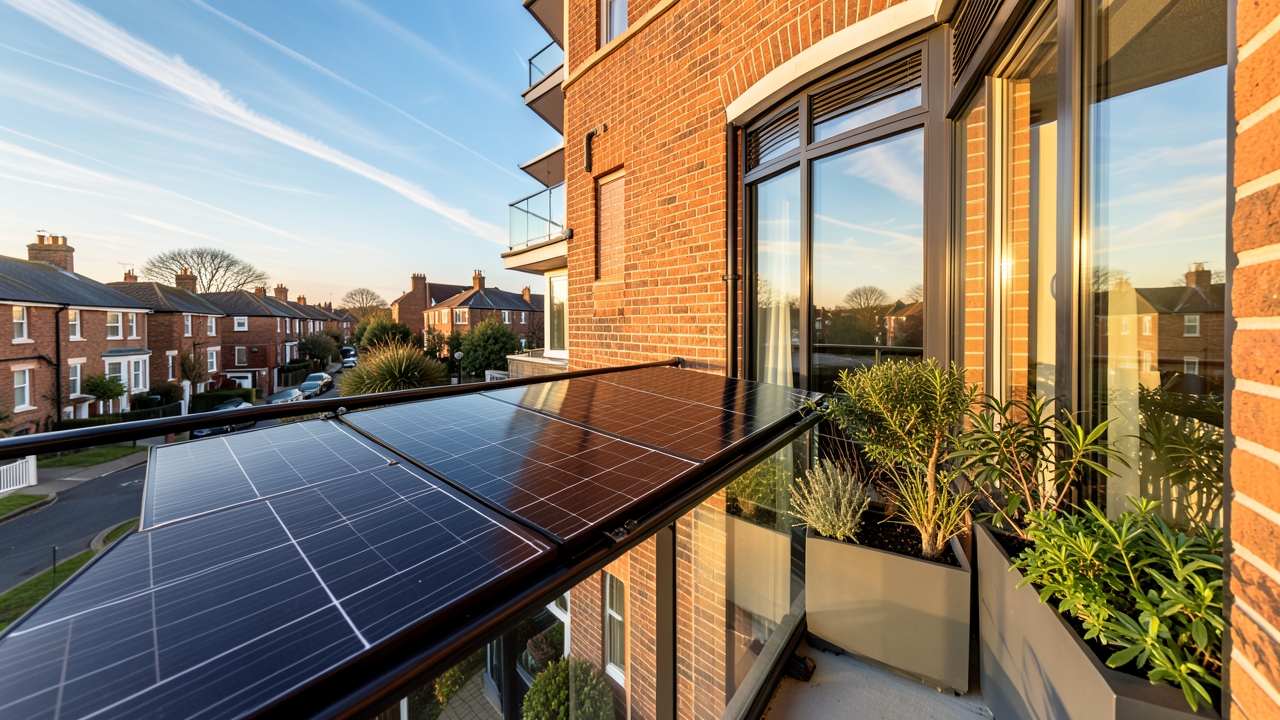
Picture this: you live in a flat, you pay ground rent, and you dream of slashing your electricity bills with balcony solar panels. Then reality hits. Do you even need permission? And if so, who do you ask? The topic of leasehold solar panel permission UK is one that confuses thousands of flat owners across the country. In this guide, we break down exactly where you stand legally, how to approach your freeholder, and what to do if they push back.
With energy prices remaining high in 2026 and balcony solar panels becoming more affordable, more leaseholders than ever want to go green. However, the path from desire to installation is rarely straightforward when a freeholder sits between you and your roof — or in this case, your balcony railing.
Understanding UK Leasehold Law and Solar Panels
Before we dive into practical steps, it helps to understand the legal framework. In England and Wales, most flats are sold as leasehold properties. This means you own the right to occupy your flat for a set period. The freeholder owns the building itself, including the exterior walls, communal areas, and often the balcony structure.
Under the Commonhold and Leasehold Reform Act 2002, leaseholders have certain rights to make alterations. However, solar panels — even small balcony-mounted systems — typically count as alterations to the building’s exterior appearance. This distinction matters enormously.
Furthermore, the Leasehold Reform (Ground Rent) Act 2022 reformed ground rents for new leases. Yet it did not fundamentally change the rules around exterior modifications. Therefore, the old permission-based system still applies for most existing leases in 2026.
What Your Lease Agreement Actually Says
Your first step is always to read your lease carefully. Most lease agreements contain clauses about:
- Alterations to the property (internal and external)
- Changes to the building’s appearance
- Fixing items to walls, railings, or windows
- Using the property for purposes other than residential
Many leases explicitly state that you must obtain the freeholder’s written consent before making any external changes. Some even list specific items that require permission. Consequently, ignoring these clauses could put you in breach of your lease — with potential legal consequences.
Do You Need Freeholder Permission for Balcony Solar Panels?
The short answer is: almost certainly, yes. Even if your balcony feels like your private space, the railing, balustrade, and external walls usually belong to the freeholder. Attaching solar panels to these structures constitutes a modification to the building.
However, there are important nuances. For example, freestanding balcony solar panels that sit on the floor of your balcony without being fixed to any structure may not require permission at all. These portable systems — often called plug-in solar panels — simply rest on the balcony surface and connect to your indoor socket via a standard plug.
Meanwhile, clamp-on systems that attach to the balcony railing almost always need consent. The freeholder can reasonably argue that drilling into, clamping onto, or modifying the railing alters the building’s exterior.
Freestanding vs Mounted: A Key Distinction
Here is a practical breakdown of the two main approaches:
Freestanding Plug-In Solar Panels
- Typically 300W to 800W systems
- Cost between £150 and £500
- No drilling or fixing required
- Connect via standard 3-pin plug
- Less likely to need freeholder consent
- Lower energy output than fixed systems
Clamp-On or Bolted Balcony Solar Panels
- Typically 800W to 2,000W systems
- Cost between £400 and £1,200
- Require fixing to railings or walls
- Higher energy output and efficiency
- Almost always require freeholder permission
- More permanent installation
For a deeper dive into your options, check out our guide to the best balcony solar panels available in the UK right now.
Common Freeholder Objections (With Case Studies)
Understanding why freeholders object helps you prepare a stronger application. Based on real-world situations across the UK, here are the most frequent objections.
Case Study 1: Aesthetic Concerns — Manchester
Sarah, a leaseholder in a converted Victorian mill in Manchester, applied for permission to install a 1,000W clamp-on solar panel system on her south-facing balcony. Her managing agent rejected the application, citing the building’s heritage status and the need to maintain a uniform appearance across all balconies.
Furthermore, the freeholder argued that individual solar panels on select balconies would create a patchwork appearance. Sarah eventually negotiated a compromise. She chose a slimline black panel that matched the dark metal railings. After submitting photos of the proposed system alongside a mockup, the freeholder granted conditional approval.
Case Study 2: Structural Concerns — London
In a 1960s-built council conversion in Hackney, Marcus wanted to mount a 1,500W panel array on his balcony. The freeholder’s surveyor raised concerns about the load-bearing capacity of the existing balustrade. The railing had not been designed to support additional weight.
As a result, Marcus had to commission a structural survey at his own expense — costing approximately £350. The survey confirmed that the balustrade could support an additional 25kg per metre. Since his panels weighed just 18kg per metre, permission was eventually granted. However, the process took four months.
Case Study 3: Insurance and Safety — Birmingham
Priya, a flat owner in a purpose-built block in Edgbaston, faced a different obstacle. Her freeholder’s insurance provider refused to cover the building if individual leaseholders installed electrical equipment on the exterior. The insurer cited fire risk and liability concerns.
Priya addressed this by providing an Electrical Installation Condition Report (EICR) for her proposed system and a certificate of compliance from a qualified installer. She also offered to sign a liability waiver. After three months of correspondence, the insurer added a clause to the building’s policy, and Priya received her permission.
How to Obtain Consent: A Step-by-Step Guide
If you have decided to go ahead, follow these steps to maximise your chances of success.
Step 1: Read Your Lease Thoroughly
Identify every clause related to alterations, exterior changes, and consent requirements. Note any specific approval processes mentioned. If your lease is unclear, consider taking it to a solicitor who specialises in leasehold property. This typically costs between £150 and £300 for a brief consultation.
Step 2: Put Your Request in Writing
Write a formal letter or email to your freeholder or managing agent. Include the following:
- A clear description of the panels you wish to install
- Dimensions and weight of the system
- How and where the panels will be fixed
- Photos or diagrams of the proposed installation
- A statement on how the panels benefit the building (reduced carbon footprint, increased property value)
- Details of the installer and any certifications they hold
- Confirmation that you will cover all costs
Step 3: Address Concerns Before They Arise
Proactively tackle the objections we covered earlier. For example, provide structural information, offer to use specific panel colours, or supply insurance documentation. The more complete your application, the harder it is for the freeholder to object on vague grounds.
Step 4: Be Patient but Persistent
Freeholders and managing agents are often slow to respond. Follow up every two weeks in writing. Keep a record of all communication. If you do not receive a response within 28 days, send a reminder citing the lease terms and noting the reasonable expectation of a reply.
Step 5: Consider Professional Help
If negotiations stall, a specialist leasehold solicitor or a property management consultant can help. Some companies now offer dedicated services for leaseholders seeking to install renewable energy systems. Costs typically range from £200 to £500 for advisory services.
What If Your Freeholder Refuses Permission?
A refusal does not necessarily mean the end of the road. However, your options depend on the reason for the refusal.
Firstly, if the freeholder provides a valid reason — such as structural inadequacy or planning restrictions — you may need to address those issues before reapplying. The UK Government’s guidance on planning permissions is worth reviewing if your building is listed or in a conservation area.
Secondly, if the refusal seems unreasonable, you can apply to the First-tier Tribunal (Property Chamber) under Section 168 of the Commonhold and Leasehold Reform Act 2002. This tribunal can order the freeholder to give consent if their refusal is deemed unreasonable. However, this process can take months and involve legal costs.
Meanwhile, consider the plug-in alternative. A freestanding solar panel system requires no structural modifications. If your freeholder objects to mounted panels, a plug-in system sidesteps the entire debate. While the output is lower, even a 600W system can save you between £50 and £80 per year on electricity in 2026.
The Cost Factor: Balcony Solar Panel Prices in the UK (2026)
Understanding the financial picture helps you make a stronger case to your freeholder and plan your own budget.
Equipment Costs
Balcony solar panel kits have become significantly more affordable in recent years. In 2026, typical prices in the UK are:
- 300W plug-in system: £150 to £250
- 600W plug-in system: £280 to £450
- 800W clamp-on system: £400 to £600
- 1,000W to 1,500W clamp-on system: £600 to £900
- 1,500W to 2,000W premium system: £900 to £1,200
Installation Costs
If you opt for a mounted system, professional installation typically costs between £150 and £400, depending on complexity. This includes securing the panels to the railing, running cabling safely into your flat, and connecting an inverter.
Potential Savings
A well-positioned 1,000W balcony solar system in the UK can generate between 800 and 1,000 kWh per year, depending on orientation and shading. At the current average electricity price of approximately 28p per kWh in 2026, that translates to savings of £224 to £280 annually. Consequently, most systems pay for themselves within three to five years.
For more information on sizing your system, read our complete guide on how much electricity balcony solar panels actually generate in UK conditions.
Planning Permission and Building Regulations
In most cases, small balcony solar panels fall under permitted development rights. This means you do not need planning permission from your local council. However, there are exceptions.
Permitted development rights do not apply to listed buildings or properties in conservation areas. In these cases, you will need full planning permission before installing any external solar panels. Furthermore, if your building is in Wales, different rules may apply under the Welsh planning system.
Building Regulations typically do not apply to small-scale solar PV installations on domestic balconies. However, if the system is hardwired into your property’s consumer unit rather than plug-in, you should ensure compliance with Part P (Electrical Safety).
Tips for a Successful Application
Based on the experiences of leaseholders across the UK, here are proven strategies for getting your solar panel application approved.
- Frame it as a communal benefit. Emphasise the environmental advantages for the entire building, not just your flat.
- Offer to share energy data. Some freeholders appreciate seeing real performance data from balcony solar installations.
- Propose a trial period. Suggest a 12-month pilot with a formal review at the end. This reduces the freeholder’s perceived risk.
- Use a reputable installer. Choose an installer certified by MCS (Microgeneration Certification Scheme). This reassures the freeholder about quality and safety.
- Get neighbours on board. If other leaseholders also want solar panels, submit a joint application. There is strength in numbers.
- Document everything. Keep copies of all correspondence, approvals, and certifications. This protects you if disputes arise later.
Conclusion: Know Your Rights, Then Take Action
Navigating leasehold solar panel permission UK rules can feel daunting, but it is far from impossible. Thousands of flat owners across the country have successfully installed balcony solar panels with their freeholder’s consent. The key is preparation, communication, and persistence.
Start by reading your lease, understanding the objections, and building a thorough application. If mounted panels prove too complicated, remember that freestanding plug-in systems offer a practical and often permission-free alternative. Either way, the financial and environmental rewards of balcony solar are well worth the effort in 2026.
Have you successfully obtained leaseholder permission for solar panels? Or are you currently navigating the process? Share your experience in the comments below — your story could help another leaseholder take the leap.
Balcony Solar Savings Calculator
See your annual savings, export income and payback time — free, no sign-up.