
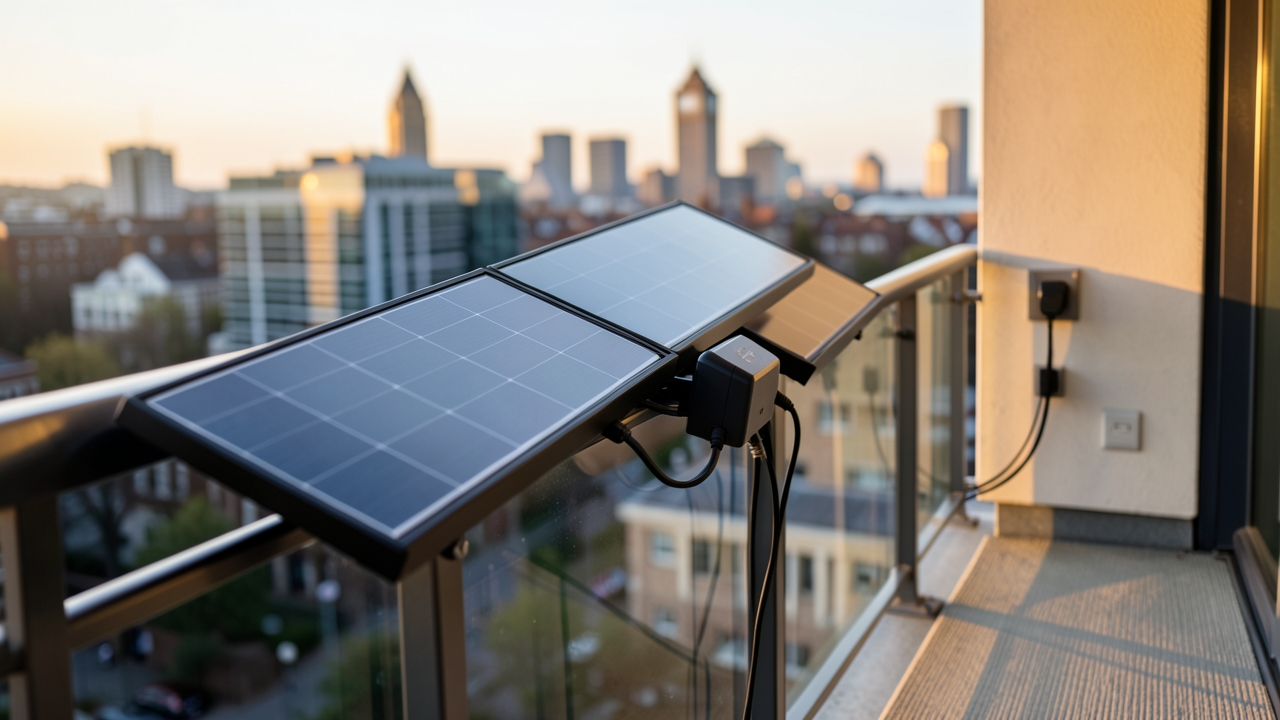
Is plug-in solar legal in the UK? The short answer is yes. No UK law bans you from plugging a solar panel into a 13A socket. However, whether your kit is safe, compliant and insurable is a far more interesting question — and it is the one most buyers never ask before ordering.
This guide cuts through the noise. We look at what BS 7671 actually requires, when Part P notification applies, and how insurers, lenders and landlords typically respond to a panel bolted to a balcony railing.
Is Plug-In Solar Legal in the UK? The Short Answer
There is no ban on plug-in solar. A microinverter system that feeds a standard 13A socket behaves much like any other plug-in appliance. Consequently, the general law does not require you to notify anyone before you connect it.
However, three separate rulebooks still apply:
- BS 7671 — the IET Wiring Regulations, which govern how the installation is designed and protected.
- Part P — the Building Regulations route for electrical work in dwellings in England and Wales.
- Engineering Recommendation G98 — the grid connection rules for any generation attached to the distribution network.
In addition, your tenancy agreement, mortgage conditions and home insurance policy may each add their own terms. Therefore, legality is not a single yes or no — it is a stack of obligations.
What the 2026 Wiring Regulations Say About a 13A Socket
BS 7671 Has No Plug-In Solar Section — Yet
At the time of writing, the current edition is BS 7671:2018+A3:2024. It contains no dedicated section for plug-in balcony kits. Instead, designers borrow from Section 712, which covers solar photovoltaic power supply systems.
Section 712 requires a means of isolation, protection against DC fault currents, clear labelling and a system that shuts down safely when the grid fails. Furthermore, the IET has signalled that a 19th Edition is in preparation. Always check the status before buying a kit that claims compliance with a specific amendment.
The Anti-Islanding Rule Matters Most
A compliant microinverter must stop exporting within milliseconds of a power cut. This is called anti-islanding, and G98-certified units are tested for it. If an inverter keeps pushing power into a dead circuit, it endangers the engineers repairing the line.
Therefore, always look for a current G98 certificate of compliance. Cheap imports frequently lack one. A kit without it is not illegal to own, but it is not safe to connect.
RCD Protection and the 13A Plug
Most UK socket circuits sit behind a 30mA RCD or RCBO. That is a reasonable starting point. However, PV inverters can inject DC residual current, which may blind a Type AC device. As a result, a Type A RCD is the sensible minimum, and many electricians now specify Type A with 6mA DC detection.
Also inspect the plug. A UK plug-in kit should arrive with a fused 13A plug and a short, heavy-duty flex. Anything supplied with a European Schuko plug and a travel adaptor should go straight back.
Is It Acceptable to Feed a Socket Instead of a Dedicated Circuit?
Strictly speaking, BS 7671 does not prohibit feeding a circuit through a plug. In practice, the socket circuit was never designed with two sources of supply in mind. Consequently, the safest approach is a dedicated radial with its own isolation, or a single socket used only for the panel.
For example, avoid sharing the panel socket with a washing machine on the same double outlet. Also avoid a spur that already feeds a tumble dryer. Load diversity is not guaranteed, and the plug fuse will not protect the cable buried behind the wall.
Where Part P Notification Kicks In
Part P of the Building Regulations applies to electrical installations in dwellings in England and Wales. It is widely misunderstood. Part P does not mean every electrical job needs a council inspection.
What Counts as Notifiable Work in England
Since the 2013 changes, notifiable work in England is a short list:
- Installing a new circuit, including a dedicated solar radial.
- Replacing a consumer unit or distribution board.
- Any work inside a special location, such as a bathroom, shower room or pool zone.
- Adding or altering earthing and main protective bonding.
Plugging a panel into an existing socket is not notifiable. However, adding an outdoor weatherproof socket or a new circuit is. In that case you must either use a registered competent person, such as a NICEIC or NAPIT member, or notify your local building control body before work begins. The full scope sits in Approved Document P on GOV.UK.
Wales, Scotland and Northern Ireland
Wales takes a stricter view of Part P, with a wider range of notifiable work. Meanwhile, Scotland operates under the Building (Scotland) Regulations and uses a building warrant system. Northern Ireland runs its own building control regime. Therefore, always check the rules for your nation, not just for England.
Will Your Insurer, Mortgage Lender or Landlord Object?
Home Insurance
Most standard home policies require electrical work to be carried out by a competent person. A plug-in kit is a grey area, so a quick phone call is worth ten minutes. Ask specifically whether a DIY plug-in solar system is covered for fire damage.
In addition, declare the panel under your contents or fixtures cover. A 400W panel is worth £150–£250 on its own. If it is bolted to a balcony, an insurer may treat it as a fixture.
Mortgage Lenders
Lenders rarely object to a plug-in appliance. However, they do object to unapproved structural alterations. Drilling into a listed façade, or fixing brackets to a shared balcony slab, can trigger a consent issue under the lease.
Consequently, keep the installation reversible. Freestanding A-frame mounts or weighted ballast bases avoid drilling entirely, and they keep your freeholder on side.
Landlords and Renters
Most assured shorthold tenancies prohibit alterations without written consent. A plug-in kit is not usually an alteration, but a wall bracket certainly is. As a result, renters should ask in writing and choose a freestanding mount wherever possible.
Also consider the meter. If your flat has a prepayment meter or a shared supply, agree in advance how any generation is credited. It is an awkward conversation to have after the fact.
Safe Installation Checklist for Plug-In Solar
Work through this list before you connect anything. Our balcony solar panel installation guide walks through the physical mounting in more detail.
- Confirm the microinverter holds a current G98 certificate from an accredited test house.
- Check the kit is IP65 or better, with MC4 connectors and UV-rated cable.
- Verify the socket circuit has 30mA RCD protection and ideally a Type A device.
- Use a single socket dedicated to the panel, not a shared double socket.
- Mount panels at a safe angle and secure them against wind uplift at 60 mph or more.
- Keep the inverter shaded and ventilated — heat reduces output and shortens lifespan.
- Route cables away from standing water, gutters and openable windows.
- Fit a warning notice at the consumer unit stating that a PV system is connected.
- Notify your DNO under G98, usually within 28 days of commissioning.
- Record serial numbers and take dated photographs for your insurer.
If any step feels uncertain, pay a qualified electrician for an hour of inspection. At £60–£120, that is cheap peace of mind.
What a Plug-In Solar Kit Costs and Saves in 2026
Prices have fallen sharply. Expect to pay around £350–£550 for a single 400W panel kit, £550–£900 for an 800W dual-panel set-up, and £900–£1,300 for a 1,200W arrangement with mounting hardware. Our round-up of the best plug-in solar kits in the UK covers the models that ship with valid G98 paperwork.
Output is modest but real. A well-sited 800W system in southern England generates roughly 650–750 kWh a year. With electricity at around 25p per kWh and typical self-consumption of 50–70%, that translates to savings of £90–£180 annually.
Therefore, payback sits at roughly five to seven years. That is respectable for a technology you can unplug and take with you when you move. The Energy Saving Trust guidance on solar panels is a useful sanity check on yields.
Do Not Count on Export Payments
You will not receive Smart Export Guarantee payments. Most SEG suppliers require an MCS-certified installation, and plug-in kits do not qualify. Consequently, size the system for self-consumption, not for export income.
What About the DNO Notification?
Under G98, any grid-connected generation up to 16A per phase must be notified to your distribution network operator. For small kits this is a short form rather than a full application. Nevertheless, it is a condition of your connection agreement, so do not skip it.
Treat the paperwork as part of the product. A G98 certificate, a Type A RCD and a written note to your insurer cost nothing extra — and they are what separate a clever gadget from a claim rejected at the worst possible moment.
The Verdict: Legal, But Only If You Do It Properly
Plug-in solar is legal in the UK in 2026. You can buy a kit, mount it on a balcony and plug it into a socket without breaking any law. However, the moment you drill into shared fabric, add a new circuit or skip the G98 notification, you move from grey area into genuine risk.
Start with a certified microinverter, a single dedicated socket and a phone call to your insurer. Then work up. If you want a broader overview of what these kits can do, read our guide to balcony solar panels in the UK.
Have you already plugged a panel into your own socket — and did your insurer or landlord ask any questions? Share your experience in the comments below.