
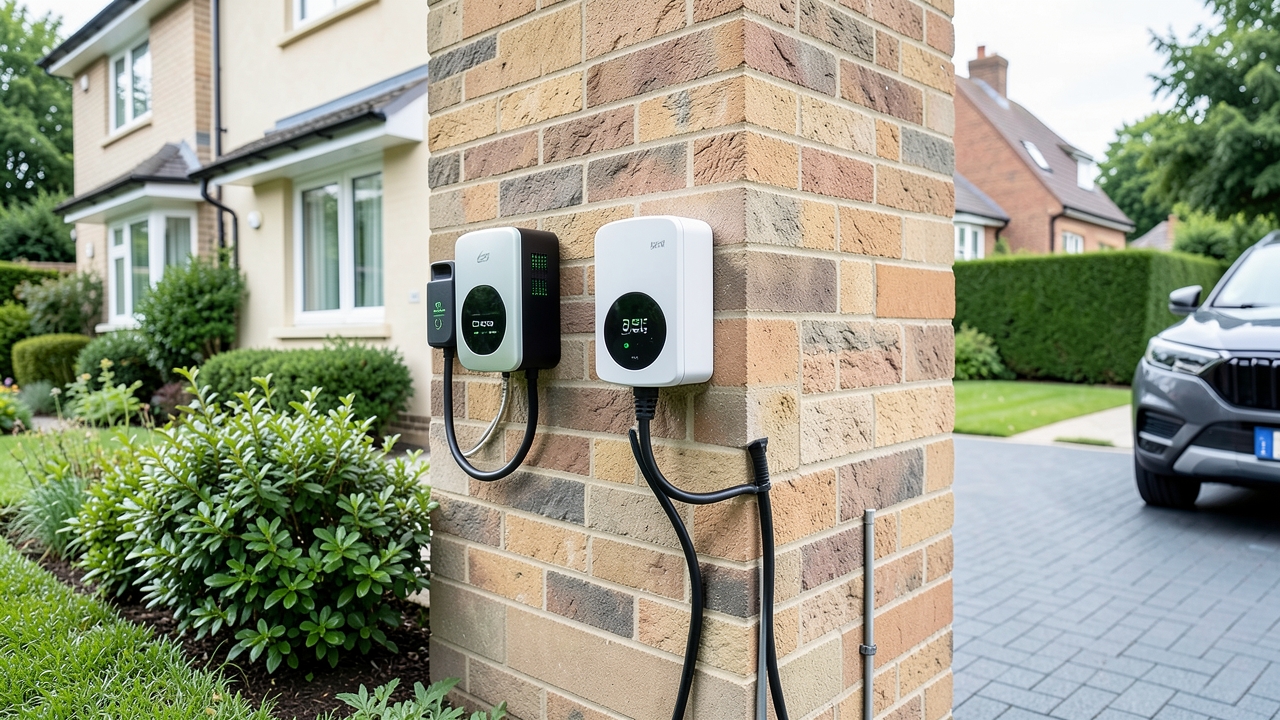
Choosing the right home EV charger represents one of the most important decisions for electric vehicle owners in the United Kingdom. With the market expanding rapidly, understanding UK EV charger costs 2026 across leading brands helps you make a smart, informed choice. In this detailed comparison, we break down the total costs of ownership for three top manufacturers: Wallbox, Ohme, and Pod Point.
By 2026, over 1.2 million UK households now charge their electric vehicles at home. Therefore, getting the right charger at the right price matters more than ever. Furthermore, government incentives, competitive hardware pricing, and smart tariff integration all influence your final spend. This guide covers hardware costs, professional installation fees, and estimated running expenses for each brand.
Whether you drive a compact city EV or a long-range family SUV, this breakdown gives you the facts you need to decide. We reference real 2026 market data, UK-specific pricing in pounds sterling, and practical advice for British homeowners.
Why Your Choice of EV Charger Matters in 2026
The UK government continues to push for electric vehicle adoption. In fact, the GOV.UK zero-emission vehicle strategy targets all new car sales to be fully electric by 2035. As a result, more drivers need reliable, affordable home charging solutions.
However, not all chargers are equal. Different brands offer varying power outputs, smart features, build quality, and warranty terms. Meanwhile, installation complexity can differ significantly depending on your property type and existing electrical setup.
Understanding the full picture — not just the sticker price — saves you hundreds of pounds over the life of your charger. Consequently, we examine each cost component separately before comparing all three brands side by side.
Wallbox EV Charger Costs in 2026
Wallbox has established itself as a premium player in the UK home charging market. The Spanish manufacturer offers a range of chargers that combine sleek design with advanced smart features. For most UK homeowners, the Wallbox Pulsar Plus remains the most popular choice.
Wallbox Hardware Prices
The Wallbox Pulsar Plus 7kW costs approximately £549 in 2026. This single-phase charger delivers up to 32 amps and includes built-in Wi-Fi and Bluetooth connectivity. For those wanting a premium experience, the Wallbox Commander 2 commands a higher price of around £799, featuring a full-colour touchscreen display.
In addition, Wallbox offers the Pulsar Max as a mid-range option at roughly £629. All models carry an IP65 weather resistance rating, making them suitable for outdoor installation across the British climate.
Wallbox Installation Costs
Professional installation through Wallbox’s certified installer network typically costs between £350 and £500. The final price depends on several factors. For example, the distance between your consumer unit and the charger mounting point affects cable requirements.
Additionally, properties needing a new circuit or consumer unit upgrade may face charges at the higher end. Most installations complete within two to four hours. Furthermore, all Wallbox installers must hold current NICEIC or SELECT registration.
Total Wallbox Cost Summary
- Pulsar Plus 7kW: £549 hardware + £400 average installation = £949 total
- Pulsar Max 7kW: £629 hardware + £400 average installation = £1,029 total
- Commander 2 7kW: £799 hardware + £400 average installation = £1,199 total
Ohme EV Charger Costs in 2026
Ohme has rapidly grown its UK presence with chargers designed specifically for smart energy integration. The British-founded company focuses heavily on software that automatically optimises charging for the cheapest electricity rates. For UK drivers on time-of-use tariffs, this represents a significant advantage.
Ohme Hardware Prices
The Ohme Home Pro 7kW charger retails at approximately £449 in 2026. This makes it one of the most affordable smart chargers available. The Home Pro features a simple three-LED interface and connects via 4G cellular, eliminating the need for home Wi-Fi.
Meanwhile, the Ohme ePod offers a more compact design at around £599. The ePod suits properties with limited wall space and provides the same smart charging capabilities as the Home Pro. Both models support dynamic load balancing to protect your home’s electrical supply.
Ohme Installation Costs
Ohme partners with a network of approved UK installers. Standard installation costs range from £300 to £450. Ohme frequently offers bundled deals that combine hardware and installation at a reduced combined price. In 2026, several providers advertise complete Ohme Home Pro packages from as little as £699 including installation.
Furthermore, Ohme’s 4G connectivity means no additional costs for smart home network integration. This simplicity particularly benefits rental properties and flats where Wi-Fi access may be limited.
Total Ohme Cost Summary
- Home Pro 7kW: £449 hardware + £375 average installation = £824 total
- ePod 7kW: £599 hardware + £375 average installation = £974 total
Pod Point EV Charger Costs in 2026
Pod Point operates one of the UK’s largest public charging networks and brings that experience to home chargers. The company’s Solo 3 range targets homeowners seeking reliability backed by a well-established brand. Pod Point also offers strong after-sales support through its UK-based customer service team.
Pod Point Hardware Prices
The Pod Point Solo 3 7kW retails at approximately £599 in 2026. This charger includes Wi-Fi connectivity, a built-in LED charge indicator, and a robust weatherproof design rated to IP66. For homeowners wanting maximum power, the Pod Point Solo 3 22kW three-phase model costs around £849.
In addition, Pod Point frequently bundles hardware with installation as a single package. This approach simplifies purchasing and often delivers better value than buying separately. The 22kW model, however, requires a three-phase electrical supply, which most UK domestic properties lack.
Pod Point Installation Costs
Pod Point’s own installation service charges between £350 and £500 for standard domestic setups. The company handles all OZEV grant applications on your behalf where eligible. On the other hand, using an independent installer may reduce costs but could affect your warranty.
Standard installations typically require a dedicated 32-amp circuit from your consumer unit. Properties with older fuse boxes may need an upgrade first, adding approximately £150 to £300 to the total cost.
Total Pod Point Cost Summary
- Solo 3 7kW: £599 hardware + £425 average installation = £1,024 total
- Solo 3 22kW: £849 hardware + £500 average installation = £1,349 total
Head-to-Head Cost Comparison
Now let us compare the three brands side by side. The following table focuses on the most popular 7kW single-phase models, which suit the vast majority of UK homes.
- Wallbox Pulsar Plus 7kW: £949 total — premium design, extensive smart features
- Ohme Home Pro 7kW: £824 total — best value, automatic tariff optimisation
- Pod Point Solo 3 7kW: £1,024 total — reliable brand, strong customer support
As you can see, the Ohme Home Pro represents the lowest entry point at £824. However, the Wallbox Pulsar Plus offers superior build quality and a companion app with more detailed energy insights. Meanwhile, Pod Point’s Solo 3 sits at the premium end but delivers excellent reliability and UK-based support.
For context, the average UK home charger installation in 2026 costs between £800 and £1,200 all in, according to data from the Energy Saving Trust. All three brands fall within or below this national average for their base 7kW models.
Running Costs: What You Will Pay Per Mile
Hardware and installation represent only the initial investment. The ongoing cost of charging your EV matters equally over the life of the charger. Fortunately, home charging remains significantly cheaper than public charging or petrol and diesel.
At the UK’s average electricity rate of 24.5p per kWh in 2026, charging a typical EV from empty to full (60kWh battery) costs approximately £14.70. This provides roughly 200 miles of range. Therefore, home charging costs about 7.4p per mile — compared to 15p to 20p per mile for petrol vehicles.
Smart Tariff Savings with Ohme
Ohme’s automatic tariff integration can reduce your running costs further. For example, drivers on Octopus Energy’s Intelligent Go tariff pay just 7.5p per kWh during off-peak hours. Consequently, a full charge drops to only £4.50 — that is just 2.3p per mile.
Wallbox and Pod Point also support scheduled charging through their respective apps. However, Ohme’s system operates entirely automatically, switching between tariff rates without manual input. Over a typical year of 8,000 miles, smart tariff optimisation could save UK drivers between £300 and £500.
Annual Running Cost Comparison
Assuming 8,000 miles per year and a typical EV efficiency of 3.5 miles per kWh:
- Standard tariff (24.5p/kWh): approximately £560 per year
- Smart tariff with Ohme (avg 12p/kWh): approximately £274 per year
- Scheduled charging with Wallbox/Pod Point (avg 15p/kWh): approximately £343 per year
Government Grants and Financial Incentives
The UK government no longer offers the £350 OZEV home charger grant that ended in 2022. However, other financial support remains available for certain groups in 2026.
The EV Chargepoint Grant provides up to £350 towards installation costs for flat owners, rental tenants, and residents of shared-ownership properties. Eligibility depends on your housing situation and vehicle ownership. Furthermore, some local councils run additional schemes — it is always worth checking with your council directly.
In addition, if you install solar panels alongside your EV charger, you can benefit from the Smart Export Guarantee (SEG). This scheme pays you for excess solar energy exported back to the grid. Combining balcony solar panels with home EV charging creates an exceptionally cost-effective energy ecosystem.
Warranty and After-Sales Support
Warranty coverage varies across the three brands and represents an important factor in total ownership costs.
- Wallbox: 3-year standard warranty, extendable to 5 years with registration
- Ohme: 3-year standard warranty, UK-based telephone support
- Pod Point: 3-year standard warranty, extended 5-year option available
All three brands offer UK-based customer support, which proves essential when you need rapid assistance. Furthermore, each maintains a network of OZEV-approved installers for both new installations and servicing.
Which EV Charger Offers the Best Value in 2026?
The answer depends on your priorities as a driver and homeowner. If you want the lowest upfront cost and automatic energy savings, the Ohme Home Pro delivers outstanding value at £824 all in. Its smart tariff integration alone could save you hundreds over the charger’s lifetime.
On the other hand, the Wallbox Pulsar Plus appeals to those who prioritise design quality, a polished app experience, and detailed energy monitoring. At £949, it costs more upfront but offers a premium ownership experience.
Meanwhile, the Pod Point Solo 3 suits homeowners who value brand reliability and comprehensive UK support. At £1,024, it carries a premium, but Pod Point’s established network and customer service provide genuine peace of mind.
Additional Considerations for UK Homeowners
Several practical factors influence your final choice beyond the charger itself.
Property Type
Detached and semi-detached homes present the simplest installation scenarios. Terraced houses and flats may face additional challenges, including shared parking access or longer cable runs. In these situations, Ohme’s compact ePod or a wall-mounted Wallbox Pulsar Plus may be more practical choices.
Electrical Capacity
All three brands offer dynamic load balancing as standard. This feature automatically adjusts charging speed to prevent overloading your home’s electrical supply. However, older properties with a 60-amp supply may need a consumer unit upgrade before installation proceeds.
Future-Proofing
Vehicle-to-grid (V2G) technology is expected to reach mainstream UK availability by 2028. Both Wallbox and Pod Point have announced V2G-compatible hardware in development. Investing in a charger from a brand actively developing V2G could future-proof your setup.
Conclusion: Making Your Decision
Understanding UK EV charger costs 2026 goes well beyond the initial purchase price. When you factor in installation, running expenses, smart tariff savings, and warranty coverage, each brand offers distinct advantages. The total three-year cost of ownership ranges from approximately £1,646 for the Ohme Home Pro to £2,093 for the Pod Point Solo 3.
Take time to assess your specific needs — property layout, electrical capacity, daily mileage, and energy tariff — before committing. A charger that perfectly suits your situation will deliver the best return on investment over its lifetime.
Have you already chosen one of these three brands, or are you still comparing? Share your experiences or questions in the comments below — we would love to hear what influenced your decision.