
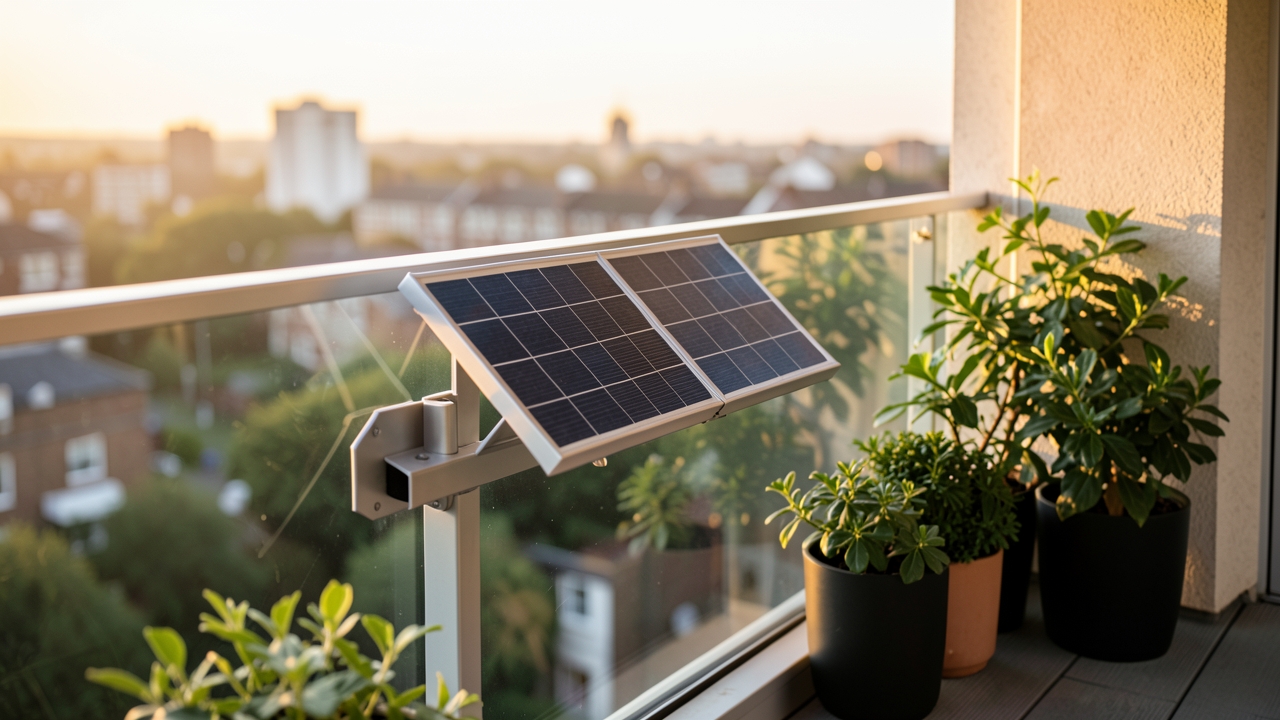
Can you install UK rented flat balcony solar without landlord consent? In most cases, the honest answer is no. Your tenancy agreement almost certainly requires written permission first. However, the picture in 2026 is more nuanced than many tenants assume. Understanding your rights and your landlord’s obligations can turn a flat refusal into a workable compromise.
This guide explains where the law sits, whether plug-in solar counts as permitted development, and how to negotiate. Furthermore, it covers realistic costs, savings and the safety rules that tenants must respect.
Do You Need Landlord Consent for UK Rented Flat Balcony Solar?
Yes, in nearly every case. A balcony usually forms part of the property you rent. Even so, the external wall, the railings and the building fabric almost always belong to the landlord or the freeholder. Consequently, fixing anything to them counts as an alteration.
Assured shorthold tenancies typically ban alterations without consent. That includes drilling, cable routing and permanent brackets. A freestanding kit is a grey area, but it still occupies the balcony. Therefore, ask before you buy anything.
What the 2026 Renewable Energy Regulations Actually Cover
The government consulted on plug-in solar during 2025. Since then, 2026 guidance has focused mainly on product safety and grid connection. For example, kits should meet BS 7671 wiring rules and use an inverter certified to EREC G98.
However, these rules govern how a system is built, not who may install one. In other words, a fully compliant kit is still an alteration to your landlord’s property. As a result, you need consent regardless of the product standard. Check the latest position in the GOV.UK planning guidance before you order.
Is Plug-In Solar a Permitted Development?
Generally, no. Permitted development rights for solar panels under Part 14 Class A apply to dwellinghouses. Flats and maisonettes are excluded from most of these rights. In addition, flat owners rarely control the external walls or the roof.
Some blocks also sit in conservation areas or carry listed status. Therefore, planning permission may be needed on top of landlord consent. These are two separate approvals, and you may need both. Our balcony solar panel guide for UK homes explains the planning basics in more detail.
Tenant Rights and Landlord Obligations in 2026
Tenancy law is not on your side here. An assured tenancy gives you the right to live in the property, not to change it. Meanwhile, the Renters’ Rights Act has strengthened security and ended no-fault evictions. Even so, it does not create a right to install solar.
Leaseholders have slightly more leverage. Under section 19 of the Landlord and Tenant Act 1927, consent to alterations cannot be unreasonably withheld. Therefore, a blanket refusal with no explanation is far weaker than a considered one.
- Your landlord must keep the structure and exterior in repair under the Landlord and Tenant Act 1985.
- You must not damage the property or breach your tenancy terms.
- Your landlord cannot refuse consent on discriminatory grounds.
- Any refusal should be reasonable, and ideally given to you in writing.
What a Balcony Solar Kit Costs and Saves in 2026
Prices have fallen sharply over the past two years. A 400W single-panel plug-in kit now costs around £280 to £450. Furthermore, an 800W two-panel set with a micro-inverter sits between £550 and £900.
- 400W single panel kit: £280 to £450
- 800W twin panel kit: £550 to £900
- Freestanding brackets and ballast: £60 to £150
- Optional battery storage: £400 to £900
- Plug-in energy monitor: £40 to £90
An 800W system on a south-facing balcony generates roughly 600 to 700 kWh a year. At around 26p per kWh, that saves £155 to £180 annually. Consequently, payback lands between four and six years.
On the other hand, you cannot claim export payments for plug-in solar. Any unused electricity flows to the grid for free. A small battery, therefore, improves the maths for households that are out all day. Compare current models in our round-up of the best balcony solar kits in the UK.
How to Negotiate With Your Landlord
Most refusals are about risk, not ideology. Remove the risk and you improve your chances dramatically. Here is a practical approach that works well for tenants.
- Write, never ask verbally. Email creates a clear record for both sides.
- Lead with a freestanding design that needs no drilling or cable holes.
- Confirm the system is under 800W and certified to EREC G98.
- Offer a temporary licence to alter, reversed at the end of the tenancy.
- Share the manufacturer datasheet and your installer’s credentials.
- Confirm you will add the kit to your contents insurance.
- Suggest a six-month trial with a review date attached.
In addition, offer to make the building look better, not worse. Neat cable trunking and matching mount colours matter far more than tenants expect. Landlords care about appearance, resale value and managing agent approval.
I would like to install a freestanding 800W plug-in solar system on the balcony. It requires no drilling and no changes to the building. I will remove it and restore the balcony at the end of my tenancy. Could we agree a licence to alter on those terms?
That short message works because it answers the three questions every landlord asks. What will it look like? What could go wrong? And what happens when you leave? Get those right and a yes becomes far more likely.
Safety, Insurance and Fire Rules You Must Respect
Balconies are often the only escape route from a flat. As a result, blocking them is a serious fire risk. Never store panels, batteries or cables where they obstruct your exit route.
Plug the inverter into a dedicated socket rather than an extension lead. Furthermore, lithium batteries should never be charged in direct sunlight or on an escape path. Tell your contents insurer and the managing agent in writing before installation.
The Energy Saving Trust offers independent advice on solar panel performance and savings. Their figures are a useful reality check against optimistic sales claims.
Alternatives If Your Landlord Refuses
A refusal is not the end of the road. There are still practical ways to cut your bills and your carbon footprint as a renter.
- Switch to a green tariff or a time-of-use tariff and shift usage to cheap hours.
- Join a community solar scheme or a solar subscription service.
- Use a plug-in energy monitor to find hidden waste, which often saves 5 to 10 per cent.
- Ask for a plug-in solar clause at your next renewal or rent review.
- Consider newer build-to-rent blocks where the freeholder already permits balcony solar.
Meanwhile, keep all your documentation. If you move to a landlord who says yes, your proposal is already written and costed. See our guide to plug-in solar rules in the UK for the technical requirements.
So, can you install UK rented flat balcony solar without consent? Legally, no, but a well-prepared request changes the conversation entirely. Focus on freestanding kit, zero damage and full removal at the end of your tenancy. Would your landlord really refuse that? Tell us in the comments whether your request was approved, and what tipped the balance.