
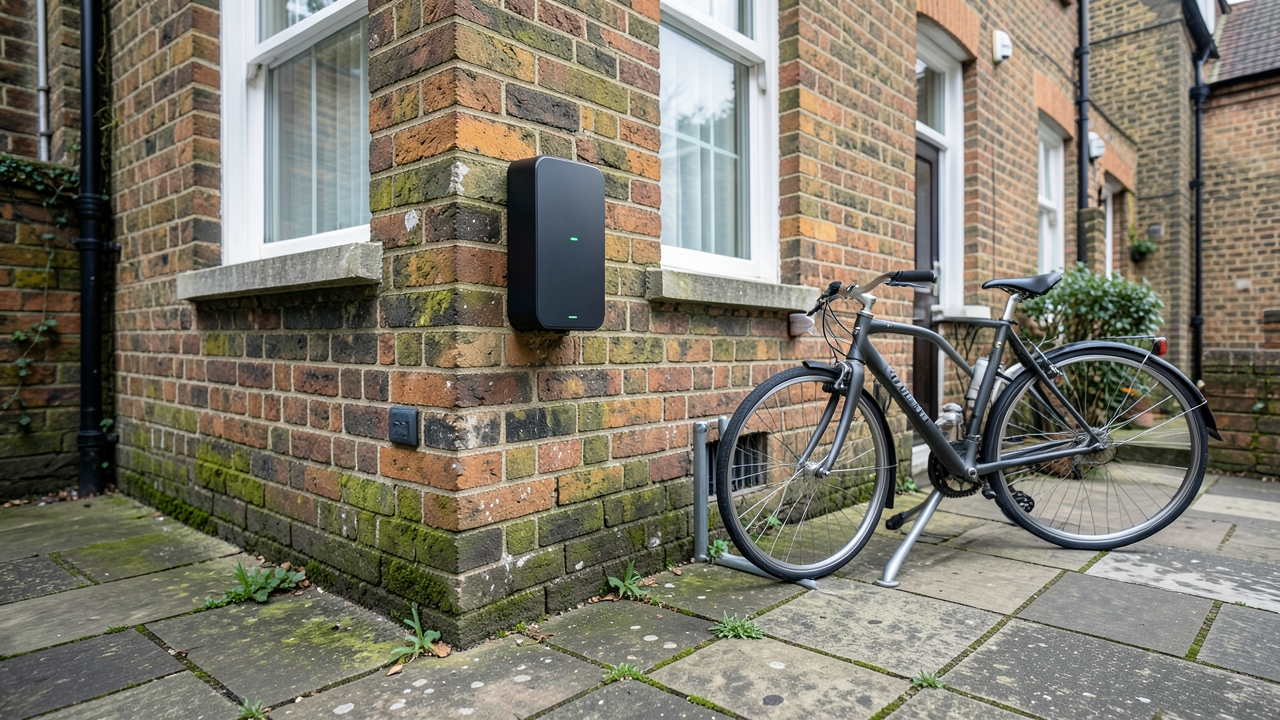
Installing a home EV charger is a key step for UK electric vehicle owners, and the Wallbox Pulsar Plus is a top choice. However, terraced houses present unique challenges like limited space and older wiring. This guide covers a successful Wallbox Pulsar Plus installation UK for typical terraced properties in 2026.
Furthermore, with the UK government pushing for EV adoption, proper installation is crucial for safety and efficiency. Let’s break down the process step by step.
Understanding the Wallbox Pulsar Plus
The Wallbox Pulsar Plus is a compact, smart 7kW (kilowatt) home charger. It’s designed for the UK market and works well with all EVs. Its small footprint is ideal for tight spaces.
Moreover, it features Wi-Fi connectivity and the MyWallbox app. This allows you to schedule charging for off-peak electricity rates. You can monitor energy usage and even connect it to solar panels if you have them.
Pre-Installation Assessment for Terraced Homes
Before any installation begins, a thorough assessment is vital. This ensures a safe and compliant setup in your specific home.
Surveying Space and Access
Terraced houses often have narrow side paths or no off-street parking. Installation on the front or rear elevation is common. Your installer must check for:
- Clear mounting space at least 1 metre above ground level.
- Safe cable routing from the consumer unit (fuse box) to the charger location.
- Potential obstacles like drainpipes, windows, or security lights.
Electrical Supply Check
Older terraced homes may have outdated wiring. A qualified electrician must inspect your consumer unit and supply. The Wallbox Pulsar Plus requires a minimum 45A supply, which is standard, but the circuit must be dedicated.
Additionally, they will confirm if an earth rod is needed for your installation. This is often the case for properties without an outdoor metallic water pipe.
Step-by-Step Wallbox Pulsar Plus Installation UK Process
Important Note: By law, EV charger installation in the UK must be carried out or certified by a registered electrician. Always use an OLEV-approved installer.
Step 1: Grant and Permission Check
Check your eligibility for the OZEV (Office for Zero Emission Vehicles) grant. In 2026, the Electric Vehicle Homecharge Scheme (EVHS) may still offer support, typically around £350 off installation costs. Your installer will usually handle this application.
Furthermore, if you live in a Conservation Area or have a listed building, you may need planning permission. Contact your local council early to avoid delays.
Step 2: Mounting the Charger
The installer will choose a suitable wall, often the front-facing brickwork. They use heavy-duty fixings to secure the Wallbox Pulsar Plus unit. The location must allow easy access to the car’s charging port.
Step 3: Running the Cable
This is often the most challenging part in a terraced house. The electrician will run an armoured cable from your consumer unit to the charger. They may:
- Go through the loft and down through an external wall.
- Run a neat, clipped cable along the outside wall.
- Use a mini trench for a short run if there’s a small garden.
Step 4: Electrical Connection and Testing
The electrician will isolate the power, connect the cable to a new circuit breaker, and link it to the charger. They perform rigorous tests on insulation resistance, earth continuity, and loop impedance. This ensures compliance with BS 7671 (the IET Wiring Regulations).
Step 5: Commissioning and Setup
Once installed, the charger is powered on. The installer helps you connect it to the MyWallbox app via Wi-Fi. They will explain how to set charging schedules to benefit from cheaper tariffs.
Tackling Common Terraced House Challenges
Space and aesthetics are often concerns. Fortunately, modern installers have solutions.
Limited Front Space
If you have no rear access, a front installation is possible. The charger can be mounted discreetly. Some installers offer discreet colour options or cable management to maintain your home’s appearance.
Off-Street Parking Solutions
Many terraced streets have permit parking. In 2026, more councils offer ‘kerb-side’ charging solutions. This involves a charge point on the pavement edge. While not a Wallbox Pulsar Plus, it’s an alternative if home installation is impossible.
Costs and What to Expect in 2026
The total cost for a Wallbox Pulsar Plus installation UK varies. It depends on the complexity of the cable run and any electrical upgrades.
As a guide, the charger itself costs between £500 and £700. Installation fees typically range from £400 to £1,000. After the OZEV grant, your final outlay could be between £550 and £1,350. For a precise quote, you must get a site survey.
For more details on general home charging costs, see our guide on EV charger installation costs.
Why Professional Installation is Non-Negotiable
An improper installation poses serious risks. These include electric shock, fire, and voided home insurance. Furthermore, the GOV.UK guidance states that the charger must be installed by a certified professional to qualify for the grant.
A certified installer provides an Electrical Installation Certificate (EIC). You need this certificate for warranty and insurance purposes. It also proves the work meets all UK standards.
Conclusion: A Smart Upgrade for Terraced Living
A successful Wallbox Pulsar Plus installation UK is perfectly achievable for terraced houses. The key is thorough planning and using a reputable, certified installer. The benefits of convenient, home charging are immense.
Furthermore, integrating a charger adds value to your property as the UK moves towards banning new petrol and diesel cars. Are you considering installing a charger at your terraced home? Share your thoughts or questions in the comments below!
For more on smart home tech, explore our articles on balcony solar panels and AI writing tools.
EV Charger Cost Calculator
Estimate your installation cost and annual charging bill — free, no sign-up.