
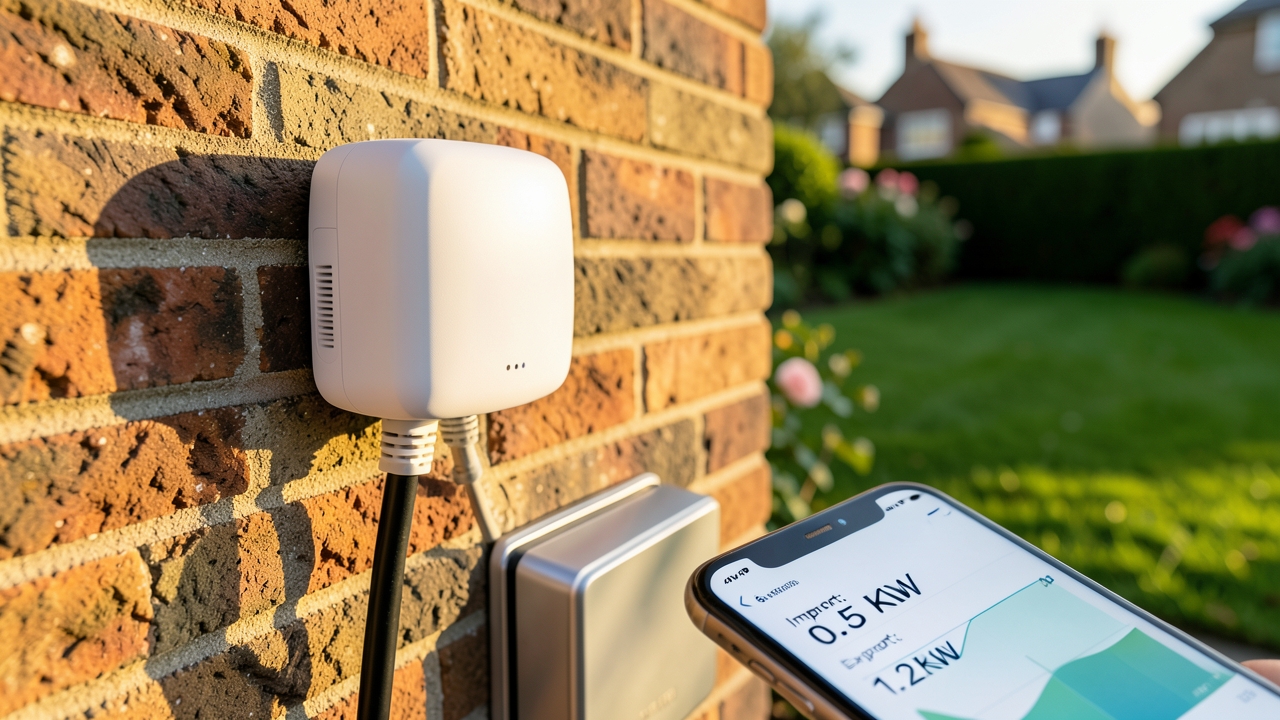
Installing solar panels is a brilliant step towards energy independence. However, without precise monitoring, you might not be making the most of every ray of sunshine. Many UK households produce surplus energy they don’t know about. This is where solar panel smart plugs UK setups come in. They offer a simple, affordable way to track exactly how much power you export to the grid. Furthermore, they help you understand your import habits, paving the way for greater self-consumption and savings.
Smart plugs have evolved beyond basic timer functions. Today, advanced energy monitoring plugs can communicate directly with your solar inverter or clamp onto your main supply. They provide granular data on your home’s energy flow. This article will explore the top solar panel smart plugs UK homeowners should consider in 2026. We’ll compare features, integration, and potential savings.
Why You Need a Solar Panel Smart Plug in Your UK Home
Knowing you have solar panels is one thing; understanding their performance is another. A dedicated smart plug for solar monitoring answers critical questions:
- How much energy are you exporting? You can see the exact kWh sent to the grid daily, monthly, and annually.
- Are you using your solar energy effectively? Tracking self-consumption helps you time the use of appliances.
- What is your grid import costing you? By monitoring off-grid hours, you can reduce reliance on expensive peak-rate electricity.
- Is your system performing optimally? Sudden drops in output can signal panel shading or inverter issues.
According to the Energy Saving Trust, a typical 4 kWp solar PV system in the UK can generate around 4,200 kWh of electricity annually. However, without monitoring, a household might only use 30-50% of this directly. A smart plug helps push that self-consumption figure higher.
Key Features to Look for in a Solar-Ready Smart Plug
Not all energy monitoring smart plugs are suitable for solar setups. For effective solar panel smart plugs UK integration, prioritise these features:
Direct Inverter Integration vs. CT Clamp Monitoring
This is the most crucial distinction. Some advanced plugs integrate directly with popular inverter brands via API or local network protocols. This provides the most accurate, real-time data on both import and export. Others use a current transformer (CT) clamp that physically attaches to a cable in your consumer unit. CT clamps are universal but may only measure total household flow, requiring calculation to deduce solar export.
Data Granularity and App Quality
Look for plugs offering per-second or per-minute readings. A clear, intuitive app that visualises data with graphs and history is essential. Furthermore, integration with platforms like Apple HomeKit, Google Home, or IFTTT can automate routines based on solar availability.
Wi-Fi Connectivity and Reliability
Your plug needs a stable Wi-Fi connection to stream data. Consider the range from your router to the plug’s location. Some models support Matter, the new universal smart home standard, for future-proofing.
Top Solar Panel Smart Plugs UK Compared for 2026
After testing and research, these models stand out for their solar monitoring capabilities in the UK market.
1. Shelly Pro PM (with Energy Add-on)
The Shelly Pro PM is a powerhouse for energy monitoring. While it’s a DIN-rail mount device rather than a plug, it’s often the core of a sophisticated DIY solar monitoring setup. It offers native support for CT clamps and can be configured to monitor both import and export precisely. Its open ecosystem allows for local data control and integration with home automation software like Home Assistant. Price: Around £120-£150 for the device and required components.
2. Tapo P110 Mini Smart Wi-Fi Plug
An excellent budget-friendly starting point. The Tapo P110 provides detailed energy monitoring for the device plugged into it. To use it for solar, you would need to plug your solar inverter’s consumption output (if available) into it, or use it to monitor a dedicated circuit. Its app is user-friendly and displays daily/monthly energy charts. While it doesn’t natively measure grid export, it’s fantastic for tracking specific appliance usage alongside your solar system. Price: Approximately £12.99.
3. TP-Link EP25 (Matter-Compatible)
Supporting the new Matter standard, the EP25 is a future-proof choice. It offers robust energy monitoring through the Tapo app. Its key advantage is the potential for seamless integration with a growing number of Matter-enabled solar inverters and home energy management systems. This could allow it to act as a smart switch, turning on high-load appliances (like immersion heaters or EV chargers) only when surplus solar is detected. Price: Around £16.99.
4. Sense Energy Monitor
This is a premium, whole-home monitor that clamps onto your main electrical feed. It uses machine learning to identify individual appliance signatures. Crucially, it detects when you are importing from or exporting to the grid. It provides a definitive answer to your solar self-consumption rate. It’s a more significant investment but offers unparalleled insight. Price: Typically £300+, professionally installed.
Calculating the Savings: Real Numbers for UK Households
Let’s consider a real-world example. A UK household with a 4 kWp system pays 28p per kWh for grid electricity (October 2025 price cap average). They receive 4p per kWh for exported energy under a Smart Export Guarantee (SEG) tariff.
Scenario Without a Smart Plug: The household consumes 40% of its solar generation directly. Annual generation: 4,200 kWh.
Self-consumption: 1,680 kWh (saving £470.40 at 28p/kWh)
Export: 2,520 kWh (earning £100.80 at 4p/kWh)
Total Annual Benefit: £571.20
Scenario With a Solar Smart Plug: By using the plug’s data to time appliance use and perhaps adding battery storage, they increase self-consumption to 65% of generation.
Self-consumption: 2,730 kWh (saving £764.40 at 28p/kWh)
Export: 1,470 kWh (earning £58.80 at 4p/kWh)
Total Annual Benefit: £823.20
In this model, the smart plug-led improvement generates an additional £252 per year. Even a modestly priced plug like the Tapo P110 pays for itself within the first year. Furthermore, this data empowers you to make informed decisions about future investments, like adding a home battery.
Installation and Setup Tips
Getting started is straightforward for most plugs:
- Positioning: Place the plug within good Wi-Fi range. For outdoor setups, ensure you use a weatherproof enclosure rated for UK conditions.
- Clamp Placement (if applicable): If using a CT clamp, it must be installed around either the live feed from the grid or the live output from your solar inverter. For accurate import/export data, clamps on both feeds are ideal. Always consult a qualified electrician for this work.
- App Calibration: Enter your tariff rates in the app to enable accurate cost calculations. Most apps allow you to set different rates for peak and off-peak periods.
- Automation: Use the data to create automations. For example, set your AI writing assistant or a smart speaker to announce when you’re exporting surplus power, prompting you to run the dishwasher.
The Future: Smart Plugs as Part of Your Home Energy Brain
The role of the solar panel smart plugs UK market is expanding. We are moving beyond simple monitoring towards active energy management. Imagine a plug that not only tells you that you’re exporting 2 kW of solar but also automatically turns on your EV charger or water heater to absorb that free energy.
The UK government’s ongoing support for smart grids and time-of-use tariffs means that having real-time data at your fingertips will become increasingly valuable. Investing in a good monitoring solution today is the first step into this smarter, more efficient future.
Choosing the right solar plug is a personal decision based on your budget, technical comfort, and goals. Do you want simple appliance monitoring, or a full grid import/export breakdown? Whatever you decide, the data you gain will transform your relationship with your solar panels.
Have you experimented with a solar smart plug? What has been your experience with tracking your energy flow? Share your thoughts and setup in the comments below!