
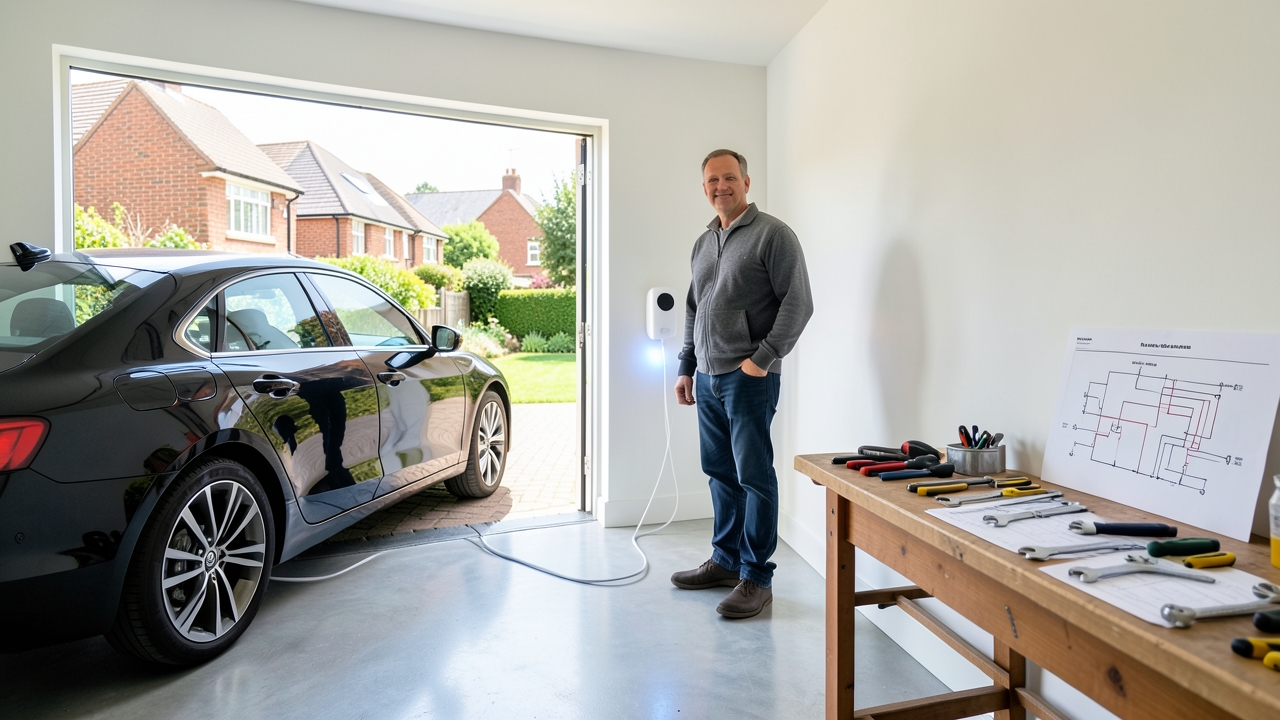
The number of electric vehicles on British roads continues to climb rapidly. In 2026, more drivers than ever are considering DIY EV charger installation UK options to save money and avoid long waiting lists for professional installers. However, electrical work on your property carries serious legal and safety obligations. This guide explores exactly when you can legally install an EV charger yourself, what Part P building regulations demand, and how Ofgem rules affect your plans.
Whether you are a competent electrician or a keen DIYer, understanding the rules before you pick up a screwdriver is essential. Mistakes can lead to fines, voided insurance, or dangerous faults.
Understanding EV Charger Installation Regulations in the UK
Several layers of regulation govern how EV chargers must be installed across the United Kingdom. These exist to protect homeowners, tenants, and the wider electrical grid.
The three main regulatory frameworks you need to know about are:
- Part P of the Building Regulations — covers electrical safety in dwellings
- BS 7671 (IET Wiring Regulations) — the national standard for electrical installations
- Ofgem Smart Charge Rules — set out in the Electric Vehicles (Smart Charge Points) Regulations 2021
Each of these plays a different role. Together, they create a framework that is quite restrictive for anyone attempting DIY EV charger installation UK projects without professional help.
Part P Building Regulations and EV Chargers
Part P of the Building Regulations 2010 has applied to domestic electrical work since January 2005. Its core purpose is to ensure that electrical installations are safe and do not create hazards for building occupants.
What Counts as Notifiable Work?
Under Part P, certain types of electrical work are classed as notifiable to your local Building Control body. Installing a new dedicated circuit for an EV charger falls squarely into this category.
According to GOV.UK’s Approved Document P guidance, notifiable work includes:
- Installing any new electrical circuit in a dwelling
- Carrying out work in a special location such as a bathroom or garden
- Modifying a consumer unit (fuse box)
A garden-located wallbox or a charger requiring a brand-new circuit from your consumer unit is therefore notifiable work. This is the case for the vast majority of home EV charger installations.
How to Comply with Part P
You have two legal routes to compliance:
Route 1: Use a registered installer. Electricians registered with a Competent Person Scheme — such as NICEIC, NAPIT, or ELECSA — can self-certify their work. They notify Building Control on your behalf after completion.
Route 2: Notify Building Control yourself. If you carry out the work yourself, you must notify your local authority’s Building Control department before starting. You will pay a fee, typically between £150 and £300. Building Control may then inspect the work on completion.
Crucially, Route 2 is only legally viable if you possess the competence to carry out the work to BS 7671 standards. This is not simply a matter of confidence — it means producing compliant test results and certification.
Ofgem Smart Charge Rules and Your Obligations
Since June 2022, the Electric Vehicles (Smart Charge Points) Regulations 2021 have imposed additional requirements on all new EV chargers installed in homes across England, Wales, and Scotland.
These regulations, enforced by Ofgem, mandate that every new private charger must be:
- A smart charger with the ability to schedule charging
- Capable of responding to signals from the grid
- Equipped with authentication or locking features to prevent unauthorised use
- Fitted with a built-in off-peak charging capability
Furthermore, the regulations require that a qualified installer must commission the charger. This means even if you physically mount the unit, the final setup, testing, and activation must be carried out by someone meeting Ofgem’s competency criteria.
This requirement significantly limits what a pure DIY EV charger installation UK project can achieve. You may mount hardware yourself, but you cannot legally complete the installation independently.
When Is DIY EV Charger Installation Legal in the UK?
Given these overlapping regulations, let us be clear about what is and is not permitted.
Scenarios Where DIY Is Technically Possible
There are limited situations where a competent person can carry out substantial DIY work legally:
If you are a qualified electrician holding current registration with a Competent Person Scheme, you may install your own EV charger at home. You can self-certify the work and notify Building Control directly. Even in this scenario, however, the smart charger must still comply with Ofgem’s commissioning requirements.
If you are not a qualified electrician, the realistic scope of DIY work is much narrower. You might legally carry out non-notifiable preparatory tasks, such as:
- Mounting the charger unit to a wall using appropriate fixings
- Digging a trench for a cable run in your garden
- Running conduit along a fence or wall (without connecting electrical cables)
However, any actual electrical wiring, circuit connection, or final testing remains notifiable work. You must either employ a registered electrician or formally notify Building Control.
What You Cannot Do Legally as a DIYer
- Install a new circuit from your consumer unit without notifying Building Control
- Wire the charger to your supply independently
- Commission or activate a smart charger without a qualified person present
- Skip the smart functionality requirements set by Ofgem
Attempting any of these steps without proper authorisation risks prosecution under the Building Act 1984. Penalties can include enforcement notices, fines of up to £5,000, and criminal charges in serious cases.
The OZEV Grant: Why Professional Installation Matters Even More
The UK Government’s Electric Vehicle Homecharge Scheme (EVHS) provides a grant of up to £350, or 75% of the total installation cost, whichever is lower. This applies to homeowners with off-street parking, flat owners, and tenants with landlord permission.
However, there is a significant catch. To claim this grant, your charger must be installed by an OZEV-registered installer. The Office for Zero Emission Vehicles will reject any application for DIY work, regardless of how competent the installer may be.
Furthermore, professional installation costs typically range from £500 to £1,500 depending on the complexity of the job. A straightforward wallbox installation on an existing circuit might cost around £600–£800, while a new circuit run to a detached garage could exceed £1,200.
When you factor in the £350 grant, the net cost of professional installation becomes very competitive. For many homeowners, choosing a qualified installer is both the safest and most cost-effective option.
Detailed Costs: DIY vs Professional EV Charger Installation
Understanding the full cost picture helps you make an informed decision. Here is a realistic breakdown for 2026:
DIY Costs (For Qualified Electricians Only)
- Smart charger unit (7kW tethered): £400–£800
- Smart charger unit (7kW untethered): £350–£700
- Cable, conduit, and consumables: £80–£200
- Building Control notification fee: £150–£300
- Testing equipment (if not already owned): £200–£500
- Total estimated DIY cost: £830–£1,800
Professional Installation Costs
- Smart charger unit (7kW tethered): £400–£800
- Professional installation labour: £400–£800
- New circuit and materials (if needed): £100–£400
- Total estimated professional cost: £900–£2,000
- Less EVHS grant: −£350
- Net cost after grant: £550–£1,650
As you can see, the price gap narrows considerably once the government grant is applied. Meanwhile, you gain full compliance, professional certification, and manufacturer warranty protection.
Safety Risks of Improper DIY Installation
Beyond the legal implications, there are serious safety consequences if a DIY EV charger installation in the UK goes wrong. EV chargers draw significant current — a 7kW unit pulls approximately 32 amps. This is comparable to running an electric shower at full power.
The Energy Saving Trust highlights that poorly installed electrical equipment is a leading cause of domestic fires in the UK. Common DIY mistakes include:
- Using incorrectly rated cable, leading to overheating
- Failing to install appropriate RCD (residual current device) protection
- Earthing and bonding errors that create shock risks
- Poor weatherproofing on outdoor installations
- Overloading an existing circuit that was not designed for EV charging
Additionally, a botched installation will almost certainly void your home insurance. Insurers routinely require evidence that electrical work was carried out by a competent person. Without a Part P certificate or Competent Person Scheme documentation, you may find yourself uninsured.
Step-by-Step: How to Stay Compliant with DIY EV Charger Installation UK
If you are determined to take a hands-on approach, follow these steps to remain within the law:
Step 1: Assess your electrical capacity. Check your consumer unit has sufficient spare ways and that your supply can handle the additional 32-amp load. An electrician can perform a load assessment for approximately £80–£150.
Step 2: Choose a compliant smart charger. Ensure the unit meets Ofgem’s Smart Charge Points Regulations and carries a valid CE or UKCA mark. Leading brands like Zappi, Pod Point, and Ohme all offer compliant models.
Step 3: Notify Building Control before starting any electrical work. Complete the relevant building control application form and pay the notification fee.
Step 4: Carry out all work to BS 7671 standards. Use appropriate cable sizes, install RCD protection, and follow the manufacturer’s installation instructions precisely.
Step 5: Complete a full electrical test and issue an Electrical Installation Certificate (EIC). Submit this to Building Control and retain a copy for your records and insurance.
Step 6: Arrange for qualified commissioning of the smart charger to satisfy Ofgem’s requirements.
Frequently Asked Questions
Can an unqualified person install an EV charger in the UK?
An unqualified person can carry out non-electrical preparatory work, such as mounting a bracket or digging a cable trench. However, they cannot legally wire, connect, or commission the charger without notifying Building Control and arranging qualified commissioning.
Do I need planning permission for a home EV charger?
Generally, no. Most domestic EV charger installations fall under permitted development rights. However, if your property is a listed building or within a Conservation Area, you should contact your local planning authority first.
What happens if I install an EV charger without notifying Building Control?<3 -->
You risk receiving an enforcement notice requiring you to remove or remediate the work. You may face fines up to £5,000. More practically, your home insurance may become invalid, and you could face difficulty selling your property without proper certification.
The Bottom Line on DIY EV Charger Installation UK
The rules surrounding DIY EV charger installation in the UK are complex but exist for good reason. High-voltage electrical work demands expertise, and the overlapping requirements of Part P, BS 7671, and Ofgem’s smart charge regulations create a high bar for compliance.
For most homeowners, the safest, most cost-effective, and most practical route remains hiring a qualified EV charger installer. The modest savings of a pure DIY approach rarely justify the legal risks, safety hazards, and lost grant eligibility.
That said, understanding these regulations empowers you to make informed choices. You can now have informed conversations with installers, challenge unreasonable quotes, and ensure every step of the process meets the required standards.
Are you planning to install an EV charger at home this year? Have you already navigated the Part P and Ofgem requirements? Share your experience in the comments below — your insights could help fellow UK drivers make smarter decisions.