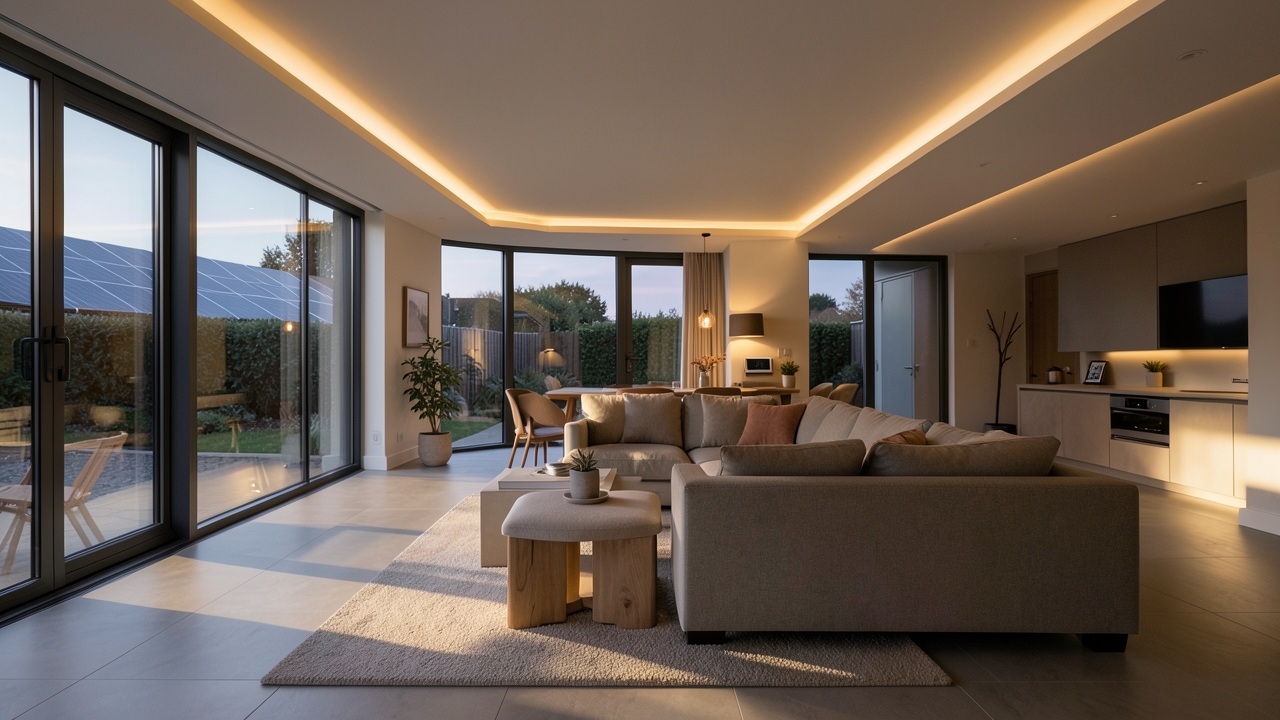
Smart lighting solar integration is transforming how UK households manage energy, turning sunlight into cost-effective illumination. By automating your lights to prioritise solar power, you can slash electricity bills and reduce your carbon footprint significantly. This guide delves into practical steps and UK-specific insights to help you optimise your home’s energy use.
Smart Lighting Solar Integration: Why It Matters for UK Homes
In the UK, where daylight hours vary seasonally, smart lighting solar integration ensures you make the most of renewable energy. For instance, during longer summer days, your system can harvest excess solar power to run lights at night, minimising grid reliance. Furthermore, this approach aligns with the UK’s net-zero targets, promoting sustainability at a household level.
Consequently, homeowners can enjoy lower energy bills, especially with rising electricity prices. According to Energy Saving Trust, smart home technologies can reduce energy consumption by up to 15% annually. In addition, integrating smart lighting with solar panels enhances home automation, making daily life more convenient and eco-friendly.
How Smart Lighting Solar Integration Works
Smart lighting solar integration involves connecting LED lights to a solar panel system via a smart hub or app. This setup allows lights to automatically switch to solar power when available. For example, during daylight hours, solar panels generate electricity stored in batteries, which smart lights then draw from after sunset.
Automation and Energy Optimisation
Automation is key to maximising solar energy use. Devices like smart bulbs from Philips Hue or LIFX can be programmed to operate only when solar power is充足. In the UK, this means timing lights for evening hours when solar storage is full. Moreover, sensors can detect natural light levels, dimming or turning off lights automatically to conserve energy.
On the other hand, manual overrides let you adjust settings for specific needs. However, for optimal efficiency, let the system learn your routines. For instance, integrating with a solar battery like the Tesla Powerwall ensures lights run primarily on stored solar energy, reducing grid dependence.
Step-by-Step Guide to Setting Up Smart Lighting with Solar
Setting up smart lighting solar integration in your UK home is straightforward with careful planning. First, assess your solar panel capacity and energy needs. Then, choose compatible devices and configure them for seamless operation.
Choosing the Right Devices
Start by selecting smart LED bulbs that support wireless protocols like Zigbee or Wi-Fi. Prices for UK models range from £15 to £50 per bulb, depending on features. In addition, consider a smart lighting hub, such as the Samsung SmartThings, which costs around £100, to centralise control.
For solar integration, ensure your panels have a battery storage system. Balcony solar panels, popular in UK urban homes, can be a cost-effective option—details on setup can be found in our guide to balcony solar panel installation. Furthermore, check that your smart lighting system is compatible with solar inverters for smooth energy flow.
Installation and Configuration
After purchasing devices, install smart bulbs in your fixtures. Then, connect them to your home network via the manufacturer’s app. Configure automation rules to prioritise solar power—set lights to turn on only when battery levels exceed 50%, for example.
For UK homes, consider the Smart Export Guarantee (SEG), which allows you to sell excess solar energy back to the grid. The GOV.UK website provides details on eligibility. Consequently, smart lighting solar integration can even generate income, further offsetting costs.
UK-Specific Considerations and Regulations
In the UK, regulations around solar panel installations and smart home devices must be followed. For instance, building regulations apply if you’re mounting panels on listed buildings or in conservation areas. Always consult local authorities to avoid fines.
Additionally, UK weather patterns affect solar efficiency. During winter, shorter daylight hours mean less solar generation, so smart lighting should fall back to grid power seamlessly. However, in summer, maximise solar use by scheduling high-energy lights for peak sun periods. Our article on smart home energy tips offers more UK-centric advice.
Cost Savings and Environmental Impact
Smart lighting solar integration can lead to substantial savings. For a typical UK home spending £500 annually on lighting, switching to solar-powered smart lights could reduce this by up to 40%, saving £200 per year. In addition, carbon emissions are cut—each kWh of solar energy displaces about 0.5 kg of CO2 from the grid.
Furthermore, the environmental benefits extend beyond your home. By reducing demand on fossil-fuel power stations, you contribute to national decarbonisation efforts. For example, the UK’s renewable energy target aims for 50% by 2030, and household actions like this play a crucial role.
Common Challenges and Solutions
One challenge is initial cost—setting up a full system with solar panels, batteries, and smart lighting can exceed £2,000. However, government grants and financing options, such as the Green Homes Grant, can help. In the UK, check eligibility for schemes to lower upfront expenses.
Another issue is technical compatibility. Not all smart lights work with every solar setup. Therefore, research devices that support open standards like Matter, ensuring future-proof integration. If unsure, consult a certified installer for advice.
The Future of Smart Lighting Solar Integration in the UK
As technology advances, smart lighting solar integration will become more efficient and affordable. Innovations like AI-driven energy management systems will optimise usage further. For instance, future setups could predict weather patterns to adjust lighting schedules automatically.
Meanwhile, UK policy support, such as the Smart Systems and Heat Programme, is driving adoption. Consequently, more homes will embrace this integration, enhancing energy resilience and sustainability nationwide.
“Integrating smart lighting with solar panels is not just about savings—it’s about creating a smarter, greener future for UK homes.”
In summary, smart lighting solar integration offers UK homeowners a practical way to reduce bills and environmental impact. By following the steps outlined and considering local factors, you can achieve optimal energy use. Have you started integrating smart lighting with your solar system? Share your experiences in the comments below!