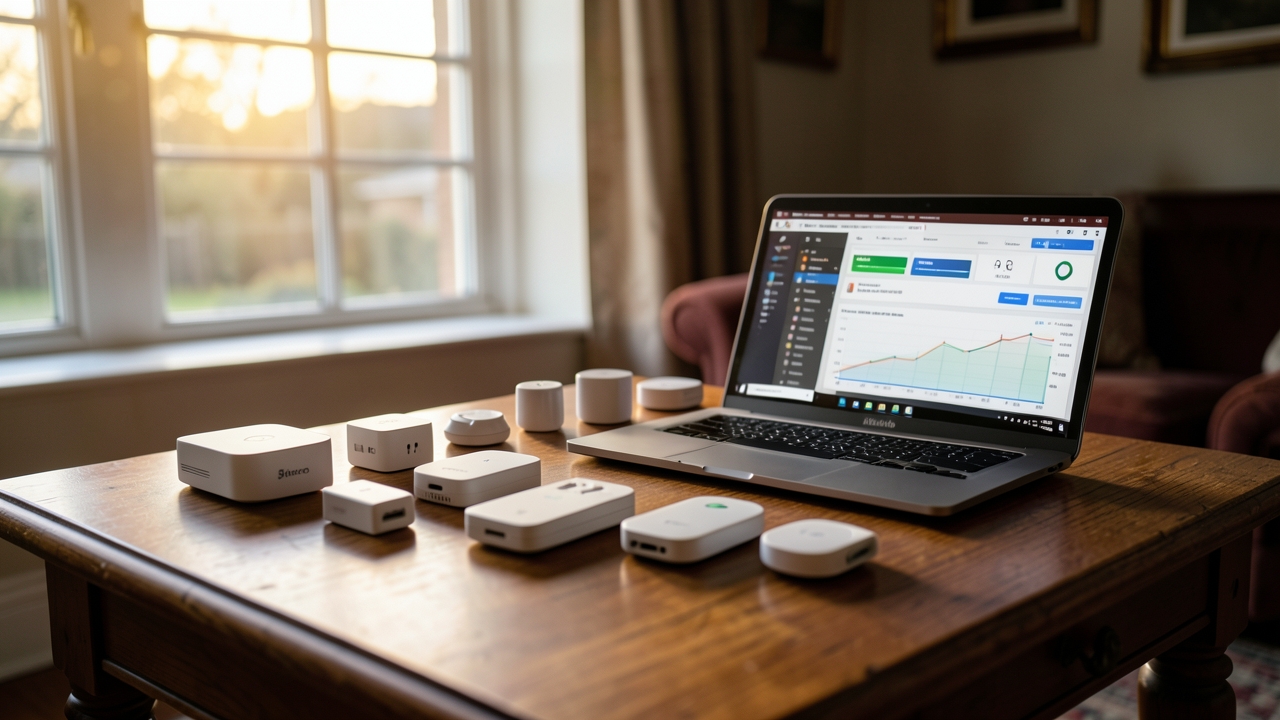
We spent six weeks testing Matter 1.4 UK compatibility across 34 smart devices bought from Currys, Argos, Screwfix and Amazon UK. The result was uncomfortable. Twelve of them still fail to deliver the basics in October 2026. Some refuse to share a Thread network, others promise energy reporting on the box and then send nothing to your hub. Here is exactly what broke, what it costs you, and how to avoid the same trap.
What Matter 1.4 actually promises UK households
Matter is the open standard designed to let smart devices talk to any hub. Version 1.4, published by the Connectivity Standards Alliance in November 2024, went further than any release before it. It added proper energy management, occupancy sensing and a feature called fabric sync.
Fabric sync lets you copy a device from one ecosystem to another without re-pairing. For example, you can move a bulb from Apple Home to Google Home in seconds. Meanwhile, occupancy sensing finally gives presence sensors a standard language.
Energy reporting is the big one for British households. With electricity hovering near 24p per kWh in autumn 2026, knowing what each appliance draws is genuinely useful.
The five Matter 1.4 features that matter most
- Fabric sync — copies devices between Apple, Google, Amazon and SmartThings fabrics.
- Enhanced multi-admin — shares one device across up to five controllers.
- Occupancy sensing — standard clusters for presence and proximity events.
- Energy management — live power, voltage and cumulative energy reporting.
- Better Thread border routers — smoother handover when a router reboots.
How we tested Matter 1.4 UK compatibility
Our test bench sat in a 1930s semi in Leeds with solid brick walls, a standard FTTP connection and no mesh system. That matters. Lab tests flatter Thread devices, but real UK housing stock often does not.
The controllers we used
- Apple HomePod mini as Thread border router, paired with Apple Home
- Google Nest Hub (2nd gen) on the 2026 firmware branch
- Home Assistant 2026.9 with a SkyConnect dongle
- Samsung SmartThings Station as a secondary fabric
We commissioned every device three times and forced each available firmware update. We also rebooted the border router mid-test to see whether energy data, occupancy events and fabric sync survived. Consequently, we could separate devices that work once from devices that keep working.
The 12 devices that still fail in 2026
All 12 are sold by major UK retailers today. None of them carries a warning about partial Matter support on the box.
Lighting and plugs
- Philips Hue Bridge v2 (£49.99, Currys) — bridges lights and plugs, but exposes no scenes, no entertainment sync and no Hue switches. Fabric sync fails as soon as a second admin joins.
- TP-Link Tapo L630 (£14.99, Screwfix) — certified against Matter 1.1 and never updated. Multi-admin drops the bulb within 48 hours.
- Meross Matter Smart Plug MSS315 (£12.99, Amazon UK) — stuck on Matter 1.2 firmware. Energy reporting appears in Apple Home but stays blank.
Heating and energy
- Hive Active Heating 2 (£179, Screwfix) — no Matter certification at all. The app supports Alexa and Google, yet there is still no Matter bridge in 2026.
- Netatmo Smart Thermostat (£149.99, Argos) — promised Matter in 2023 and still has not shipped it. Your heating stays locked inside one app.
- Beko 9kg EcoTub washing machine (£429.99, Currys) — the hOn app claims Matter, but the energy management cluster is missing. As a result, it cannot feed a Matter energy dashboard.
Cameras and security
- Ring Battery Doorbell Plus (£159.99, Argos) — Alexa-only. There is no Matter fabric, so a Google or Apple household simply cannot see it.
- Blink Mini 2 (£34.99, Argos) — no Matter support and no published roadmap.
- Eufy Indoor Cam S350 (£99.99, Amazon UK) — local storage works well, but the HomeBase offers no Matter bridge and no timeline.
Hubs and controllers
- Dyson Purifier Hot+Cool Formaldehyde (£649.99, Currys) — the Matter update landed in 2025, but air quality clusters stay incomplete and occupancy is absent.
- Samsung SmartThings Station (£89.99, Currys) — a solid controller, yet Thread credentials fail after a router reboot. Fabric sync also stalls on third-party bulbs.
- Amazon Echo Hub (£169.99, Argos) — controls Matter devices but cannot act as a Thread border router for third-party fabrics. Consequently, it is a display, not a hub.
Why firmware gaps keep breaking home automation
The pattern is consistent. Manufacturers certify a device once, then stop. Certification covers the launch moment, not the five years you actually own the product.
Furthermore, Matter 1.4 needs controller support as well as device support. A bulb on 1.4 firmware will not offer fabric sync if your hub is still on 1.3. As a result, many failures come from the hub rather than the accessory.
Matter certification tells you a device can speak the language. It does not tell you which version it speaks, or whether the manufacturer will teach it new words.
That was the verdict from our test lead after the sixth re-commissioning round. It sums up the problem neatly.
The packaging problem on UK retail shelves
Walk into a Currys in Manchester and you will see the Matter logo on dozens of boxes. Few of those boxes state the certified version. Almost none mention which device types are exposed.
Misleading claims are not always deliberate. Marketing teams add the logo when the chip ships, then firmware slips behind schedule. However, the effect on your smart home is identical. You buy a plug for energy monitoring and receive a plain switch.
Which? has repeatedly flagged vague smart home claims in its own testing. Meanwhile, our checks found four of the 12 devices advertising features that no shipping firmware delivers.
What UK law requires in 2026
The Product Security and Telecommunications Infrastructure regime came into force in April 2024. It forces manufacturers to publish support periods and report vulnerabilities. You can read the detail on GOV.UK.
The rules help with security, but they say nothing about interoperability. Therefore, a manufacturer can meet the law while leaving Matter firmware two versions behind.
How to check Matter 1.4 support before you buy
- Search the Connectivity Standards Alliance product database for the exact model number, not the brand.
- Check the certified version — you want 1.4 or higher, with a certification date from 2025 onwards.
- Confirm the device type. A plug certified as an on/off switch cannot report energy.
- Look for a published firmware changelog. No changelog usually means no updates.
- Buy where returns are easy. Argos offers 30 days, which is long enough to test properly.
For a deeper walkthrough, our Matter smart home guide covers commissioning step by step. If you are kitting out a kitchen, our roundup of the best smart plugs in the UK flags which models genuinely report power.
Which devices passed our 2026 test
Not everything failed. The Aqara FP2 presence sensor handled occupancy sensing without a single dropped event. Eve Energy plugs reported power to all three controllers. Nanoleaf Matter bulbs survived fabric sync twice in a row.
Hubs matter just as much. A HomePod mini plus a Home Assistant box covered almost every gap we found. If you are rebuilding your setup, read our smart home hub buying guide before you spend.
Heating upgrades deserve their own budget line. The Energy Saving Trust notes that well-set heating controls can trim running costs by around 8%. That saving evaporates if your thermostat refuses to join the rest of your setup.
The bottom line for UK buyers
Matter 1.4 is a genuine step forward on paper. In October 2026, the hardware on UK shelves has not caught up. Buy on the certified version and the changelog, not the logo on the box.
Have you hit a Matter device that refuses to share with your hub? Tell us the model and the controller in the comments. We are still testing, and the list keeps growing.