Setting up a truly smart home in the UK has never been more accessible. With energy prices remaining a concern and smart device adoption surging, many homeowners are turning to open-source platforms for greater control. That is where Home Assistant UK setups come into their own. Unlike proprietary ecosystems, Home Assistant puts you firmly in the driver’s seat. In this complete 2026 guide, we will walk through everything you need to know — from choosing the right hardware to building powerful automations tailored for British homes.
What Is Home Assistant and Why Should UK Homeowners Care?
Home Assistant is a free, open-source home automation platform. It runs locally on your own hardware, which means your data stays within your home. For privacy-conscious UK households, this is a major advantage over cloud-dependent alternatives.
Furthermore, Home Assistant integrates with thousands of smart devices. These range from Philips Hue lights and Tado thermostats to Zigbee sensors and Matter-compatible products. In 2026, it supports over 2,800 integrations, making it one of the most versatile platforms available anywhere.
For UK users specifically, Home Assistant offers brilliant support for local energy monitoring, smart tariff integration with providers like Octopus Energy, and compatibility with popular British smart home brands. It truly is the Swiss Army knife of home automation.
Home Assistant UK Hardware: Raspberry Pi vs NUC and Beyond
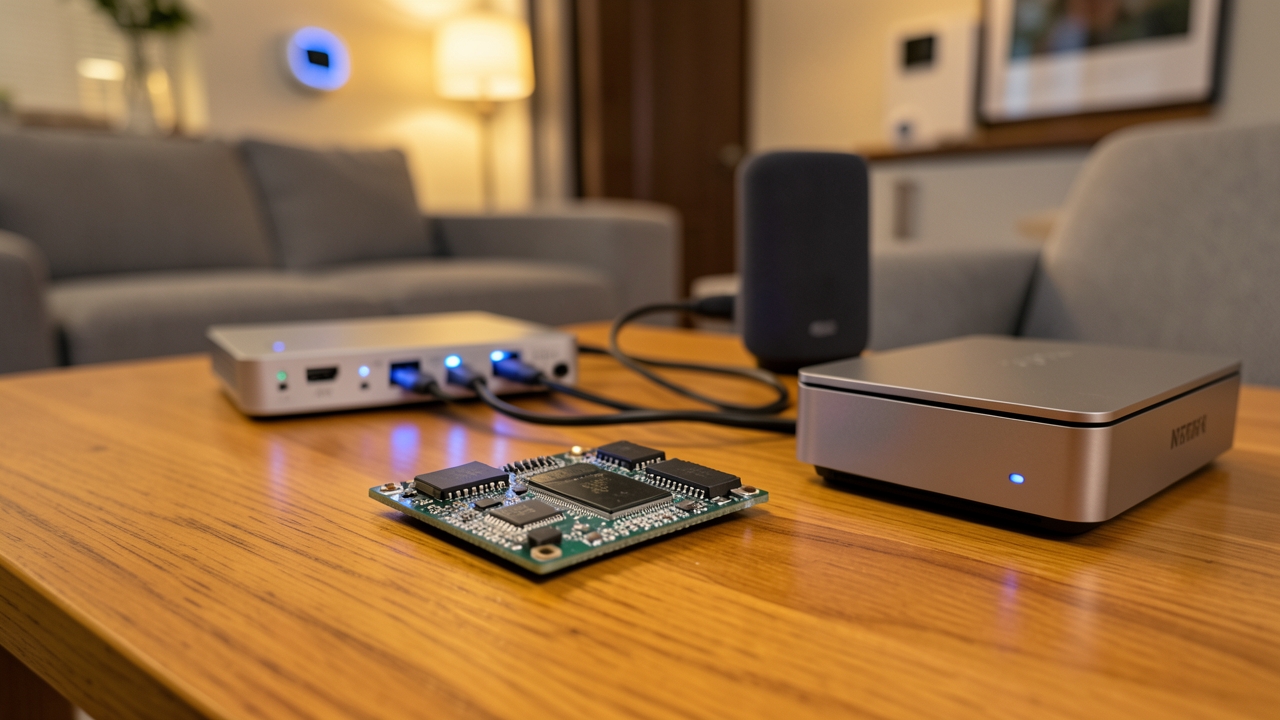
One of the first decisions you will face is choosing your hardware. Home Assistant runs on a wide range of devices. However, two options dominate the UK market in 2026: the Raspberry Pi 5 and Intel NUC mini PCs.
Raspberry Pi 5
The Raspberry Pi 5 remains the most popular entry point for beginners. The 4GB model costs approximately £55, while the 8GB version sits around £75. You will also need a microSD card (£8–£15), a case (£10–£20), and a reliable power supply (£12).
Consequently, you can get started for roughly £85–£120 all-in. The Pi 5 handles most smart home workloads comfortably. However, if you plan to run add-ons like Frigate for AI camera detection, you may notice occasional slowdowns.
Intel NUC Mini PC
An Intel NUC (or equivalent mini PC) offers significantly more power. A mid-range NUC with an Intel i3 processor, 16GB RAM, and a 256GB SSD typically costs between £250 and £400 in the UK. For example, models from Beelink or Minisforum offer excellent value through Amazon UK.
Furthermore, a NUC handles multiple add-ons, large camera setups, and complex automations without breaking a sweat. If you are serious about home automation, this investment pays dividends in reliability and future-proofing.
Home Assistant Green and Yellow
The official Home Assistant Green hardware launched in late 2024 and remains available in 2026 for approximately £99. It is a pre-built, plug-and-play option ideal for non-technical users. The Home Assistant Yellow, priced from around £125 (without compute module), adds built-in Zigbee and Thread support — perfect for UK homes embracing Matter-enabled devices.
Installing Home Assistant: A Step-by-Step UK Guide
Installation is surprisingly straightforward. Home Assistant offers two main methods: Home Assistant Operating System (HAOS) and Home Assistant Container using Docker. For most UK users, HAOS is the recommended choice.
Here is the basic process for installing HAOS on a Raspberry Pi or NUC:
- Download the Home Assistant OS image from the official website (home-assistant.io)
- Flash the image to a microSD card or SSD using Raspberry Pi Imager or Balena Etcher
- Insert the card or drive into your chosen hardware and power it on
- Wait 10–20 minutes for the initial installation to complete
- Navigate to http://homeassistant.local:8123 in your browser
- Create your account and follow the onboarding wizard
In addition, if you already run a NAS device like a Synology or QNAP, you can install Home Assistant as a Docker container or virtual machine. This approach avoids purchasing separate hardware entirely.
For those considering broader home upgrades alongside their smart home project, it is worth exploring balcony solar panels for UK homes — a natural companion to home automation and energy monitoring.
Adding UK Smart Home Devices to Home Assistant
Once Home Assistant is running, the fun truly begins. Adding devices varies depending on the protocol — Wi-Fi, Zigbee, Z-Wave, Thread, or Matter.
Wi-Fi Devices
Many UK smart home products connect via Wi-Fi. Devices from brands like TP-Link Kasa, Tuya, and Shelly integrate seamlessly. For instance, the Shelly Plus 1PM smart relay (£14–£18) is a brilliant way to add power monitoring to almost any circuit in your home.
Zigbee Devices
Zigbee remains the gold standard for reliable, low-power smart home networks. You will need a Zigbee coordinator — such as the Sonoff Zigbee 3.0 USB Dongle Plus (£20–£25). This plugs directly into your Home Assistant hardware.
Popular Zigbee devices available in the UK include Aqara sensors (£12–£20), IKEA TRÅDFRI bulbs (£8–£10 each), and Third Reality water leak sensors (£15). These create a robust mesh network throughout your property.
Matter and Thread Devices
Matter support in Home Assistant has matured significantly by 2026. Thread border routers are now built into many devices, including the Apple HomePod Mini and Google Nest Hub. Therefore, adding Matter devices to Home Assistant is largely a plug-and-play experience.
Building Powerful UK-Tailored Automations
Automations are where Home Assistant truly outshines commercial alternatives. You can create rules based on time, device state, weather, energy prices, or even AI predictions.
For example, here are some automations particularly useful for UK households:
- Octopus Agile tariff optimisation: Automatically run energy-intensive appliances during the cheapest 30-minute windows, potentially saving £200+ annually
- Heating schedules based on occupancy: Integrate with Tado or Honeywell Evohome to lower temperatures when no one is home
- EV charging automation: Charge your electric vehicle only during off-peak hours using a smart charger integration. If you are exploring the best EV chargers for UK homes in 2026, Home Assistant supports many popular models including Zappi and Ohme
- Advent security: Use presence detection to automatically arm cameras, lock doors, and switch on exterior lights when the last person leaves
- Weather-responsive garden irrigation: Skip watering if rain is forecast within 24 hours, using Met Office data
The automation editor in Home Assistant uses a visual, no-code interface. However, YAML editing is available for advanced users who want finer control. As a result, both beginners and power users find the system equally satisfying.
Home Assistant vs Commercial Smart Home Ecosystems
Many UK homeowners already use Amazon Alexa, Google Home, or Apple HomeKit. So how does Home Assistant compare?
The key differences are significant:
Privacy and Data Ownership
Commercial ecosystems rely heavily on cloud services. Your data is processed on remote servers. According to UK GDPR regulations, you have rights over your personal data. However, exercising those rights with Big Tech can be cumbersome. Home Assistant keeps everything local by default.
Interoperability
Commercial ecosystems tend to lock you into their product ranges. Home Assistant, on the other hand, connects devices from any manufacturer. You can control a Philips Hue light alongside a Tuya plug and a Zigbee door sensor — all from a single dashboard.
Cost
Home Assistant itself is completely free. There are no monthly subscription fees. The only cost is your hardware, which typically ranges from £85 to £400 depending on your choice. Commercial hubs like the Amazon Echo ecosystem or Apple HomeKit require purchasing brand-specific devices that often carry a premium.
Reliability
On the other hand, commercial platforms can suffer from cloud outages. When Amazon or Google servers go down, your “smart” home can become rather dim. Home Assistant runs locally, so your automations continue working regardless of your internet connection.
Energy Monitoring: A UK-Specific Superpower
With UK energy bills averaging around £1,500–£1,800 annually for a typical household in 2026, monitoring consumption has never been more important. Home Assistant excels here.
Devices like the Shelly EM (£35–£50) or the CT clamp-based home energy monitoring solutions feed real-time data directly into Home Assistant. You can then create dashboards showing exactly how much electricity your solar panels generate, how much your EV consumes, and which appliances draw the most power.
The Energy Saving Trust recommends regular monitoring as one of the most effective ways to reduce household energy consumption. Home Assistant makes this effortless and visually engaging.
Security Considerations for UK Users
Running a smart home platform requires sensible security practices. Here are essential steps for every UK Home Assistant user:
- Enable multi-factor authentication (MFA) on your Home Assistant account immediately
- Use a strong, unique password managed through a password manager
- Set up SSL/TLS encryption for external access using Let’s Encrypt — this is free and straightforward
- Consider a VPN for remote access instead of exposing Home Assistant directly to the internet
- Keep Home Assistant updated — security patches are released regularly
- Back up your configuration — Home Assistant supports automatic Google Drive and SMB backups
Furthermore, the UK’s National Cyber Security Centre (NCSC) provides excellent guidance on securing Internet of Things devices in your home. Following these principles alongside Home Assistant’s built-in security features keeps your setup robust.
Getting Started: Recommended UK Shopping List for 2026
Here is a practical starter kit for a new Home Assistant UK setup in 2026:
Hardware: Raspberry Pi 5 8GB (£75) + official case and power supply (£22) + 256GB microSD (£15) = £112
Coordinator: Sonoff Zigbee 3.0 Dongle Plus (£22)
Sensors: Aqara Temperature & Humidity Sensor (£15) + Aqara Door Sensor (£12) + IKEA TRÅDFRI Motion Sensor (£8) = £35
Smart Plugs: 3x Shelly Plus Plug S (£15 each) = £45
Total estimated starter cost: £214
This kit gives you temperature monitoring, door and motion detection, and the ability to monitor energy consumption on three appliances. It is an excellent foundation that you can expand over time.
Final Thoughts: Is Home Assistant Right for Your UK Home?
Home Assistant UK setups offer unmatched flexibility, privacy, and power for smart home enthusiasts in 2026. Whether you are monitoring energy usage, automating your EV charger, or building a comprehensive security system, it delivers capabilities that rival — and often surpass — expensive proprietary solutions.
There is a learning curve, admittedly. However, the community is extraordinarily helpful, with active UK-based forums and thousands of YouTube tutorials. Once you experience the freedom of a truly local smart home, there is rarely any going back.
Have you already started your Home Assistant journey, or are you considering taking the plunge? We would love to hear about your experience — share your setup or ask your questions in the comments below!