Energy bills remain one of the biggest household expenses in Britain. In 2026, the average UK household spends roughly £1,500 to £1,800 per year on electricity alone. That is precisely why a smart energy monitor UK has become an essential gadget for cost-conscious homeowners. These devices show you exactly where your money goes — in real time — so you can take action to reduce waste.
In this guide, we explore the best smart home energy monitors available in the UK for 2026. We compare leading brands such as Ovo, Loop, Sense, and Hive. Furthermore, we cover installation, features, cost savings, and how each device helps British households shrink their electricity bills.
What Is a Smart Energy Monitor?
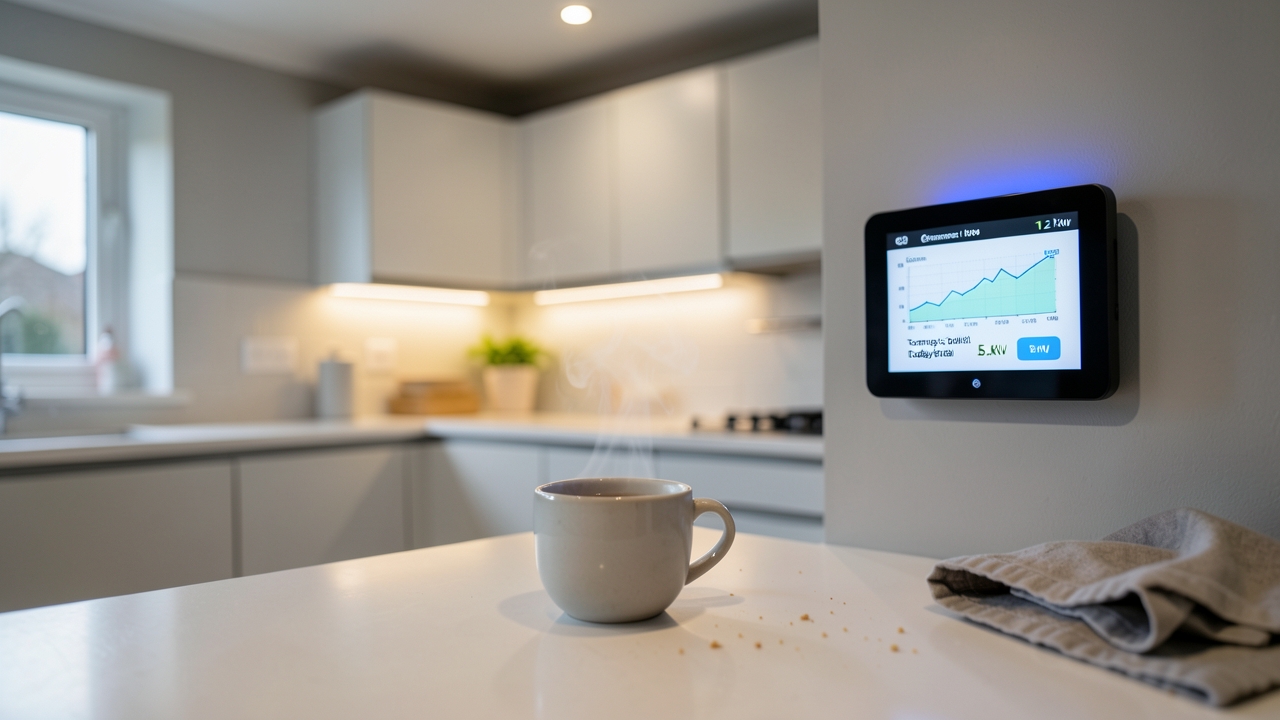
A smart energy monitor tracks your home’s electricity consumption in real time. It connects to your electricity meter or consumer unit and displays live data on a screen, smartphone app, or both. Unlike traditional meters, smart monitors break down usage by appliance, time of day, and tariff rate.
Therefore, you can identify energy-hungry devices, adjust your habits, and make informed decisions about upgrades such as solar panels or smart plugs. In short, a smart energy monitor gives you full visibility over your home’s energy footprint.
Why Use a Smart Energy Monitor in the UK in 2026?
The UK’s energy landscape has shifted dramatically in recent years. Although the Energy Price Cap has stabilised somewhat, electricity prices remain historically high. As a result, every kilowatt-hour (kWh) saved translates directly into money back in your pocket.
Additionally, many British households now own solar panels, electric vehicles, or both. A smart energy monitor helps you maximise self-consumption of solar electricity and schedule EV charging during off-peak hours. The UK Government’s Energy Price Cap guidance confirms that time-of-use tariffs can save households up to 20% annually when paired with smart monitoring.
Key Benefits at a Glance
- Real-time electricity usage tracking by the minute
- Appliance-level detection to pinpoint wasted energy
- Tariff-aware monitoring that calculates cost per kWh automatically
- Integration with solar panels, battery storage, and EV chargers
- Historical data and trend analysis over weeks, months, and years
- Automated tips and recommendations to reduce consumption
How Do Smart Energy Monitors Work?
Most smart energy monitors use one of two methods to gather data. The first method involves clamping a CT (current transformer) sensor around the main electricity cable inside your consumer unit. This clamp measures the total current flowing into your home. The monitor then calculates power consumption using the voltage from your supply.
The second method communicates directly with your smart meter via the Home Area Network (HAN). This approach requires a compatible smart meter and typically works through your energy supplier’s infrastructure. However, not all monitors support every smart meter type, so compatibility matters.
Once the device collects data, it transmits information to a cloud platform. You then access live readings, historical trends, and cost breakdowns through a companion app or web dashboard. Some monitors also include a physical display unit that sits on your kitchen counter or wall.
Best Smart Energy Monitor UK Options for 2026
We tested and compared four of the most popular smart energy monitors available to UK consumers in 2026. Here is our detailed breakdown of each.
Ovo Energy Monitor
Ovo Energy offers its smart energy monitor free of charge to customers on compatible tariffs. The device connects to your smart meter and delivers real-time data through the Ovo app. You can see your electricity usage by the half hour, track daily costs, and set spending alerts.
In addition, Ovo provides a Heatmap feature that visualises when your home uses the most energy throughout the day. This helps you shift heavy usage to off-peak periods. The monitor typically costs nothing for Ovo customers, making it one of the best-value options available. Non-Ovo customers cannot access the device directly, but similar functionality exists through other platforms.
Loop Energy Monitor
Loop is a standalone smart energy monitor that works with any UK energy supplier. The system includes a clip-on CT sensor that attaches to your fuse box and a Wi-Fi-connected hub. Setup takes roughly 15 minutes for most households.
The Loop app displays real-time usage, daily summaries, and monthly comparisons. Furthermore, Loop provides personalised energy-saving tips based on your consumption patterns. The monitor retails for approximately £39.99, and there are no ongoing subscription fees. For budget-conscious households wanting a simple, effective solution, Loop represents excellent value.
Sense Energy Monitor
Sense takes a different approach using machine learning. The device installs in your consumer unit and monitors electrical signatures from every appliance in your home. Over time, Sense identifies individual devices — kettles, washing machines, TVs, and more — by their unique electrical patterns.
Therefore, Sense provides genuinely granular appliance-level monitoring without requiring smart plugs on every device. The Sense monitor costs approximately £239 and connects to both iOS and Android apps. Although the upfront cost is higher, the intelligence it delivers is unmatched. You can see precisely which appliances consume the most power and when they run.
Sense also integrates with solar inverters and battery systems, making it ideal for households investing in renewable technology. The Energy Saving Trust recommends appliance-level monitoring as one of the most effective ways to reduce household energy consumption.
Hive Energy Monitor
Hive, the smart home brand from British Gas parent company Centrica, offers an energy tracking feature within its broader smart home ecosystem. The Hive system connects to your smart meter and displays real-time electricity and gas usage in the Hive app.
Meanwhile, if you already own Hive smart plugs, heating controls, or cameras, the energy monitor integrates seamlessly into your existing setup. Hive does not sell a standalone monitor as such. Instead, it pulls smart meter data through your energy supplier. The Hive app is free to use, though you need a compatible smart meter installed. This makes Hive ideal for households already invested in the Hive ecosystem.
Smart Energy Monitor UK Comparison Table
Here is a quick side-by-side comparison to help you choose the right device for your household.
Ovo Monitor: Free for Ovo customers, smart meter integration, no standalone purchase option
Loop Monitor: £39.99, CT clamp sensor, works with any supplier, no subscription
Sense Monitor: £239, machine-learning appliance detection, solar and battery compatible
Hive Energy: Free via Hive app, smart meter dependent, best for existing Hive users
Installation and Setup
Installing a smart energy monitor ranges from straightforward to moderately technical. Loop and Sense both use clip-on CT sensors that attach around the main cable in your consumer unit. You should always switch off the mains supply before opening the consumer unit cover. If you are unsure, hire a qualified electrician.
Ovo and Hive monitors rely on smart meter communication rather than physical clamps. Therefore, installation for these devices is essentially automatic once your smart meter is set up and linked to your account. Most households complete the full setup process within 30 minutes.
What You Need Before You Start
How Much Can You Save With a Smart Energy Monitor?
Research consistently shows that households with energy monitors reduce consumption by 5% to 15%. For a typical UK household spending £1,600 per year on electricity, that equates to £80 to £240 in annual savings. Over a five-year period, even a £239 Sense monitor pays for itself several times over.
Furthermore, smart monitors help you take full advantage of time-of-use tariffs such as Octopus Agile or Ovo’s Smart Optimiser. By shifting washing machine cycles, dishwashers, and EV charging to off-peak hours, you can reduce costs by a further 15% to 25%. These savings add up quickly, especially for larger households.
Practical Tips to Maximise Savings
Smart Energy Monitors and Renewable Technology
If you have solar panels or plan to install them, a smart energy monitor becomes even more valuable. Monitors like Sense and Loop can show you exactly how much solar electricity you generate, consume, and export. This data helps you fine-tune your usage to maximise self-consumption.
For example, you might discover that running your washing machine at midday — when solar generation peaks — reduces grid electricity imports by 80%. Similarly, pairing a monitor with an EV charger lets you charge your car using solar energy rather than expensive grid power. For more information on combining smart monitoring with home renewables, explore our guide to balcony solar panels in the UK.
Choosing the Right Smart Energy Monitor for Your Home
The best smart energy monitor depends on your specific needs and budget. If you are an Ovo customer, the free Ovo monitor is a no-brainer starting point. For homeowners wanting a low-cost, supplier-agnostic option, Loop at £39.99 offers fantastic simplicity.
However, if you want the deepest insight into individual appliance usage, Sense stands alone thanks to its machine-learning technology. Meanwhile, Hive suits those already using its smart home products. Consider your existing setup, budget, and how much detail you need before deciding.
The Future of Smart Energy Monitoring in the UK
The UK Government continues to push for smarter energy systems. The Smart Flexibility Programme, launched in partnership with Ofgem, encourages households to participate in demand-side response schemes. As a result, smart energy monitors will play an increasingly important role in balancing the national grid.
Looking ahead, we expect monitors to integrate more deeply with home battery storage, heat pumps, and vehicle-to-grid (V2G) technology. The convergence of these systems means your energy monitor could eventually automate your entire home energy strategy — optimising consumption, storage, and export without any manual input.
Final Thoughts
A smart energy monitor is one of the simplest and most effective investments for any UK household looking to reduce electricity bills in 2026. Whether you choose the free Ovo monitor, the budget-friendly Loop, the intelligent Sense, or the ecosystem-driven Hive, the benefits are clear: greater visibility, lower bills, and a smaller carbon footprint.
Have you tried a smart energy monitor in your home? Which brand worked best for you, and how much did you save? Share your experience in the comments below — we would love to hear from you. For more guides on smart home technology, including EV charger options and e-bike conversion kits, explore the rest of Smart Home Tech UK.
Smart Plug Energy Savings Calculator
Find out how much standby power costs you — and what a smart plug could save.