As energy prices fluctuate and households become more conscious of their consumption, the smart plug energy monitoring uk market has evolved significantly. In 2026, these devices do far more than just turn your appliances on and off remotely. They provide detailed insights into exactly how much power your devices are using, helping you make informed decisions to cut waste and lower your electricity bills. But are they worth the extra cost over basic smart plugs? This complete guide explores everything you need to know.
What Is a Smart Plug with Energy Monitoring?
A standard smart plug allows you to control a connected device via an app or voice assistant. A smart plug with built-in energy monitoring takes this a step further by including a hardware sensor. This sensor continuously measures the electrical current flowing to the connected appliance. It then calculates the power usage in kilowatt-hours (kWh) and often converts this into a monetary cost based on your tariff.
Therefore, instead of simply guessing which appliances are costing you the most, you get concrete data. You can identify energy-draining devices that remain on standby or discover which old appliance is less efficient than you thought. This granular data is the foundation for making meaningful energy savings.
How These Devices Track Appliance Usage
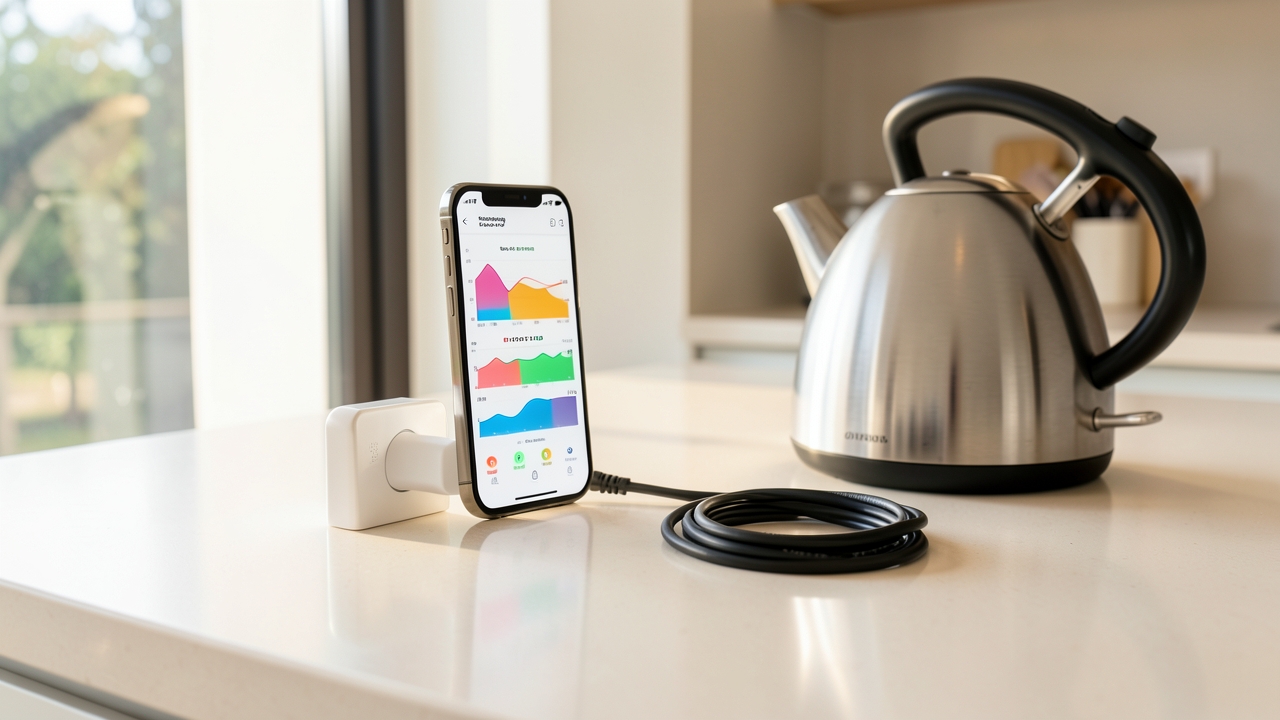
The tracking mechanism is sophisticated yet user-friendly. Once you plug the smart plug into a wall socket and connect your appliance, the monitoring process begins. The device measures the real-time power draw in watts. It samples this data at frequent intervals, often every few seconds.
The plug communicates this data wirelessly to your home network via Wi-Fi or a dedicated protocol like Zigbee. The companion app on your smartphone then aggregates the data. You can view:
- Real-time power consumption displayed in watts.
- Historical usage over days, weeks, or months.
- Cost breakdowns based on the electricity tariff you input (in pence per kWh).
- Alerts for unusual spikes in usage or devices left on.
Furthermore, many models offer scheduling features. You can programme your appliance to run only during off-peak tariff hours, like overnight, maximising savings if you are on an Economy 7 or smart tariff.
Typical Savings in a UK Household
The potential savings vary greatly depending on your habits and the appliances you monitor. However, according to the Energy Saving Trust, understanding your energy use is the first step to reducing it. A common discovery is the amount of energy consumed by devices on standby.
For example, a television and set-top box left on standby 24/7 could cost over £100 annually. By using a smart plug to completely cut power to these devices when not in use, you can recoup that entire cost. Similarly, monitoring an older fridge freezer might reveal it uses twice the energy of a new A-rated model, helping you decide when an upgrade makes financial sense.
While it is unrealistic to expect the plug itself to slash your bill in half, households that actively use the data to change habits and turn off phantom loads often report savings of 5-15% on their overall electricity bill. Over the lifetime of the device, the savings can far exceed the initial purchase price.
Best Smart Plugs with Monitoring in 2026 (UK Models)
The UK market in 2026 offers several excellent options. Here are the top contenders based on features, app quality, and value:
1. TP-Link Tapo P110M
A favourite for its reliability and comprehensive app. It offers detailed energy monitoring, scheduling, and integrates with Amazon Alexa and Google Assistant. The Tapo app provides clear graphs and daily/weekly/monthly reports. Price: around £22.99.
2. Meross Smart Plug Mini with Energy Monitoring
Its compact design does not block adjacent sockets. It provides real-time and historical energy data via the Meross app and supports voice control. It is a solid, no-frills option for monitoring single appliances. Price: approximately £19.99.
3. Eve Energy (Thread & Matter Enabled)
For those invested in the Apple ecosystem or the new Matter smart home standard, Eve Energy is a premium choice. It uses Thread for a more reliable, mesh-network connection and offers precise consumption data directly in the Apple Home app. Price: around £49.99.
It is crucial to note that any smart plug must be BS 1363 certified for safe use in the UK. All the models mentioned above meet this requirement. For a deeper dive into compatible devices, see our guide on smart home energy saving devices.
App Setup and Getting Started
Setup is typically straightforward:
Most apps allow you to set schedules and automation rules. For instance, you could create a rule to turn off the plug if the power draw drops below 1W for an hour, indicating the device is in standby.
Are Smart Plugs with Monitoring Worth the Premium?
A basic smart plug costs as little as £10-£15, while a monitoring version averages £20-£50. The premium of £10-£35 is what you are weighing against potential value.
They are worth it if:
- You are genuinely curious about where your energy money goes.
- You want to identify and reduce phantom loads.
- You plan to use the data to make decisions about replacing old appliances.
- You are on a time-of-use tariff and want to automate cheaper energy use.
They may not be worth it if:
- You just want to turn a lamp on or off remotely and are not interested in the data.
- You already have a whole-home energy monitor like a Sense or Hive Energy Monitor.
The core advantage is awareness. You cannot manage what you do not measure. For a small upfront cost, you gain actionable intelligence about your home’s energy behaviour.
Conclusion and Final Thoughts
In 2026, a smart plug energy monitoring uk device is no longer a niche gadget. It is a practical, affordable tool for any energy-conscious household. By providing transparency over appliance consumption, these devices empower you to take control of your energy bills in a very direct way. While the savings from a single plug may be modest, the cumulative effect of monitoring several key appliances and changing your habits can be significant.
The best models offer accurate data, reliable connectivity, and user-friendly apps that make the information easy to understand and act upon. Given the ongoing focus on energy efficiency and the cost of living, the investment in one or two monitoring smart plugs is a logical step towards a smarter, more economical home.
Have you used a smart plug with energy monitoring? Share your experience or ask a question in the comments below!
Smart Plug Energy Savings Calculator
Find out how much standby power costs you — and what a smart plug could save.