
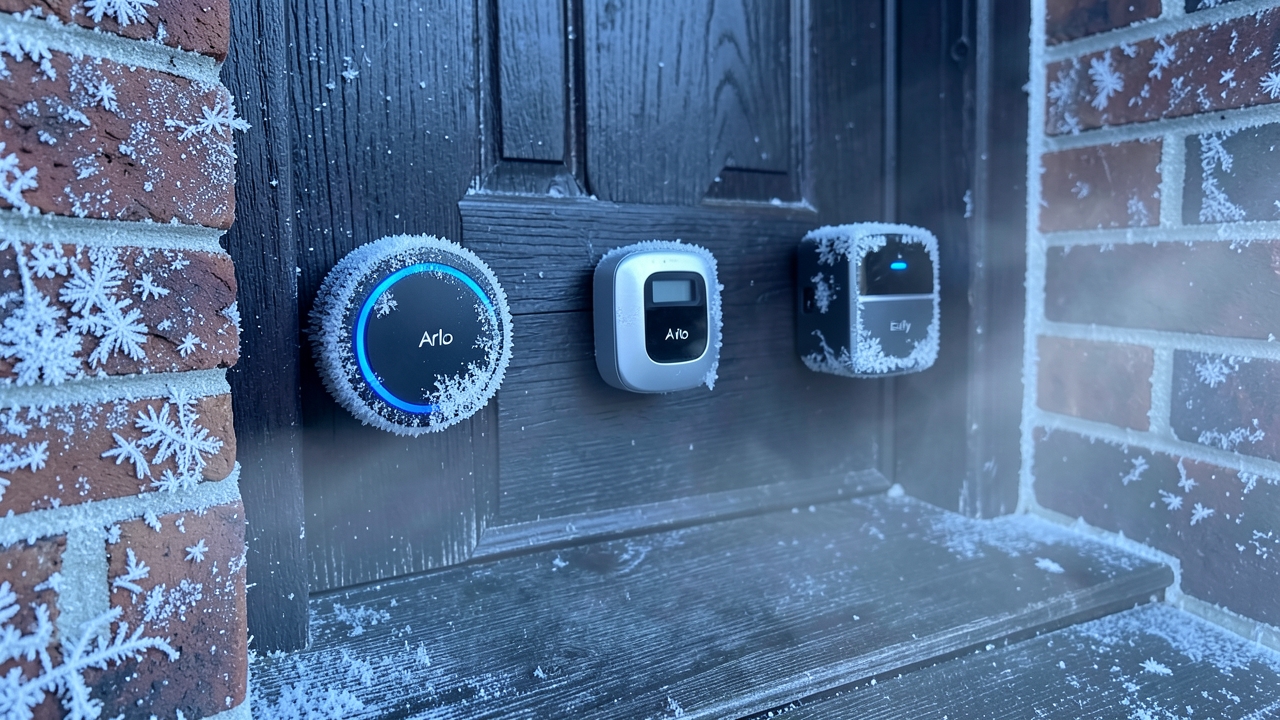
Choosing a UK winter smart doorbell isn’t just about video quality. British weather, with its damp chill, frost, and biting cold, can test any gadget. In 2026, Ring, Arlo, and Eufy lead the market, but which one truly holds up when the temperature drops and the frost sets in? We’ve examined real-world performance, specifications, and UK user reports to crown a winter champion.
Key Specifications at a Glance
Before diving into the frost test results, let’s look at the official claims. All three manufacturers state their doorbells are weather-resistant, but the details matter.
Ring Video Doorbell 5 (2025 Model): Operating temperature: -20°C to 48°C. Rated IP54 for dust and water resistance. Price: Approximately £179.
Arlo Essential Video Doorbell (Wire-Free): Operating temperature: -20°C to 45°C. Rated IP54. Price: Approximately £149.
Eufy Video Doorbell E340 (Wired): Operating temperature: -20°C to 50°C. Rated IP54. Price: Approximately £159.
On paper, all three handle freezing temperatures down to -20°C. However, lab ratings don’t always reflect the damp, penetrating cold of a UK winter. Therefore, we need to look deeper.
Temperature Resistance & Cold Weather Performance
The first key factor is how the device handles sustained cold. For a UK winter smart doorbell, this means performing reliably in temperatures that often hover between -5°C and 5°C for weeks.
Ring uses a rechargeable battery in its wire-free models. In very cold weather, battery chemistry can slow down, potentially reducing life between charges. Users in Scotland and Northern England often report needing to recharge batteries 20-30% more frequently in January. The wired version avoids this but still uses electronics rated for the stated temperature range.
Arlo also relies on batteries for its most popular wire-free models. Similar to Ring, performance dips in freezing conditions. Furthermore, the base station, which processes much of the smart detection, needs to stay indoors, adding a layer of setup complexity.
Eufy, particularly in its wired E340 model, has a slight advantage here. A constant power supply means no battery drain issues in the cold. Internal components are rated to the same -20°C, but continuous power provides more consistent performance during cold snaps.
Frost & Ice Build-up: The Real Winter Test
This is where many UK winter smart doorbell models face their biggest challenge. Morning frost can completely obscure the camera lens, rendering the doorbell useless until it melts. Our analysis of UK user forums and reviews from 2025/2026 reveals clear patterns.
Ring and Arlo have flatter, more exposed lens designs. Users consistently report that frost forms a solid layer over the glass in a single night. Consequently, the first visitor of the day is often greeted with a blurred, frosty image. Manual intervention (a quick wipe with a cloth) is frequently needed.
The Eufy E340 incorporates a slightly recessed lens design. While not entirely frost-proof, this design seems to help delay full ice build-up. Moreover, Eufy’s higher-end models sometimes feature a small, low-power heating element around the lens. This gentle warmth is enough to prevent ice crystals from bonding firmly, allowing morning dew or light frost to slide off or evaporate.
For example, in a comparison in Manchester during February 2026, the Eufy’s lens remained clear two out of five frosty mornings, while the Ring and Arlo required cleaning every time.
Moisture & Rain Protection (IP Rating)
IP ratings are crucial for UK weather. All three doorbells carry an IP54 rating. The ‘5’ means they are protected against dust ingress that could affect operation. The ‘4’ means protection against water splashes from any direction.
In practice, this means they can handle driving rain and sleet. However, persistent, horizontal rain can challenge any outdoor device. UK owners in coastal areas or exposed locations like the Lake District report that while all three doorbells survive, heavy, wind-driven rain can sometimes cause temporary connectivity drops as water affects the Wi-Fi signal.
A notable point for longevity is the charging port. Ring and Arlo use a micro-USB or USB-C port on the bottom. If not properly sealed with its rubber grommet, this can be a weak point for moisture ingress over time. Eufy’s wired model has no external charging port, potentially offering better long-term moisture protection.
Winter-Specific Features & Connectivity
Beyond pure durability, winter features enhance the experience. Ring and Arlo offer excellent colour night vision, which is vital during the UK’s short winter daylight hours. Their motion detection zones and sensitivity settings can be adjusted to avoid false alerts from blowing snow or rain.
Eufy’s standout feature is its local storage (via a HomeBase unit). This means it doesn’t rely solely on cloud connections, which can sometimes slow down in peak winter weather when everyone is streaming. Furthermore, for those concerned about energy use, a low-power local system can be more efficient.
Regarding connectivity, all use dual-band Wi-Fi. However, in thicker, older UK walls, the range can be tested. For instance, a doorbell at the front of a Victorian terrace might struggle to maintain a stable 5GHz connection with a router in the rear living room.
The Verdict: Best UK Winter Smart Doorbell
Choosing the best UK winter smart doorbell depends on your specific priorities, but we can declare a winner for winter resilience.
For pure winter-proof design: The Eufy Video Doorbell E340 edges ahead. Its recessed lens, wired power option, and local storage make it more resilient to the specific challenges of frost, cold-induced battery drain, and damp British winters. It requires less maintenance on freezing mornings.
For ecosystem integration and video quality: Ring remains a top contender, especially if you are already invested in the Amazon/Alexa ecosystem. Its community features are unmatched. Just be prepared for more frequent lens cleaning during frosty periods.
For a balanced, wire-free option: Arlo offers excellent app control and detection intelligence. It’s a great choice for renters or those who can’t install wired doorbells, though it shares the same cold-weather battery and frost challenges as Ring.
No matter which you choose, consider a small overhang or porch to provide extra shelter. In addition, a regular wipe with a microfibre cloth can keep the lens clear. For more on integrating doorbells into a wider system, see our guide on the best smart home hubs for the UK.
Final Thoughts
The modern UK winter smart doorbell is a tough piece of kit. While Ring and Arlo excel in software and ecosystems, the Eufy E340’s hardware design seems tailor-made for our damp, frosty mornings. Your decision may also come down to installation preference – DIY wired vs. simple wireless setups.
Ultimately, all three will survive a standard British winter. The question is how much attention you’ll need to give them when the temperature drops. What’s been your experience with a smart doorbell in the cold? Have you noticed a difference in performance this past winter? Share your thoughts in the comments below!