
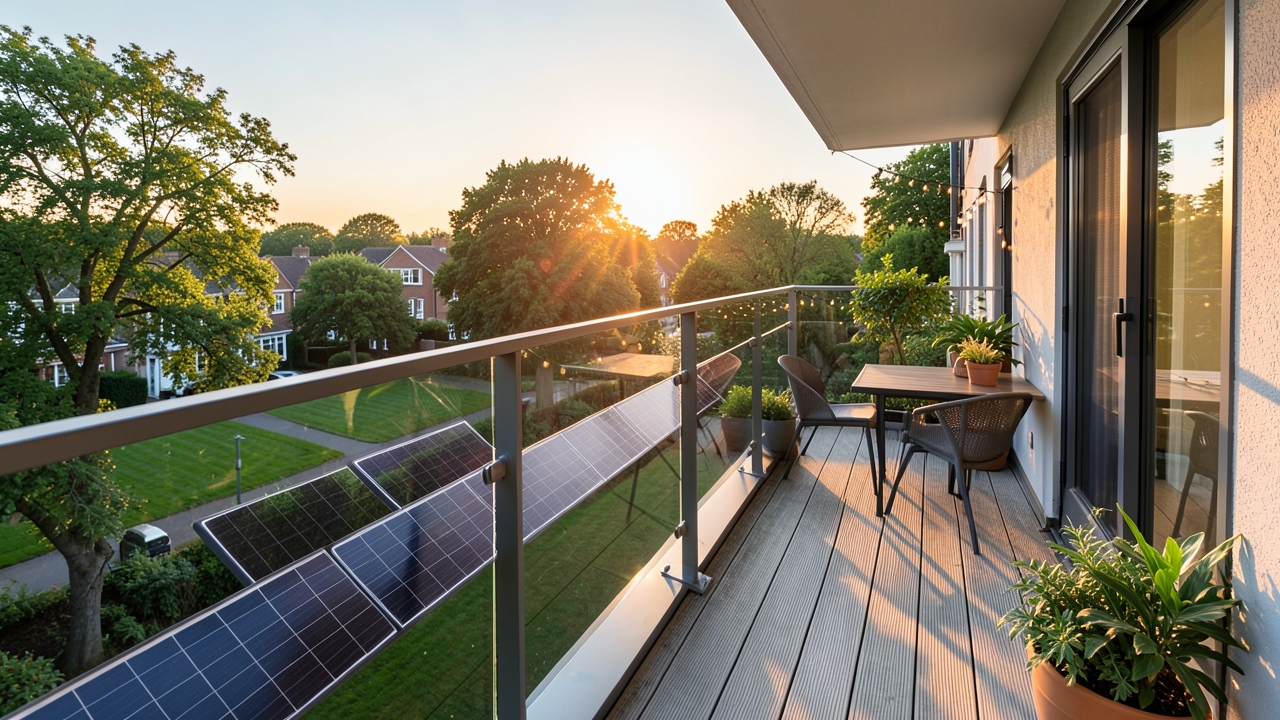
In 2026, many UK tenants are looking at balcony solar panels to cut energy bills. However, tenant solar panel installation UK involves legal steps you must follow. This article explores the rules, from landlord consent to local council regulations, with 2026 updates.
Understanding Balcony Solar Panels for Tenants
Balcony solar panels are small, plug-in photovoltaic kits. They attach to railings or walls and generate electricity. For tenants, they offer a way to use solar energy without major changes. In the UK, these systems typically cost between £300 and £1,000 in 2026, depending on wattage and brand.
For example, a 400W kit might save you around £80-£120 per year on electricity. However, installation in rented flats requires careful planning. You need to consider legal permissions first.
The Legal Framework for Tenant Solar Panel Installation UK
The UK has laws that affect tenants making property modifications. The Landlord and Tenant Act 1985 covers duties for landlords. In 2026, new guidelines from the Ministry of Housing emphasize energy efficiency in rentals. This includes support for renewable energy, but with conditions.
Landlord Permission: A Key Requirement
As a tenant, you must get written permission from your landlord. This is often outlined in your tenancy agreement. Without it, you could breach your contract. Landlords can refuse if they have reasonable grounds, such as structural concerns or planning rules.
Furthermore, the Tenant Fees Act 2019 means landlords cannot charge excessive fees for modifications. However, they may ask for a deposit or to cover any restoration costs. In 2026, some landlords are more open due to government incentives like the Green Homes Grant extension.
Always request permission in writing. Include details like panel size, installation method, and no structural changes. This helps build a case for approval.
2026 Updates: New Support and Rules
This year, the UK government launched the Renters’ Energy Efficiency Scheme. It encourages landlords to approve eco-upgrades. Tenants can apply for up to £500 in subsidies for solar installations, provided they have landlord consent. Check GOV.UK for full details.
However, not all flats qualify. For example, listed buildings or conservation areas may have stricter rules. Therefore, research local authority guidelines first.
Local Authority Regulations and Planning Permission
Local councils oversee planning and building regulations. For balcony solar panels, you might not need full planning permission if the installation is minor. But, it must comply with permitted development rights.
When Planning Permission Is Required
In 2026, typical exemptions apply for small, temporary fixtures. However, if your flat is in a listed building or a conservation area, you need prior approval. Contact your local council’s planning department for advice.
Furthermore, building regulations must be met for electrical safety. Panels must be installed by a certified professional to avoid fire risks. The IET Wiring Regulations (BS 7671) set these standards. Failure to comply can lead to fines or insurance issues.
Leasehold vs. Freehold Considerations
If you live in a leasehold flat, check your lease terms. Some leases prohibit external modifications. As a result, you may need permission from the freeholder or management company. This adds another layer to tenant solar panel installation UK.
Practical Steps for Tenants in 2026
Follow these steps to navigate the process smoothly.
- Review your tenancy agreement: Look for clauses on alterations.
- Request landlord permission: Write a formal letter with benefits.
- Consult your local council: Ask about planning and building rules.
- Choose a certified installer: Ensure they follow UK safety standards.
- Apply for subsidies: Use schemes like the Renters’ Energy Efficiency Scheme.
For instance, a tenant in Manchester might find easier approval due to city-wide green initiatives. On the other hand, in historic areas, like parts of London, rules can be tougher. Therefore, tailor your approach to your location.
Costs and Benefits of Tenant Solar Panel Installation UK
In 2026, average costs for a balcony solar kit range from £300 to £1,000. Installation fees add another £100-£200. However, with subsidies, you could reduce this by up to £500. Over time, savings on electricity bills can offset the investment.
Benefits include lower carbon footprint and energy independence. Furthermore, in the UK, solar panels can increase property desirability. Some landlords may even share in the savings if they agree to the installation.
For more details on costs and kits, check our guide on best balcony solar panels in the UK.
Conclusion: Navigate Your Solar Journey as a Tenant
Tenant solar panel installation UK in 2026 is more accessible but requires legal diligence. By securing landlord permission and following local regulations, you can embrace renewable energy. Remember, start with research and open communication.
Have you considered installing balcony solar panels in your rented flat? Share your experiences or questions in the comments below!
For further reading, explore our article on solar energy for renters in the UK or visit Energy Saving Trust for impartial advice.
Balcony Solar Savings Calculator
See your annual savings, export income and payback time — free, no sign-up.