
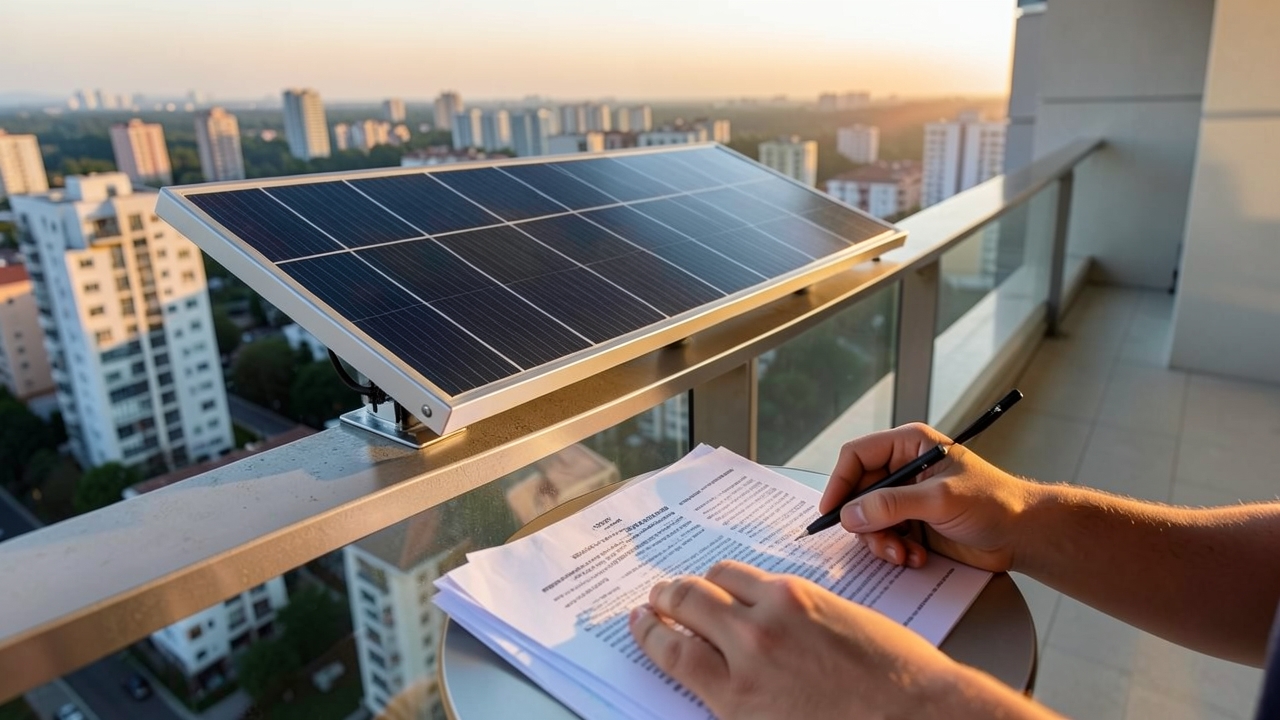
The rise of balcony solar panels offers a brilliant way for flat residents to generate their own clean electricity. However, for tenants and leaseholders in the UK, the path to installation is not as simple as plugging in a device. Securing the correct flat solar permission UK is a critical first step. This guide details the permissions you need from freeholders, landlords, and local councils in 2026.
Without the proper approvals, you risk fines, legal action, or being forced to remove your system. Therefore, understanding the landscape of permissions is essential before purchasing any hardware. We will break down each requirement and show you how to navigate the process successfully.
Understanding the Permission Landscape for Flat Solar Panels
Installing a solar panel on a flat’s balcony is not a straightforward DIY project. This is because the building structure is jointly owned. Permissions are required from multiple parties. The main stakeholders are your landlord (if you rent) and the building’s freeholder or management company. In some cases, your local council may also have a say.
1. Permission from Your Landlord (If You Rent)
If you are a tenant, your first port of call is your landlord. Your tenancy agreement likely includes a clause about alterations or modifications. Installing a balcony solar panel certainly counts as one. You must obtain written consent from your landlord before proceeding.
Landlords may have legitimate concerns. For instance, they might worry about potential damage to the building’s facade or the structural integrity of the balcony railing. They may also be concerned about insurance implications. Being prepared with detailed information about your chosen system, such as a non-invasive plug-in solar panel kit, can help alleviate these worries.
2. Permission from the Freeholder or Management Company
This is often the most significant hurdle. In a leasehold flat, you own the interior space, but the external walls, windows, and balcony structure are typically part of the common parts owned by the freeholder. The balcony solar panel installation must therefore have formal approval from the freeholder or the building’s managing agent.
You will likely need to submit a “licence for alterations” application. This formal process may involve an application fee. The freeholder will assess the request based on its effect on the building’s appearance, structure, and the rights of other residents.
What Do Local Planning Authorities Require in 2026?
For most small-scale, plug-in balcony solar systems, full planning permission is not required. These systems typically fall under Permitted Development rights. However, this is not automatic. Key conditions must be met.
For example, the solar panel must not be installed on a building within a designated Area of Outstanding Natural Beauty (AONB) or a Conservation Area if it would have a detrimental effect on the building’s character. Furthermore, if you live in a listed building, you will almost certainly need listed building consent for any external alteration, including solar panels.
It is crucial to check with your local council’s planning department. A quick pre-application enquiry can save significant time. They will advise if your specific installation requires formal planning consent.
Common Restrictions and How to Navigate Them
Even with initial approval, you may face specific restrictions. Understanding these in advance helps in selecting the right system.
Restriction on Drilling and Fixings
The most common restriction is a blanket ban on drilling into the building’s external walls or balcony structures. This is a primary reason why balcony solar panels have evolved. Modern systems use specialist, non-invasive clamps that attach to existing railings. This design often bypasses the need for structural alterations, which is a major selling point for freeholders.
Aesthetic and Positional Rules
The freeholder may dictate the panel’s position to maintain a uniform building appearance. They might require it to be flush with the balcony rail and not protrude significantly. Colour is another factor. Many systems are black to blend in, but you may need to specify this in your application.
Cable Routing and Electrical Safety
The cable running from your balcony into your flat is a key consideration. It must be routed safely without creating a trip hazard. Plugs must go through a window or a specially designed, sealed entry point. Furthermore, all electrical work must comply with Part P of the Building Regulations. For a simple plug-in system, this is usually handled by using a certified electrician for any fixed wiring.
A Step-by-Step Guide to Securing Flat Solar Permission UK
Follow these steps to maximise your chances of success:
- Research Your Lease and Tenancy Agreement: Look for clauses on alterations and external installations.
- Contact Your Landlord or Freeholder Early: Have an initial, informal conversation before any purchase.
- Choose a Suitable System: Opt for a non-invasive, plug-and-play balcony solar kit to ease approval.
- Prepare a Formal Application: Include product details, a photo of your balcony, and a simple installation plan showing no drilling is required.
- Submit to the Freeholder/Management Agent: Use their official process and be prepared to pay an application fee (typically £50-£150).
- Check with Your Local Council: Especially if you live in a listed building, Conservation Area, or AONB.
- Get Written Approval: Do not install anything until you have a signed, formal agreement.
What If Permission Is Refused?
If your application is refused, ask for the specific reasons in writing. You can often address these concerns. For example, if the refusal is due to drilling, switch to a clamp-on model. If it is about appearance, propose a different colour or position.
However, if the freeholder is fundamentally opposed, your options are limited. They are within their rights to protect the building’s fabric and appearance. At this stage, consider joining or forming a resident’s group. Collective lobbying for a building-wide solar initiative can be far more powerful.
“The key to successful planning for communal buildings is early engagement and presenting a solution that benefits the entire community, not just the individual applicant.”
The Cost of Getting Permission vs. The Cost of Not
An application fee of up to £150 is a small price to pay for legal compliance. The consequences of installing without permission are severe. You could face legal action, be forced to remove the panel at your own expense, or even lose your tenancy. Furthermore, if your installation causes any damage to the building, you will be liable for the full repair costs.
Investing time in the permission process protects you financially and ensures your renewable energy project starts on the right foot. For more on the benefits and setup, explore our guide to balcony solar panel kits.
Conclusion: Preparation is Key for Flat Solar Permission UK
Navigating flat solar permission UK in 2026 requires patience and clear communication. Your path involves securing consent from both your landlord and the freeholder, while also ensuring compliance with planning rules. By choosing a non-invasive system and submitting a thorough, professional application, you significantly increase your chances of approval.
The clean energy revolution should be accessible to everyone, including flat dwellers. Have you recently gone through the permission process for a balcony solar panel? Share your experience or questions in the comments below to help fellow residents!
Balcony Solar Savings Calculator
See your annual savings, export income and payback time — free, no sign-up.