Electric vehicle ownership is booming across the United Kingdom. As more households switch to EVs, the question of smart plug EV charger monitoring has become a hot topic. After all, charging your car at home represents a significant chunk of your electricity bill. Without proper monitoring, you could be overspending by hundreds of pounds each year. In this guide, we explore exactly how smart plugs can help you track, manage, and reduce the energy your EV charger consumes. We cover UK-specific tariffs, device recommendations, and practical setup advice tailored to British homes in 2026.
What Is Smart Plug EV Charger Monitoring?
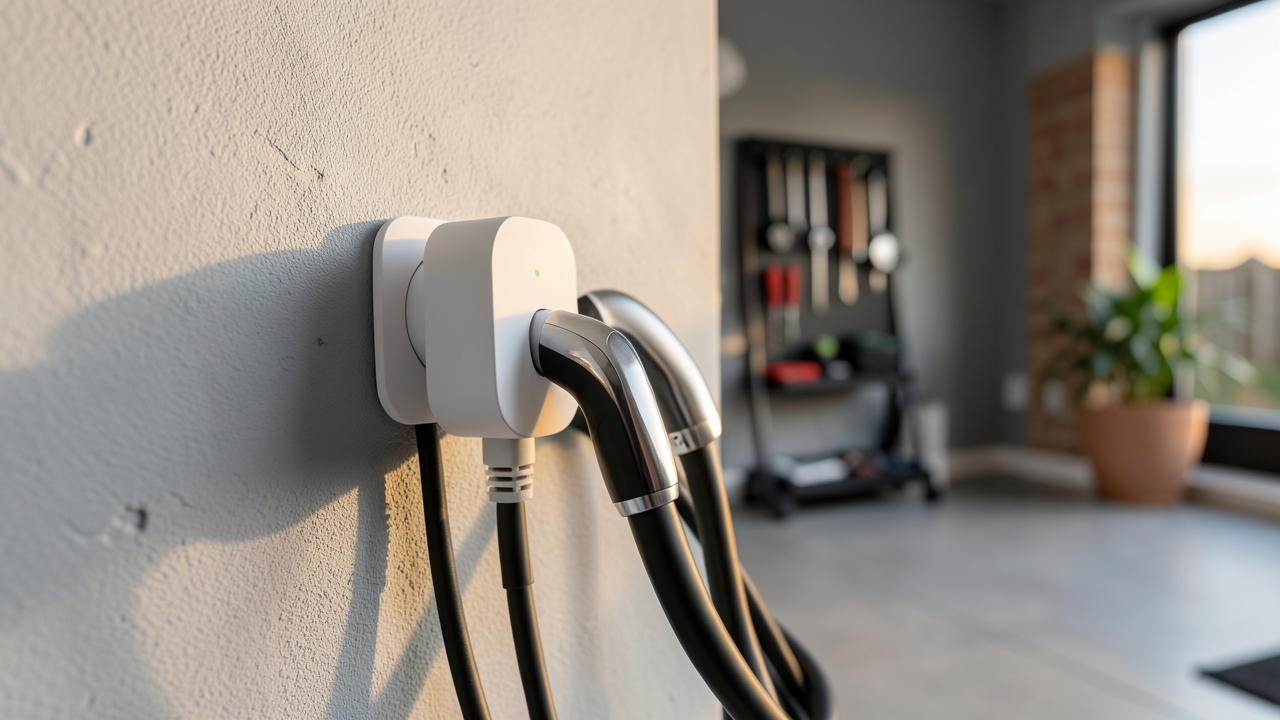
A smart plug sits between your wall socket and your EV charger. It measures how much electricity flows through it in real time. Most smart plugs connect to your home Wi-Fi network. This allows you to view energy data on a smartphone app from anywhere.
However, smart plug EV charger monitoring goes beyond simply reading a number. Advanced models track consumption over hours, days, and months. They log cost estimates based on your electricity tariff. Furthermore, many allow you to set schedules so your EV charges only during off-peak hours.
It is important to note that smart plugs are best suited for portable or Level 1/Level 2 chargers that plug into a standard 13A UK socket. If you have a dedicated 32A home wallbox hardwired into your consumer unit, a smart plug will not be directly compatible. In that case, you would need to explore dedicated EV chargers with built-in smart monitoring instead.
Why UK Homeowners Should Monitor EV Charging Energy
The average UK household pays approximately 24.5p per kWh for electricity under the Energy Price Guarantee as of mid-2026. If your EV has a 60 kWh battery, a full charge from empty could cost around £14.70 at standard rates. That adds up quickly if you drive regularly.
Meanwhile, many UK energy suppliers offer time-of-use tariffs. For example, Octopus Energy’s Agile tariff or EDF’s Go Further tariff provide significantly cheaper electricity during overnight windows. Without smart plug EV charger monitoring, you might miss these savings entirely. You simply would not know when or how much your charger draws.
Key Benefits of Monitoring Your EV Charger
- Cost savings: Identify exactly how much each charge costs you
- Tariff optimisation: Shift charging to the cheapest rate windows automatically
- Usage insights: Understand your driving patterns and charging frequency
- Carbon tracking: Some apps estimate your charging carbon footprint
- Anomaly detection: Spot unusual spikes that may indicate faults or energy theft
Best Smart Plugs for EV Charger Monitoring in 2026
Not every smart plug handles the demands of EV charging. You need a device rated for at least 13 amps and ideally 3 kW or higher. Here are the top options available to UK homeowners right now.
1. TP-Link Kasa EP25 Smart Plug
The TP-Link Kasa EP25 is a popular and affordable option. It supports energy monitoring up to 13A (3,120W). The Kasa app provides real-time and historical energy data. It integrates with Amazon Alexa and Google Home. Price: approximately £14.99 per unit. For the price, it offers excellent value for basic EV charger monitoring.
2. Shelly Plug S UK
The Shelly Plug S offers more advanced features for tech-savvy users. It supports up to 16A and connects via both Wi-Fi and Bluetooth. The Shelly app provides detailed energy graphs. Furthermore, it supports local API access for integration with Home Assistant and other platforms. Price: around £19.99.
3. TP-Link Tapo P110M
The Tapo P110M features a built-in energy monitor with monthly and daily breakdowns. It supports Matter compatibility, making it future-proof for smart home setups. Additionally, you can set schedules and timers directly in the app. Price: approximately £12.99.
4. Hive Active Plug
For homeowners already in the Hive ecosystem, the Hive Active Plug is a natural choice. It provides energy monitoring via the Hive app and works well with Hive’s heating controls. Price: around £19.00.
How to Set Up Smart Plug EV Charger Monitoring at Home
Setting up smart plug EV charger monitoring is straightforward. Follow these steps for a smooth installation.
Step 1: Choose the Right Smart Plug
Ensure the smart plug is rated for at least 13A. Standard UK sockets deliver 13A at 230V, giving a maximum of around 3kW. If your portable charger draws close to this limit, select a plug with a robust build quality and good heat dissipation.
Step 2: Connect to Your Wi-Fi Network
Plug the smart plug into a wall socket near your EV charging point. Download the companion app and follow the pairing process. Make sure your Wi-Fi signal reaches the location reliably. Weak signals can cause dropouts that interrupt monitoring data.
Step 3: Configure Your Electricity Tariff
Enter your current electricity tariff rate into the smart plug app. Many apps let you input different rates for peak and off-peak periods. This ensures your cost estimates remain accurate throughout the day. For example, if you are on a two-rate tariff with 12p/kWh overnight and 28p/kWh during peak hours, input both rates correctly.
Step 4: Create a Charging Schedule
Set your smart plug to switch on during off-peak hours only. Most UK off-peak windows run from 12am to 5am or 1am to 6am depending on your supplier. Programme the plug to start charging at midnight and switch off at 5am. As a result, you charge your EV exclusively at the cheapest rate.
Step 5: Monitor and Adjust
Check the app weekly for the first month. Review your charging patterns and total costs. Adjust your schedule if your driving routine changes. Furthermore, compare your monitored costs against your energy bill to verify accuracy.
Optimising EV Charging with UK Energy Tariffs
Smart plug EV charger monitoring becomes truly powerful when combined with the right energy tariff. The UK market offers several options in 2026 that reward overnight or off-peak electricity usage.
Octopus Energy Agile Tariff
Octopus Energy’s Agile tariff prices electricity in 30-minute intervals based on wholesale costs. Prices typically drop below 10p/kWh during overnight hours. On windy nights, prices can even go negative. By using a smart plug to schedule EV charging during these windows, you could reduce your charging costs by 50-70%.
Time-of-Use Fixed Tariffs
Suppliers like EDF, E.ON Next, and British Gas offer fixed time-of-use tariffs. These provide a guaranteed low rate during set overnight windows. For instance, EDF’s Go Further tariff offers electricity at 9p/kWh between 12am and 5am. Compared to the standard 24.5p/kWh rate, that represents a saving of roughly £9.30 per full charge on a 60 kWh battery.
Solar Integration Opportunities
If you have balcony solar panels or a full rooftop PV system, smart plug monitoring helps you understand when to charge using free solar energy. Some advanced setups combine solar generation data with smart plug schedules. This maximises your use of self-generated electricity and minimises grid dependency.
The UK Government’s electric vehicle charging regulations continue to support smart charging features. These regulations encourage demand-side response, which smart plug monitoring directly facilitates.
Calculating Your Potential Savings
Let us work through a realistic UK example. Suppose you drive 8,000 miles per year in an EV that consumes 3.5 miles per kWh. You would need approximately 2,286 kWh annually for driving.
Without monitoring, you might charge during peak hours at 24.5p/kWh. Your annual charging cost would be approximately £560. However, with smart plug EV charger monitoring and an overnight tariff at 10p/kWh, the same annual consumption costs roughly £229. That is a saving of approximately £331 per year.
Furthermore, if you pair your setup with AI-powered home energy tools to automate your consumption analysis, you can identify even more efficiency opportunities across your household.
Common Mistakes to Avoid
Even with the best intentions, homeowners sometimes make errors when implementing smart plug EV charger monitoring. Here are the pitfalls to watch out for.
- Using an under-rated plug: A 10A smart plug on a charger drawing 13A can overheat. Always check the amp rating carefully.
- Ignoring firmware updates: Smart plug manufacturers release updates for security and accuracy. Install them promptly.
- Forgetting tariff changes: If your energy supplier changes rates, update your app settings immediately.
- Placing the plug too far from the router: Wi-Fi dropouts mean missing data. Use a plug with strong connectivity or add a Wi-Fi extender.
- Not checking socket condition: A worn or loose 13A socket creates resistance and heat. Inspect the socket before plugging in high-draw devices.
Smart Plug EV Charger Monitoring and Home Energy Integration
Smart plugs work best as part of a broader home energy strategy. When you combine EV charger monitoring with whole-home energy tracking, patterns emerge. You might discover that your washing machine or tumble dryer consumes more than expected. Consequently, you can prioritise efficiency improvements where they matter most.
Platforms like Home Assistant, Apple HomeKit, and Google Home allow you to create automation routines. For example, you could set a rule that pauses EV charging if your total home consumption exceeds 5kW. This prevents tripping your fuse box or exceeding your export limit if you have solar panels installed.
The Future of Smart EV Charging in the UK
Looking ahead, the UK Government is pushing towards Vehicle-to-Grid (V2G) technology. This allows EVs to feed electricity back into the grid during peak demand. Smart plugs represent the first step towards understanding and managing your EV’s energy relationship with your home.
Additionally, the rollout of smart meters across the UK makes energy data more accessible than ever. By 2026, over 80% of UK homes have a smart meter installed. This means real-time consumption data from your smart plug can be compared against your meter readings for greater accuracy.
Final Thoughts on Smart Plug EV Charger Monitoring
Smart plug EV charger monitoring is one of the simplest and most cost-effective upgrades a UK homeowner can make. For as little as £13, you gain full visibility over your EV charging costs. Combined with the right energy tariff, the savings can exceed £300 per year. The setup is quick, the apps are user-friendly, and the benefits are immediate.
Whether you drive a compact EV around town or a large electric SUV on long commutes, monitoring your charger energy consumption puts you in control. It is a small device that delivers outsized value for your wallet and the planet.
Have you tried smart plug EV charger monitoring at home? What tariff are you currently using, and how much have you saved? Share your experience in the comments below — we would love to hear from fellow UK EV owners.
Smart Plug Energy Savings Calculator
Find out how much standby power costs you — and what a smart plug could save.