
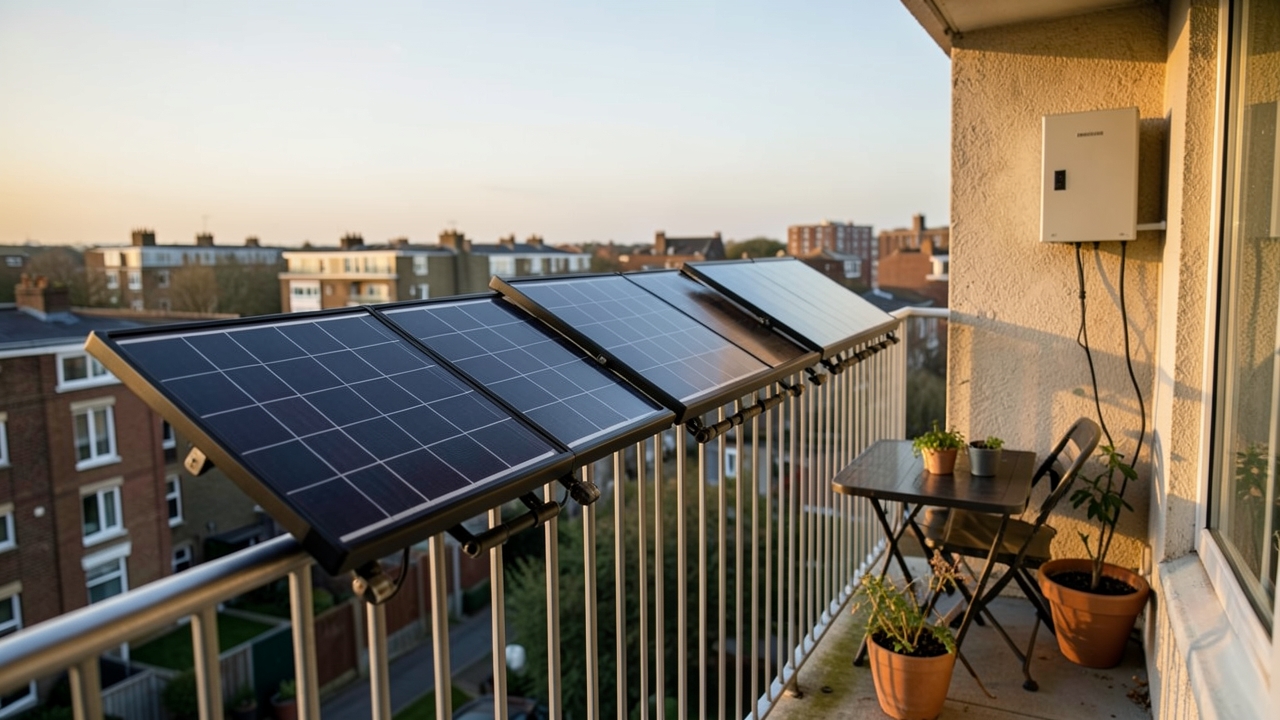
As energy costs rise in 2026, many UK renters are exploring renewable options. Balcony solar panels rental UK solutions offer a practical way to cut electricity bills without permanent modifications. However, tenants must navigate legal requirements and landlord agreements before installation.
This guide explains tenant rights, consent procedures, and local council regulations for plug-in solar kits. Furthermore, it provides practical advice for a smooth and compliant setup. Therefore, you can make an informed decision and start generating clean energy at home.
Tenant Rights and Legal Framework in the UK
In the UK, tenants have specific rights under the Housing Act 1988 and the Landlord and Tenant Act 1985. These laws protect you from unfair eviction and allow reasonable alterations. However, installing balcony solar panels typically requires landlord consent first. For example, a plug-in solar kit that attaches to the balcony railing may count as a “improvement” under section 11 of the Landlord and Tenant Act.
According to a 2025 report by Energy Saving Trust, over 40% of UK renters are interested in solar energy but cite legal barriers as a major concern. Therefore, understanding your rights is crucial. You can make minor alterations without consent if they are reversible and don’t damage the property. But balcony solar panels often need explicit approval.
Understanding Landlord Consent Requirements
Landlord consent is usually required for installing balcony solar panels in a UK rented flat. This is because the panels are affixed to the building structure, even if temporarily. Moreover, most tenancy agreements include clauses on alterations. Consequently, failing to get consent could lead to disputes or deposit deductions.
To seek consent, start by writing a formal request to your landlord. Explain the benefits, such as reduced energy bills and minimal impact. For instance, plug-in solar kits like the best balcony solar panels in the UK are designed for easy installation without drilling. Furthermore, provide details on the product, including weight and fixation method.
If your landlord refuses, you can appeal under the Right to Repair scheme or seek mediation. However, in practice, most landlords agree when shown evidence of safety and reversibility. In addition, government initiatives like the Smart Export Guarantee (SEG) may incentivise landlords, as excess energy can be sold back to the grid.
Local Council Regulations and Planning Permission
Local council regulations vary across the UK, but planning permission is often not required for balcony solar panels. Under the Permitted Development Rights, small-scale solar equipment on residential properties is usually exempt. However, this applies more to houses; flats may have different rules. Therefore, check with your local council’s planning department.
For example, in London boroughs like Camden or Manchester, flat conversions may need approval if the building is listed or in a conservation area. Furthermore, safety standards must be met. The panels should not obstruct fire escapes or windows. As a result, consulting council guidelines ensures compliance.
External links to official sources can help. Visit GOV.UK’s private renting guidance for general advice. Additionally, contact your local council’s environmental health team for specific regulations.
Practical Guide to Installing Balcony Solar Panels in a Rented Flat
Once you have consent, focus on practical installation. This section covers choosing a kit, setup tips, and safety measures. Balcony solar panels rental UK options are increasingly user-friendly in 2026.
Choosing the Right Plug-in Solar Kit
Select a plug-in solar kit that suits your balcony size and energy needs. In the UK, popular kits range from 300W to 800W, priced between £300 and £800. For instance, a 500W kit might generate around 2 kWh per day in summer, saving £5-£10 monthly on electricity bills. Moreover, look for kits with EU safety certification (CE marking) and weatherproof design.
Consider portable or rail-mounted options. Rail-mounted systems are more stable but require secure attachment. Meanwhile, portable kits can be removed easily, which is ideal for renters. Refer to our plug-in solar kits guide for detailed reviews and comparisons.
Installation Tips and Safety Considerations
Installation should be straightforward. First, clean the balcony area and ensure the railing is sturdy. Use non-invasive clamps or straps that don’t drill holes. Furthermore, angle the panels south-facing for maximum exposure. In the UK, optimal angles are between 30-40 degrees. However, balconies may limit this, so adjust accordingly.
Safety is paramount. Avoid overloading the balcony structure; typical kits weigh 10-20 kg. Also, use surge protectors and ensure electrical connections are waterproof. As a result, you prevent hazards like fires or falls. If unsure, consult a qualified electrician for a one-off check, costing around £50-£100.
Benefits and Costs of Balcony Solar Panels for Tenants
Beyond legality, consider the benefits and costs. Balcony solar panels rental UK setups offer tangible advantages. For example, they reduce reliance on grid electricity and lower carbon footprints. In 2026, with energy prices averaging 25p per kWh, a 500W kit could save £100-£200 annually.
Costs include the initial investment and potential removal fees. However, many kits are designed for reuse, so you can take them when moving. Furthermore, the Smart Export Guarantee allows you to sell excess energy, earning additional income. Consequently, payback periods can be as short as 2-3 years.
On the other hand, challenges include limited balcony space and variable weather. But with proper planning, these are manageable. Additionally, landlords may benefit from increased property appeal, making consent more likely.
Conclusion: Empowering Renters with Solar Energy
In summary, installing balcony solar panels in a UK rented flat is legally possible with the right approach. Tenant rights allow for reasonable alterations, but landlord consent and council checks are essential. Therefore, by choosing appropriate plug-in kits and following safety guidelines, you can enjoy renewable energy benefits.
As we move towards a greener future in 2026, renters play a key role. Have you considered balcony solar panels for your rental property? Share your thoughts or questions in the comments below – we’d love to hear from you!
Balcony Solar Savings Calculator
See your annual savings, export income and payback time — free, no sign-up.