
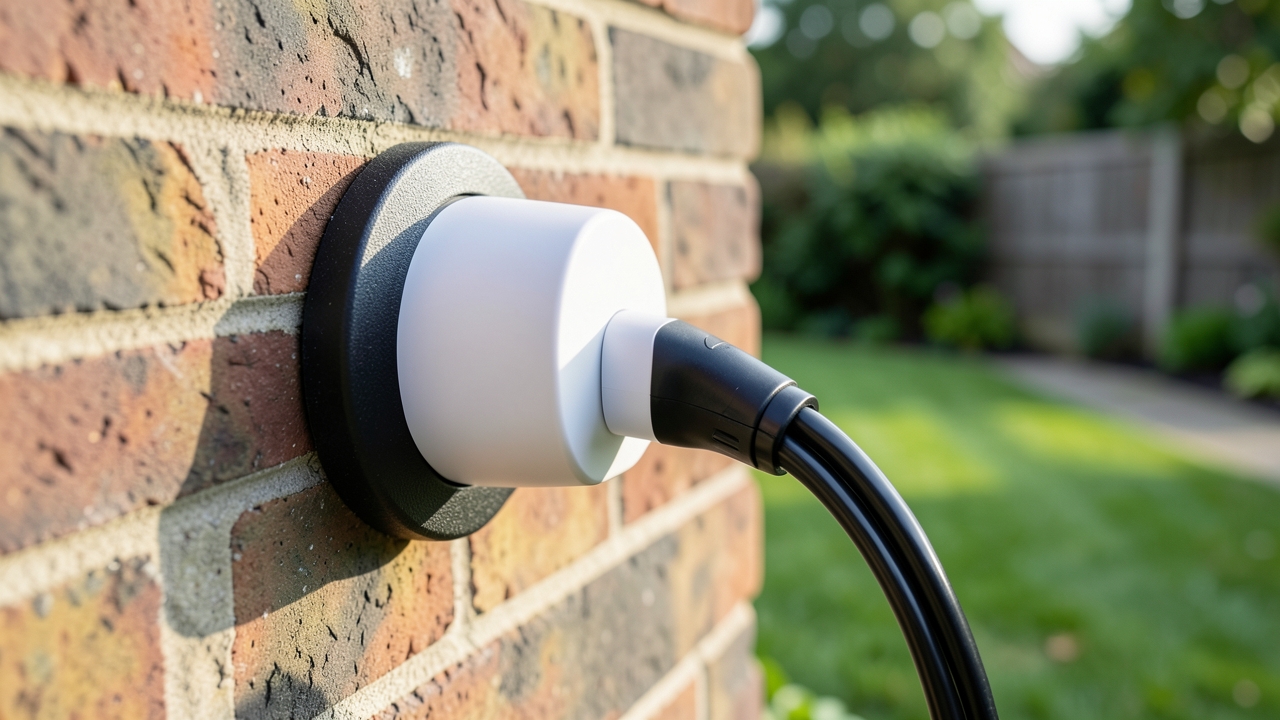
With electricity prices fluctuating and smart energy tariffs on the rise, knowing exactly what your EV charger costs to run has never been more important. EV charger smart plug monitoring is a simple, affordable way to track every kWh consumed during your overnight charge. This practical guide walks you through choosing the right smart plug and setting it up to slash your charging costs using popular UK time-of-use tariffs.
Furthermore, this level of insight helps you understand your vehicle’s true efficiency and contributes to a smarter home energy ecosystem. You’ll gain control over your biggest energy expense without complicated installations.
Why You Should Monitor Your EV Charger’s Energy Use
Firstly, an EV charger is often the most powerful appliance in a UK home, drawing 7kW or more. Without monitoring, it’s easy to lose track of the actual cost. Smart plug monitoring provides granular data for every charging session.
Consequently, this data is the key to leveraging time-of-use tariffs. Providers like Octopus Energy, EDF, and EON offer electricity for as little as 7.5p/kWh during off-peak hours, compared to standard rates of over 30p/kWh. By shifting your charging to these cheap windows, you could save hundreds of pounds annually.
Key Benefits at a Glance
- Cost Transparency: See the exact pence-per-mile cost of your driving.
- Tariff Optimisation: Confirm you’re charging during the cheapest available slots.
- Usage Insights: Track your vehicle’s efficiency over time in miles per kWh.
- Budgeting Control: Set precise charging budgets within your energy management app.
Choosing the Right Smart Plug for EV Charger Monitoring
Not every smart plug is suitable for monitoring an EV charger. You must check the specifications carefully to handle the load and connect reliably.
Critical Specifications for UK Users
- Maximum Power Load: Ensure the plug is rated for at least 13A or 3kW. For a typical 7kW home charger, you need a 32A industrial-grade smart relay, not a standard plug. For slower 3.6kW chargers, a heavy-duty 16A smart plug may suffice.
- Energy Monitoring: Verify the plug includes real-time energy monitoring (kWh tracking). Many basic “on/off” smart plugs lack this feature.
- Connectivity: Wi-Fi models offer broader range, while Zigbee or Z-Wave models integrate into whole-home hubs like Philips Hue or Hubitat.
- Weatherproof Rating: For outdoor installation (common for chargers), look for an IP44 or higher rating.
For example, a popular choice for standard 3-pin plug chargers is the TP-Link Tapo P110M, which offers detailed energy monitoring via its app. For hardwired 7kW+ chargers, a professionally installed smart relay from brands like myenergi (with Zappi) or Ohme (with Home Pro) is the correct solution.
Step-by-Step UK Setup Guide for Your Smart Plug
Follow these steps to get monitoring and cost-saving online.
Step 1: Safety First & Compatibility Check
Before plugging anything in, consult your charger’s manual. Some chargers have built-in monitoring and may void warranties if modified. Always use an RCD-protected socket. For outdoor installations, consider consulting a qualified electrician.
Step 2: Install the Smart Plug & App
Plug your EV charger’s supply into the smart plug, then plug the smart plug into your socket. Download the manufacturer’s app (e.g., Kasa, Tapo, Tuya). Connect the plug to your home Wi-Fi by following the in-app pairing process.
Step 3: Enable Energy Monitoring & Set Up Tariffs
Within the app, locate the energy monitoring or “usage” section. Here, you can often set your electricity supplier and tariff rate. Crucially, input your specific time-of-use tariff rates so the app can calculate costs automatically.
Step 4: Create an Automated Charging Schedule
Use the smart plug’s scheduling function to align with your tariff’s cheapest hours. For instance, if you have a tariff with a cheap rate from 12am-5am, schedule your charger to only receive power during this window. This automation is the core of cost saving.
Therefore, your EV will automatically charge only when electricity is cheapest, even if you plug it in earlier. Remember to set the departure time on your car’s own timer as well, so it’s ready when you need it.
Reducing Costs with UK Time-of-Use Tariffs
As of 2026, the UK energy market offers several EV-specific tariffs. Your smart plug becomes the tool that harnesses these savings.
Popular UK Tariff Structures
- Flat Rate: A single price per kWh all day. Monitoring helps reduce total usage but doesn’t exploit off-peak rates.
- Time-of-Use (e.g., Go/Green: A cheap overnight rate (e.g., 7.5p/kWh) and a higher peak rate. This is ideal for overnight EV charging.
- Agile Dynamic Tariffs: Prices change every 30 minutes based on wholesale markets. Requires more advanced monitoring and scheduling to avoid expensive peaks.
The UK Government encourages smart meter adoption (GOV.UK), as these tariffs require one to function. A smart plug works in tandem with your smart meter to provide detailed, device-specific data your meter alone cannot show.
For example, a 60 kWh EV battery charged entirely on a 7.5p/kWh off-peak rate costs £4.50. The same charge on a 30p/kWh standard tariff would cost £18.00. With smart plug monitoring, you can verify exactly when this charge happened and the precise cost.
Advanced Tips for Maximising Your Savings
Integrate with Solar Panels
If you have balcony solar panels or a full rooftop system, advanced smart plugs (or a dedicated EV charger) can prioritise charging from your own free solar energy. This further reduces reliance on grid electricity and maximises self-consumption.
Use Home Automation Platforms
Connect your Wi-Fi smart plug to a platform like Home Assistant or Google Home. This allows for complex automations. For instance, you could set a rule to start charging only if your home battery’s state of charge is below 20%, or if solar generation is forecast to be high.
Review and Adjust Regularly
Check your smart plug app weekly. Monitor for any failed charging sessions or schedule errors. As the Energy Saving Trust advises, consistent monitoring is key to understanding and reducing household energy use. Your charging habits and tariff rates may change, so adjust your schedule accordingly.
Conclusion: Take Control of Your EV Charging Costs
Implementing EV charger smart plug monitoring is one of the most straightforward and effective steps a UK EV owner can take to control energy expenditure. By choosing the correct hardware, setting it up properly, and pairing it with a time-of-use tariff, you transform your charger from a passive cost into a managed, optimised asset.
The small upfront investment in a suitable smart plug can pay for itself within months through slashed charging bills. Have you already started monitoring your EV’s energy use? Share your tips or questions in the comments below!
Smart Plug Energy Savings Calculator
Find out how much standby power costs you — and what a smart plug could save.