
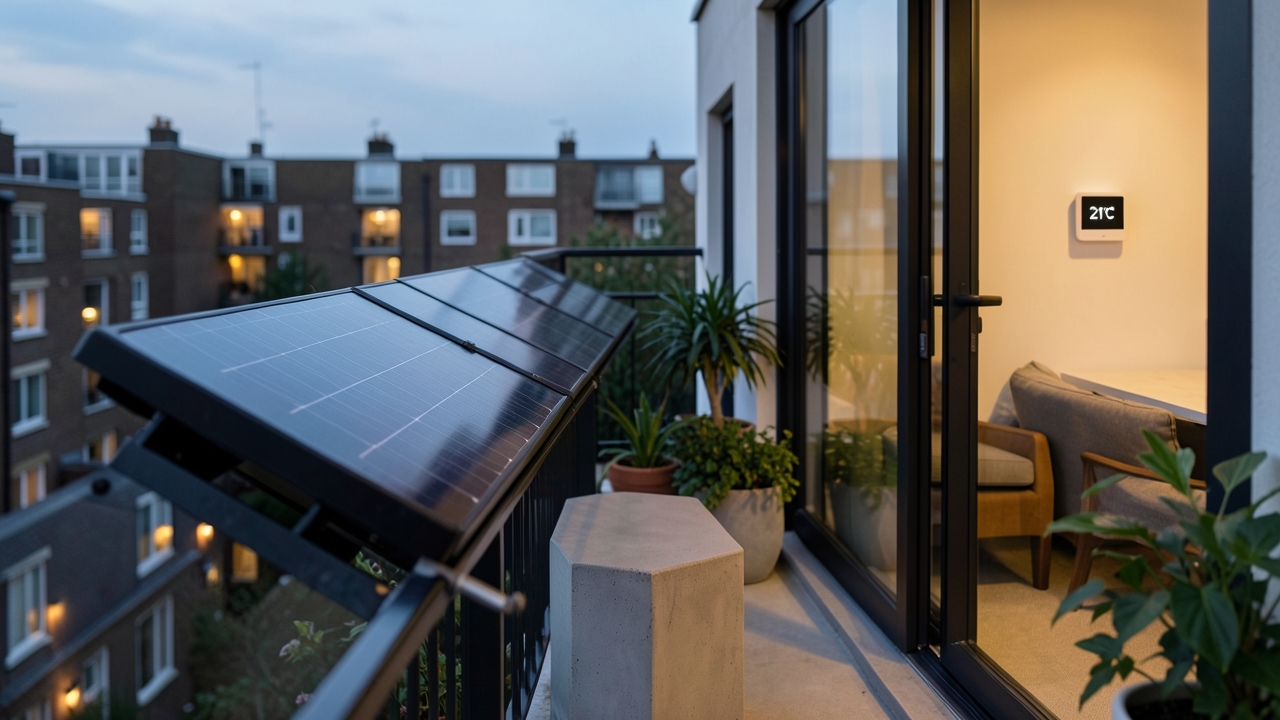
Integrating smart thermostat solar panels offers UK urban dwellers a powerful way to slash energy bills. In 2026, with energy prices still volatile, this combination is a smart move. It lets flats harness solar power for heating, optimising every ray of sunlight. For those in apartments, balcony solar panels are a game-changer, and pairing them with a smart thermostat maximises efficiency.
This guide explores how devices like Tado and Hive work with balcony solar systems. We’ll cover UK-specific costs, savings, and regulations. You’ll learn practical steps to set this up in your flat. Let’s dive into the details.
What Are Smart Thermostats and How Do They Work?
Smart thermostats are Wi-Fi-enabled devices that control your heating remotely. They learn your habits and adjust temperatures automatically. Brands like Tado and Hive are popular in the UK. Tado offers geofencing, which turns heating off when you’re out. Hive provides app control and scheduling.
These devices connect to your boiler or heating system. They use sensors to monitor room temperature and humidity. Furthermore, they integrate with other smart home gadgets. For example, they can work with voice assistants like Alexa. This connectivity is key for pairing with solar panels.
Key Features for UK Homes
In the UK, smart thermostats must comply with building regulations. They often include frost protection and holiday modes. Moreover, they provide energy usage reports. These reports help you track savings. A typical unit costs between £150 and £250. Installation might add £100 to £200, but DIY options exist.
Balcony Solar Panels: A Practical Solution for Flats
Balcony solar panels are compact systems designed for urban flats. They mount on railings or walls, generating electricity from sunlight. In the UK, a standard setup produces 300W to 600W. This is enough to power small appliances or supplement heating. Prices range from £300 to £800 for a complete kit.
These panels are lightweight and easy to install. They don’t require planning permission in most cases. However, always check your lease agreement. The UK government encourages renewable adoption through grants. For instance, the Smart Export Guarantee (SEG) pays you for excess energy sent back to the grid.
According to the Energy Saving Trust, solar panels can save UK households up to £300 per year on energy bills. For flats, balcony systems offer a scalable version of this benefit.
Smart Thermostat Solar Panels Integration: How It Works
The magic happens when smart thermostats and solar panels talk to each other. Some systems use a solar inverter or a smart hub to share data. For example, Tado can integrate with solar generation via the Tado app. It adjusts heating based on real-time solar output.
Here’s a step-by-step breakdown:
- Data Sharing: The solar panels send generation data to the smart thermostat.
- Optimised Heating: The thermostat heats rooms when solar power is abundant.
- Grid Import Reduction: It minimises electricity use from the grid during peak times.
- Savings Boost: This can increase overall efficiency by 20% to 40%.
Consequently, you use more self-generated solar energy. This reduces reliance on expensive grid electricity. In the UK, with prices around 25p per kWh, this adds up. A well-integrated system might save £100 to £200 annually.
Compatible Systems in the UK
Tado offers open API for custom integrations. Hive works with Hive Solar, a dedicated product. Furthermore, third-party platforms like Home Assistant can bridge gaps. For flats, ensure your system is compatible. Check manufacturer guidelines for UK-specific models.
Energy Savings and Cost Benefits in the UK
UK flats face high energy costs, with average bills over £1,000 yearly. Smart thermostat solar panels tackle this directly. By prioritising solar-heated air, you cut gas or electric heating use. For instance, a 500W balcony system might generate 400kWh annually.
Meanwhile, a smart thermostat can reduce heating bills by 10% to 15%. Combined, savings could reach £200 to £400 per year. The return on investment often takes 2 to 4 years. In addition, property value may increase with green tech.
However, results vary based on orientation and usage. South-facing balconies yield more power. Furthermore, regular maintenance ensures optimal performance. Clean panels seasonally and update thermostat software.
UK Regulations and Incentives for 2026
In the UK, regulations support renewable energy in flats. The Microgeneration Certification Scheme (MCS) certifies solar installations. This is often required for grants. The Smart Export Guarantee allows you to sell excess electricity. Payments vary by supplier, but rates are around 5p to 15p per kWh.
For smart thermostats, there are no specific regulations, but they must meet safety standards. The UK government promotes energy efficiency through schemes like the Boiler Upgrade Scheme. Although this focuses on boilers, smart controls complement it. Always check local council rules for balcony installations.
Furthermore, tax relief might apply. The Enhanced Capital Allowance scheme allows businesses to deduct costs. For individuals, VAT on energy-saving materials is reduced to 0%. This makes upgrades more affordable in 2026.
Getting Started: Tips for Implementation in Flats
Ready to set up smart thermostat solar panels? Follow these UK-specific tips:
- Assess Your Space: Measure your balcony for panel fit. Ensure sunlight exposure.
- Choose Compatible Devices: Select a smart thermostat that supports solar integration.
- Hire Certified Installers: For solar panels, use MCS-certified professionals. Costs are £500 to £1,000 installed.
- Set Up the Hub: Connect devices via Wi-Fi or a central hub. Configure automation rules in apps.
- Monitor and Adjust: Track energy savings in real-time. Tweak settings for seasonal changes.
For more guidance, explore our guide on balcony solar panels in the UK. If you’re interested in broader home energy, check our article on EV charger installation for sustainable transport. Additionally, our e-bike conversion kits offer another way to cut carbon.
External resources provide further insights. Visit GOV.UK for renewable energy policies. For thermostat reviews, see Which?.
Conclusion: Maximise Your Savings Today
Smart thermostat solar panels are a smart investment for UK flats in 2026. They reduce energy bills and enhance comfort. By integrating technology, you harness solar power efficiently. With savings up to 30%, the benefits are clear.
As energy costs evolve, this setup future-proofs your home. It’s accessible, even in urban settings. Take the first step by auditing your energy use. Then, explore compatible systems.
Have you considered integrating smart thermostats with solar panels? Share your thoughts or questions below – we’d love to hear from you!