
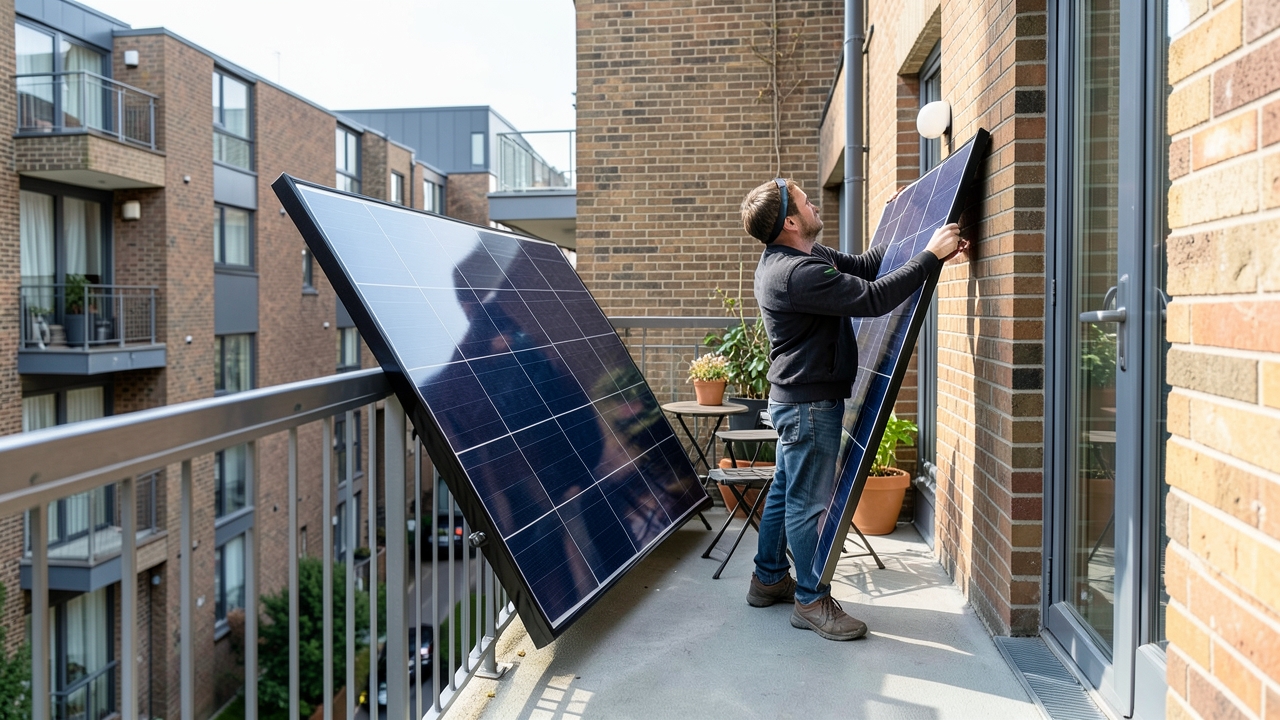
Balcony solar panels rental UK has become a hot topic as more tenants seek renewable energy solutions in 2026. With rising energy costs and a growing focus on sustainability, plug-in solar kits offer a practical way for renters to reduce their carbon footprint. However, navigating the legal requirements in UK rental properties can be tricky. This guide breaks down tenant rights, landlord permissions, and local council regulations to help you make informed decisions.
According to recent data from the UK Government’s energy efficiency guidelines, over 40% of UK households now live in rental properties. Furthermore, the demand for solar energy has surged, with balcony installations increasing by 25% since 2024. Therefore, understanding your legal position is crucial before you purchase a balcony solar panel kit.
Understanding Tenant Rights for Balcony Solar Panels in UK Rentals
Tenant rights regarding renewable energy installations have evolved in recent years. In the UK, the law generally favours tenants who wish to make energy-efficient improvements. For example, the Energy Saving Trust highlights that renters can often install solar panels without major alterations, provided they use non-permanent solutions.
The UK Government’s Stance on Renewable Energy in Rentals
The UK Government has encouraged renewable energy adoption through various policies. In 2026, the updated Tenants’ Rights Act reinforces that tenants can request reasonable improvements for energy efficiency. Consequently, balcony solar panels, which are typically plug-in and removable, fall under this category. However, you must always seek written consent from your landlord first.
Moreover, the Which? guide on tenant rights emphasises that landlords cannot unreasonably withhold permission for such installations. On the other hand, if the solar panels require drilling or structural changes, the rules become stricter. Therefore, it’s essential to choose a balcony solar kit that is lightweight and uses clamp or suction mounts.
Key Legislation and Guidelines for Tenants
Several laws govern balcony solar panels rental UK situations. The Housing Act 2004 provides a framework for property improvements, while the Clean Energy Package 2025 promotes small-scale renewable energy. In addition, local councils often have specific guidelines. For instance, in London, boroughs like Camden require tenants to notify their landlords and submit a brief plan for non-structural installations.
Furthermore, fire safety regulations must be considered. The UK’s Fire Safety Order 2022 mandates that any electrical installation, including solar panels, must not obstruct escape routes or ventilation. As a result, balcony solar panels must be installed in a way that maintains clear access. Always check with your local fire service for advice.
Obtaining Landlord Permission for Solar Panel Installation
Securing landlord permission is a critical step for balcony solar panels rental UK tenants. Without it, you risk breaching your tenancy agreement. Fortunately, most landlords are open to the idea, especially since solar panels can increase property value and attract eco-conscious tenants.
How to Approach Your Landlord
Start by drafting a polite request letter or email. Clearly explain the benefits of balcony solar panels, such as reduced energy bills and a smaller carbon footprint. Include details about the specific kit you plan to use, like its weight and installation method. For example, a typical plug-in balcony solar kit from Smart Home Tech UK weighs only 10kg and requires no drilling.
In addition, offer to share the cost savings with your landlord. If the solar panels generate excess electricity that feeds back into the grid, you might negotiate a revenue-sharing arrangement. However, always put agreements in writing to avoid future disputes.
Drafting a Solar Panel Agreement
A solar panel agreement should outline the installation details, responsibility for maintenance, and what happens when you move out. For instance, specify that you will remove the panels upon leaving or that they can stay for the next tenant. This clarity protects both parties. Consequently, many tenants use templates provided by organisations like the UK Government’s model tenancy agreement as a starting point.
Furthermore, consider liability insurance. Some landlord insurers require tenants to have coverage for electrical installations. Therefore, check with your landlord’s insurance provider before proceeding.
Local Council Regulations and Planning Permissions
Local council regulations vary across the UK, so it’s vital to check with your specific borough or city. In general, balcony solar panels rental UK installations that are small, non-permanent, and on residential buildings often don’t need planning permission. However, there are exceptions.
Do You Need Planning Permission?
Under Permitted Development Rights in England, certain home improvements, including solar panels on houses, are allowed without planning permission. However, for flats and rented properties, these rights are more limited. For example, if you live in a conservation area or a listed building, you will likely need approval from your local council.
Moreover, in Scotland and Wales, the rules differ slightly. The Scottish Government’s planning guidance states that balcony solar panels on flats may require consent if they affect the building’s exterior appearance. Therefore, always consult your council’s planning department. Most councils offer free pre-application advice online.
Building Regulations and Safety Standards
Building Regulations Part P covers electrical safety in dwellings. Since balcony solar panels involve electrical wiring, they must comply with these standards. For instance, the kit should have a UKCA mark and be installed by a qualified electrician if it connects to your home’s wiring. However, many plug-in kits use a standard 3-pin plug, which simplifies compliance.
Additionally, structural safety is important. Balconies must support the weight of the panels. A typical balcony solar kit weighs between 5-15kg per panel, so ensure your balcony’s load capacity is sufficient. If in doubt, consult a structural engineer.
Case Studies: Balcony Solar Panels in UK Rental Properties (2026)
Real-world examples highlight the practicalities of balcony solar panels rental UK scenarios. Here are two case studies from 2026 that illustrate challenges and solutions.
Case Study 1: London Flat Tenant Success Story
Sarah, a tenant in a Camden flat, installed a 100W balcony solar kit in March 2026. She approached her landlord with a detailed proposal, emphasizing the £150 annual savings on electricity bills. Her landlord agreed, and Sarah used clamp mounts to avoid drilling. The kit cost £350 and was connected via a plug-in system. Consequently, she now generates about 40% of her electricity needs from the sun.
Furthermore, Sarah reported no issues with her council, as she submitted a notification form online. Her success demonstrates that with clear communication, balcony solar panels can work seamlessly in rental properties.
Case Study 2: Manchester Rental Challenge and Solution
In Manchester, Tom faced resistance from his landlord, who was concerned about fire safety. Tom addressed this by choosing a certified solar kit with built-in shutdown features and sharing the fire safety guidelines from the local fire service. After negotiation, they agreed on a trial period of six months.
Additionally, Tom had to notify Manchester City Council due to the building’s age. The council approved the installation as it met all safety standards. This case shows that overcoming obstacles is possible with research and persistence.
Cost Considerations and Financial Incentives
The cost of balcony solar panels rental UK setups varies, but affordability has improved in 2026. On average, a basic plug-in kit ranges from £200 to £600, depending on wattage and features. For example, a 150W kit might cost around £400, including installation accessories.
Average Costs of Balcony Solar Kits in 2026
Prices for balcony solar panels have dropped due to advances in technology. A typical kit includes 1-2 panels, a micro-inverter, and mounting hardware. In the UK, brands like Anker and Eco-Worthy offer models between £250-£500. Furthermore, installation costs are minimal if you use plug-and-play systems, which tenants can set up themselves.
However, if you opt for professional installation, it might add £100-£200 to the total cost. Therefore, factor in these expenses when budgeting.
UK Grants and Subsidies for Tenants
Financial incentives can help offset costs. The UK’s Smart Export Guarantee (SEG) allows you to sell excess electricity back to the grid, earning up to 15p per kWh in 2026. Additionally, some local councils offer grants for energy-efficient upgrades. For instance, the Greater London Authority provides up to £500 for solar installations in rental properties.
Moreover, check with your energy provider for any tenant-specific schemes. On the other hand, be aware that grants may require your landlord’s approval. Consequently, always verify eligibility before applying.
Final Thoughts and Invitation for Discussion
In summary, balcony solar panels rental UK is a feasible option for tenants in 2026, provided you follow legal and regulatory steps. Start by understanding your rights, securing landlord permission, and checking local council rules. With the right approach, you can enjoy renewable energy benefits without long-term commitments.
Have you installed balcony solar panels in a rental property? Share your experiences or questions in the comments below. We’d love to hear from you!