
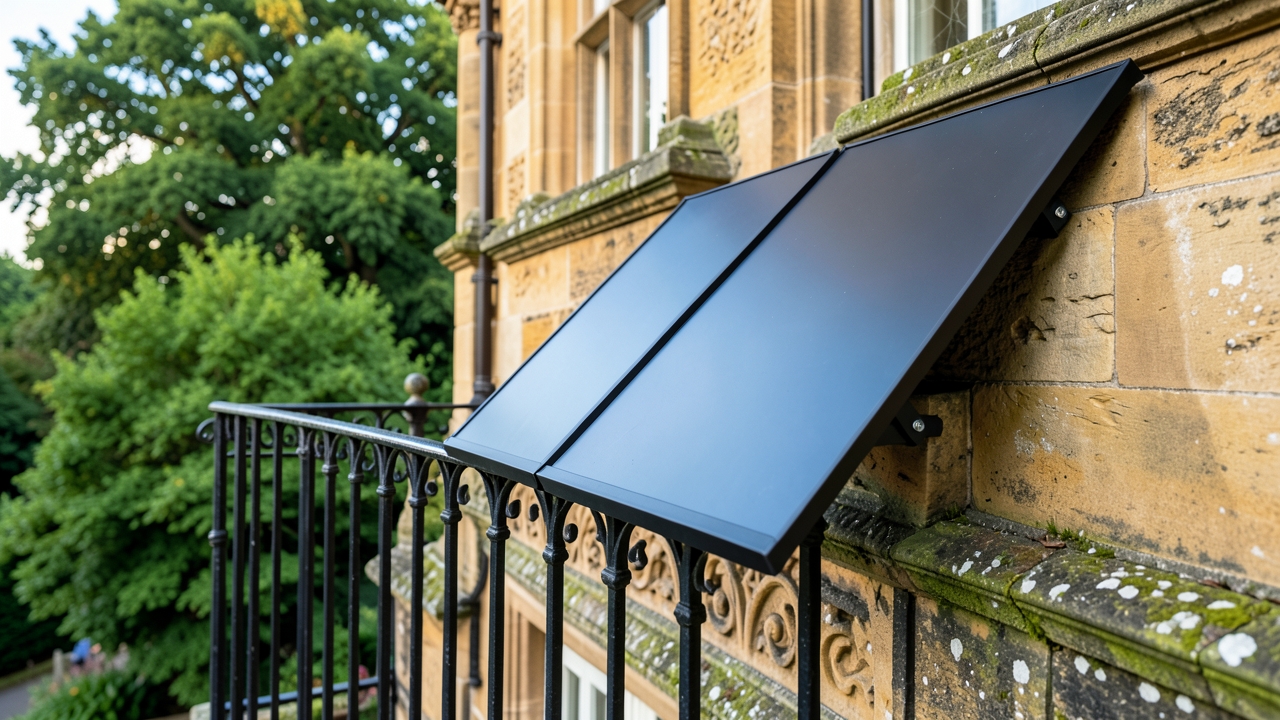
Installing listed building balcony solar UK systems can seem daunting due to strict heritage rules. However, with careful planning, it is often possible to harness solar energy without compromising historical integrity. In 2026, many UK residents are exploring plug-in solar kits for their balconies, but listed properties require special consideration.
Understanding Listed Building Consent for Balcony Solar UK
Listed buildings in England and Wales are protected under the Planning (Listed Buildings and Conservation Areas) Act 1990. Any alteration, including installing solar panels, typically requires listed building consent from your local planning authority. Furthermore, this consent is separate from regular planning permission and focuses on preserving the building’s special architectural or historic interest.
Key Steps to Obtain Consent
- Contact your local council’s planning department early in the process. They can provide guidance specific to your property.
- Submit detailed plans showing the proposed solar panel installation, including dimensions and materials.
- Explain how the installation will minimise visual impact and avoid damage to the building’s fabric.
- Be prepared for negotiations; adjustments may be needed to gain approval.
For example, a resident in a Grade II listed flat in Brighton had to use transparent panels to blend with historic windows. This case illustrates that creativity often meets regulatory requirements. According to GOV.UK, failure to obtain consent can lead to enforcement action, including fines or orders to remove the panels.
Practical Challenges for Balcony Solar UK in Listed Properties
Beyond legal permissions, practical hurdles exist for listed building balcony solar UK setups. Structural limitations and aesthetic concerns are common. However, modern plug-in solar kits, such as those from Smart Home Tech UK, are designed to be lightweight and non-invasive.
Structural and Aesthetic Considerations
Listed buildings often have delicate structures, like aged masonry or timber balconies. Therefore, installing heavy equipment could cause damage. In addition, conservation officers prioritise maintaining the building’s appearance. For instance, solar panels must not dominate the facade or be visible from key viewpoints.
On the other hand, some solutions exist. Removable mounting systems, for example, allow panels to be taken down for maintenance or events. Moreover, using frames that match the balcony’s colour can reduce visual intrusion. As a result, these approaches help balance energy goals with heritage preservation.
Case Studies: UK Residents Installing Listed Building Balcony Solar
Real-world examples show that success is achievable with patience and collaboration. Here are two case studies from 2026.
Case Study 1: London’s Grade II Listed Flat
Emma, a resident in a Grade II listed flat in Camden, wanted to reduce her electricity bills. She applied for listed building consent for a 500W plug-in solar kit on her balcony railing. After six weeks, the council approved it with conditions: panels had to be black to match ironwork, and installation must be reversible. The kit cost £420, and it now generates about 0.5 kWh daily in summer, saving her around £120 annually.
Case Study 2: Cotswolds Cottage
In the Cotswolds, a couple living in a thatched-roof cottage with a small balcony faced resistance initially. Their local authority was concerned about impact on the streetscape. However, they proposed a discreet, low-profile kit from Smart Home Tech UK’s top plug-in solar kits. After adjustments, including a planning condition to remove panels during winter months, they gained consent. The £650 investment now powers their outdoor lighting and small appliances.
These cases highlight that with tailored solutions and open dialogue, listed building balcony solar UK installations can proceed. Local councils often support sustainable upgrades if heritage is respected.
Costs and Incentives for Balcony Solar in 2026
The price of balcony solar panels varies, but plug-in kits remain affordable. For example, a basic 1kW system suitable for a small balcony typically ranges from £300 to £800 in 2026. Larger kits, up to 2kW, can cost between £1,000 and £1,500. Installation fees are often minimal since these are DIY-friendly.
Government Support and Savings
Although grants for listed buildings are limited, the UK government offers incentives like the Smart Export Guarantee (SEG), which pays for excess electricity exported to the grid. Furthermore, reduced VAT on solar equipment, currently at 0%, helps lower costs. The Energy Saving Trust estimates that solar panels can save households between £200 and £400 annually, depending on usage.
Consequently, for listed buildings, the financial benefits must be weighed against potential consent costs and modifications. However, many residents find the long-term savings and environmental impact worthwhile.
Final Thoughts: Is Listed Building Balcony Solar UK Feasible?
In summary, installing balcony solar panels in a UK listed building in 2026 is feasible but requires careful navigation of regulations and practical challenges. Start by consulting your local authority and exploring reversible, low-impact kits. Remember, each property is unique, so personalised advice is key.
Are you considering solar for your listed balcony? Share your experiences or questions below, and let’s discuss how to make sustainable energy work in heritage homes!