
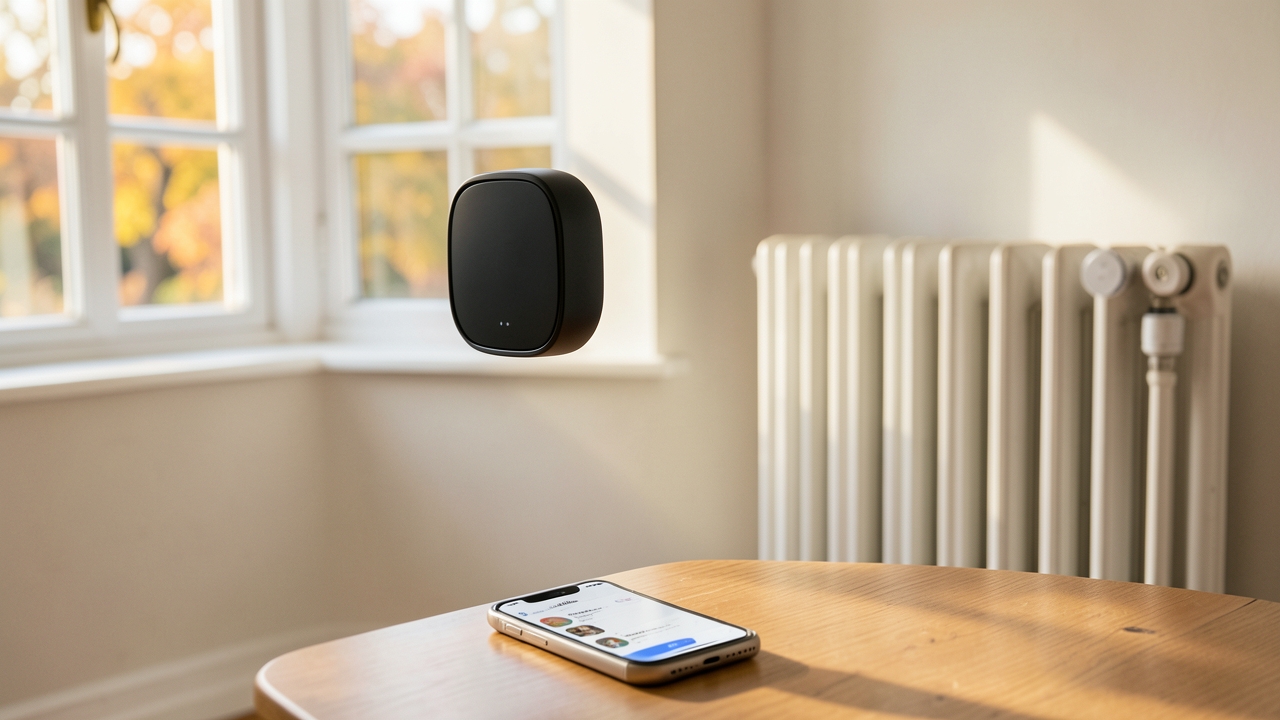
Smart thermostat savings UK homeowners are promised often sound too good to be true. Manufacturers talk about cutting heating bills by up to 30%. However, the October 2026 Ofgem price cap gives us a fixed set of unit rates to test those claims against. So we built a model of a typical three-bed semi-detached home and ran the numbers for Nest, Tado and Hive.
The short answer? Yes, they save money. Nevertheless, the realistic figure is 5% to 20% of your heating bill, not 30%. Here is exactly what that means in pounds and pence this winter.
The October 2026 Ofgem Price Cap in Numbers
Ofgem confirmed the October to December 2026 cap in late August. For a typical dual-fuel household paying by direct debit, it now sits at roughly £1,850 a year. That assumes 2,700 kWh of electricity and 11,500 kWh of gas.
- Electricity unit rate: 26.1p per kWh
- Gas unit rate: 6.9p per kWh
- Electricity standing charge: 55.4p per day
- Gas standing charge: 34.1p per day
Standing charges matter here. Furthermore, they are fixed costs you pay no matter how little energy you use. Consequently, no thermostat on the market can reduce them. Only your unit consumption is up for grabs. Always check the latest figures on the Ofgem price cap page before you commit.
Our Test Household: A Three-Bed Semi in the Midlands
To keep the comparison fair, we used one household model throughout. It is a 2005-built three-bed semi-detached house with cavity wall insulation, 250mm of loft insulation and a modern condensing gas boiler. Two adults and one child live there, and someone is home most evenings and weekends.
The Heating Assumptions
- Annual gas use: 11,500 kWh
- Space heating: 9,200 kWh
- Hot water: 1,800 kWh
- October to March share of space heating: 80%, or about 7,360 kWh
- Cost of that heating at 6.9p per kWh: roughly £508
- Existing controls: one basic programmer, one wall thermostat, no TRVs
So the prize is a £508 heating bill for the season. That is the number every percentage claim gets measured against.
Smart Thermostat Savings UK: Nest, Tado and Hive Tested
Google Nest Learning Thermostat: Realistic Saving £40 to £60
Google claims 6% to 12% savings on heating. In our model, 8% to 12% of £508 works out at £41 to £61 across the season. The hardware costs about £189. It learns your schedule, senses occupancy and drops into Eco mode when the house is empty.
Tado with Smart Radiator Thermostats: Realistic Saving £76 to £102
Tado is the only one of the three that sells proper zonal control. Therefore, it has the strongest case. The company claims up to 31%. Our estimate is more modest: 15% to 20% when you fit smart TRVs to at least four radiators and stop heating empty rooms. A starter kit runs about £150, and each extra smart TRV costs £60 to £70.
Hive Thermostat: Realistic Saving £25 to £46
Hive claims up to £130 a year. In our model, 5% to 9% of £508 gives £25 to £46 per heating season. Hive’s strengths are simple scheduling, geofencing and app control. On the other hand, it lacks the room-by-room zoning that drives the bigger numbers. Expect to pay £129 to £179, plus fitting if you do not fancy a DIY job.
Do the Up to 30% Claims Stack Up?
Partly. The manufacturers are not lying, but they compare against a very specific baseline. As a result, savings of 20% to 30% are achievable if you currently heat the whole house all day at one fixed temperature.
However, most UK homes already have some controls. Testing by Which? has repeatedly found smaller real-world savings than the marketing implies. If you already run a sensible schedule, expect 3% to 8%. That is still worth having, but it will not pay for itself in one winter.
A smart thermostat is a control upgrade, not a magic wand. It only saves energy when it changes when and where you heat.
Where the Savings Actually Come From
Scheduling and Geofencing
The biggest single win is not heating an empty house. For example, a household that leaves at 8am and returns at 6pm can drop three to four hours of heating every weekday. That alone is worth £60 to £90 over a season.
Zonal Control and Smart TRVs
Smart radiator valves let you hold the living room at 20C while the spare bedroom sits at 15C. In addition, they let you shut off rooms you never use. Consequently, expect another 8% to 15% on top of your scheduling savings.
Lower Boiler Flow Temperature
This one is free, and it is the best value upgrade on this list. Turning your boiler flow temperature down to 55-60C lets a condensing boiler run in condensing mode more often. As a result, gas use can fall by 6% to 8%. Do this before you buy any gadget. The Energy Saving Trust has a clear walkthrough.
Smart Tariffs and Time-of-Use Pricing
Flexible tariffs such as Octopus Agile reward you for shifting load away from peak hours. Meanwhile, a smart thermostat can pre-heat the house between 1pm and 4pm, when electricity and gas demand are lower. On the other hand, this only pays off if your household is actually at home during the day.
Payback: How Long Until the Hardware Pays for Itself?
- Nest at £189, saving about £50 a season: payback just under four heating seasons
- Tado starter kit plus four smart TRVs at around £400, saving about £90 a season: payback roughly 4.5 seasons
- Hive at £149, saving about £35 a season: payback about 4.3 seasons
Now stretch that over a realistic lifespan. A thermostat should last 10 to 15 years. Therefore, Nest delivers roughly £500 of savings against £189 of hardware. Tado returns nearer £500 net once you account for the TRVs. Hive returns about £200 net. All three win, but none of them transforms your bill.
If you already own a well-programmed thermostat and decent TRVs, your payback could stretch past seven years. On the other hand, if your home has one analogue dial and no TRVs, payback can drop under three seasons.
Three Habits That Quietly Cancel Your Savings
- Leaving windows open while the heating runs. A single open window can waste more gas than a smart schedule saves.
- Blocking radiators with sofas, curtains or drying racks. Trapped heat makes the room thermostat overshoot.
- Skipping the annual boiler service. A dirty heat exchanger can add 5% to 10% to your gas use.
Cutting the Rest of the Bill in 2026
Heating is not the whole story. In addition, a few other moves can help this winter. If you want to compare hardware before you buy, our guide to the best smart thermostats in the UK covers compatibility with combi boilers, heat pumps and underfloor heating.
Meanwhile, a balcony solar panel kit can trim £80 to £150 from your electricity bill each year, and it pairs neatly with a smart tariff. Furthermore, if you are weighing up a heat pump, the Boiler Upgrade Scheme still offers grants of £7,500 in England and Wales. Full details sit on GOV.UK.
You can also find more low-cost ideas in our round-up of ways to reduce your energy bills without spending a fortune.
Our Verdict
Tado wins on raw savings, thanks to zonal control. Nest wins on usability and simple payback. Hive wins on price and ease of fitting. All three beat doing nothing, and none of them delivers the headline 30% for a typical UK home.
Treat the October 2026 price cap as your benchmark, not as a horror story. At 6.9p per kWh for gas, every 1,000 kWh you avoid saves £69. A smart thermostat is one of the cheapest ways to shave off that first 1,000 to 1,500 kWh.
Have you fitted a smart thermostat and tracked the difference on your smart meter? Tell us what your real numbers looked like, because we would love to compare them with our model.