
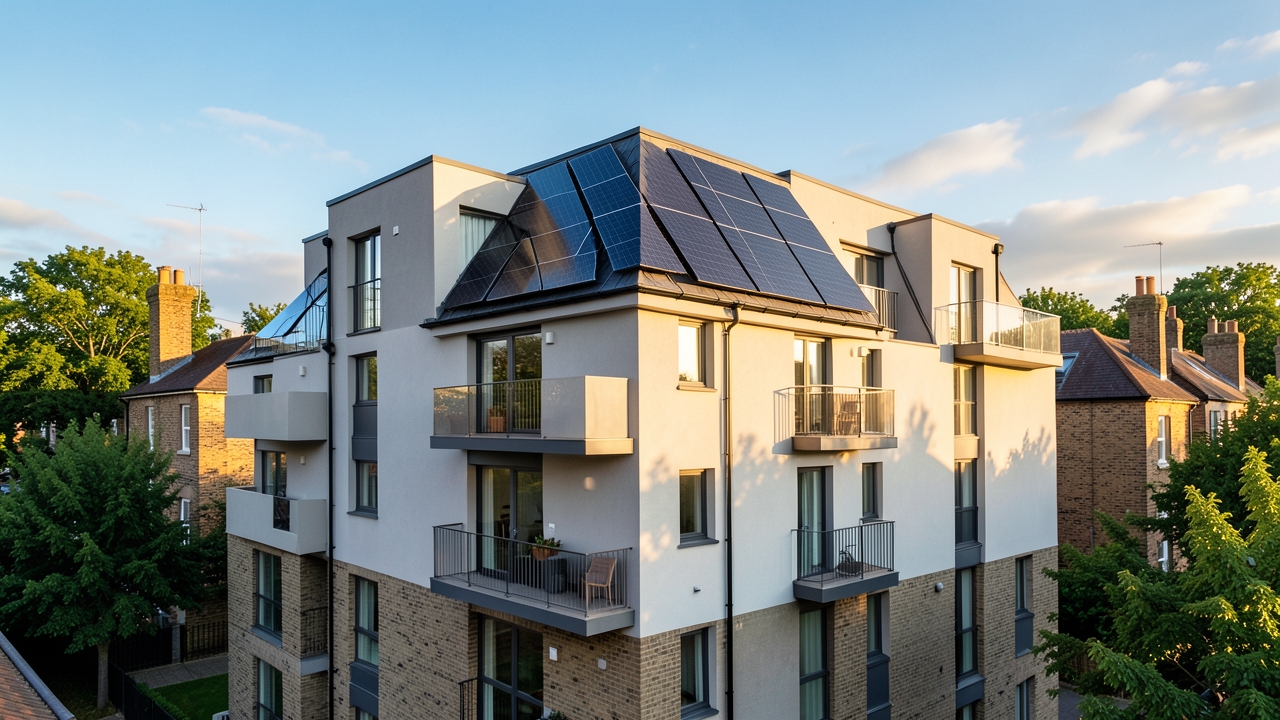
Finding ways to cut energy bills matters more than ever in 2026. Balcony solar panels offer a tempting solution for flat owners. However, if you live in a leasehold property, things get complicated. The question of whether you can install balcony solar leasehold UK setups involves legal rules, lease terms, and freeholder permissions. This guide walks you through everything you need to know before fitting solar panels to your balcony.
What Is a Leasehold Property and Why Does It Matter?
A leasehold property means you own the right to live in your flat for a set period. You do not own the building itself. The freeholder owns the structure, communal areas, and often the exterior walls and balconies. This distinction is critical when considering any modifications to your home.
For leasehold flat owners, your lease is effectively the rulebook. It dictates what changes you can and cannot make. Many leases contain clauses about alterations, fixtures, and external modifications. Installing balcony solar panels typically falls under these clauses.
Furthermore, the freeholder often holds responsibility for the building’s appearance and structural integrity. They have a legitimate interest in approving any visible changes. This is why obtaining permission is almost always necessary before installation.
Can You Install Balcony Solar Panels on a Leasehold Flat?
The short answer is: yes, you can, but you will likely need permission first. The longer answer depends on your specific lease terms, your freeholder’s attitude, and current UK law. In 2026, the legal landscape is shifting in favour of renewable energy installations. However, leasehold restrictions have not disappeared entirely.
Most lease agreements require written consent before you make any external alterations. Solar panels, even small balcony units, are considered alterations. Fitting them without permission could breach your lease. This might lead to legal action or demands to remove the panels.
Types of Balcony Solar Panels for Flats
Not all balcony solar setups are the same. Understanding the different types helps when discussing options with your freeholder. Here are the main categories:
- Plug-in balcony solar panels — lightweight, portable units that connect directly to a wall socket
- Rail-mounted balcony systems — panels fixed to a railing with clamps or brackets
- Balustrade-integrated panels — solar cells built into the glass of your balcony barrier
- Freestanding foldable panels — temporary units that lean against the balcony wall
Plug-in and freestanding options cause the least disruption and are easiest to approve. Rail-mounted and integrated systems require more permanent fixtures. These typically face greater scrutiny from freeholders and management companies.
What Does Your Lease Say About Solar Panel Installation?
Your first step is always to read your lease carefully. Look for clauses mentioning “alterations,” “fixtures,” or “external modifications.” Some leases specifically mention satellite dishes, aerials, or shutters. Solar panels may or may not be explicitly referenced.
If your lease is silent on solar panels, you still need to check the general alteration clauses. Most leases contain broad wording about changes visible from outside the property. This almost certainly covers balcony solar installations.
Additionally, check whether your balcony is classified as demised (part of your lease) or communal property. This distinction matters enormously. If the balcony is communal, you face an even higher bar for approval.
Common Lease Clauses That Affect Solar Panels
- “No external alterations without prior written consent of the landlord”
- “The lessee shall not affix any apparatus to the exterior of the building”
- “All windows, doors, and balcony areas must maintain the building’s uniform appearance”
- “The freeholder reserves the right to require removal of unapproved fixtures”
These clauses are standard in many UK leasehold agreements. They give freeholders significant control over what happens on your balcony. However, recent legal changes are starting to challenge these restrictions.
2026 UK Housing Law Updates for Solar Installations
The legal framework around leasehold properties has changed significantly in recent years. The Leasehold and Freehold Reform Act 2024 introduced new protections for leaseholders. While this Act primarily addressed service charges and lease extensions, it signalled a shift in government thinking.
More importantly, the UK government’s solar energy strategy has placed new emphasis on removing barriers to solar adoption. The 2026 updates include stronger guidance for management companies and freeholders to adopt a reasonable approach.
Furthermore, the Electricity Act 1989, Section 66, gives rights to install solar equipment on buildings. Courts have increasingly interpreted this to include leasehold properties. This means freeholders cannot refuse solar installations without good reason.
The Right to Request Solar Panels
In 2026, leaseholders have a stronger legal position than ever before. The government has issued updated guidance encouraging management companies to respond positively to solar panel requests. Refusing permission without a valid reason is increasingly seen as unreasonable.
However, freeholders can still impose reasonable conditions. For example, they may require specific panel types, professional installation, or insurance coverage. They may also insist on a particular mounting method that protects the building’s structure.
Do You Need Freeholder Permission for Balcony Solar Panels?
In almost every case, yes. Even if your lease does not explicitly mention solar panels, external alterations require approval. The management company or freeholder must give written consent. This applies to both permanent and temporary installations in most cases.
The process typically involves submitting a formal request. You should include details about the panels, mounting method, and any structural assessments. A polite, well-documented application improves your chances significantly.
How to Request Permission
Follow these practical steps to maximise your chances of approval:
- Read your lease agreement thoroughly before making contact
- Write a formal letter or email to the freeholder or managing agent
- Explain the environmental and financial benefits of the installation
- Provide product specifications, including weight, dimensions, and mounting details
- Offer to share photographs once the installation is complete
- Confirm you will arrange professional installation if required
- Ask about any specific conditions or preferred suppliers
Furthermore, consider reaching out to other leaseholders in your building. A collective request carries more weight. If multiple residents want solar panels, the freeholder may agree to a building-wide solution. This could even reduce costs through bulk purchasing.
How Much Do Balcony Solar Panels Cost in the UK?
Balcony solar panels are surprisingly affordable in 2026. Prices have dropped considerably over the past few years. For a basic plug-in system, you can expect to pay between £200 and £400. These typically produce between 300W and 600W of power.
Mid-range rail-mounted systems cost between £400 and £800. These offer better performance and a more permanent solution. Professional installation adds roughly £100 to £250, depending on complexity.
Premium integrated balcony systems can cost £1,000 or more. However, these provide the sleekest appearance. They may be easier to approve because they look like an intentional part of the building.
Expected Energy Savings
A typical 400W balcony solar panel setup in the UK generates around 350-450 kWh per year. Based on 2026 electricity prices averaging 28p per kWh, this saves approximately £98 to £126 annually. South-facing balconies achieve the highest output.
Meanwhile, east or west-facing balconies produce around 70% of the maximum output. Even north-facing balconies generate some power during summer months. Every bit of generation helps reduce your reliance on grid electricity.
What Happens If Your Freeholder Refuses Permission?
Unfortunately, some freeholders remain reluctant to approve solar installations. If your request is denied, you have several options. First, ask for the specific reasons behind the refusal. Understanding their concerns allows you to address them.
For example, they may worry about roof loading, visual impact, or water ingress. You can commission a structural survey to address safety concerns. You can also propose less visible panel positions or alternative mounting methods.
If informal negotiations fail, consider these next steps:
- Submit a formal complaint through the management company’s dispute process
- Contact your local council’s leasehold advisory service
- Seek advice from the Leasehold Advisory Service (TLAS)
- Explore whether the refusal breaches the 2026 guidance on renewable energy
- Consider a First-tier Tribunal (Property Chamber) application as a last resort
Furthermore, document everything. Keep copies of all correspondence. Record dates, names, and outcomes of any conversations. Strong documentation strengthens your position if matters escalate.
Rights of Light and Planning Considerations
One common concern from freeholders and neighbours is the “right to light.” This legal principle protects residents from having their natural light blocked. Balcony solar panels rarely cause rights of light issues. They are typically too small and positioned too low to affect neighbours significantly.
Planning permission is generally not required for small balcony solar panels. The UK government’s permitted development rights cover some solar installations. However, flats in listed buildings or conservation areas face stricter rules.
Additionally, if your building is a listed structure, you will need listed building consent. This applies even to temporary or removable panels. Always check with your local planning authority before proceeding.
Benefits of Balcony Solar Panels for Leaseholders
Despite the administrative hurdles, balcony solar panels offer genuine benefits. Understanding these advantages helps you build a compelling case for your freeholder.
Financial Benefits
Balcony solar panels reduce your electricity bills from day one. Over a typical 25-year panel lifespan, savings can reach £2,500 or more. The panels typically pay for themselves within two to four years. After that, the electricity they generate is essentially free.
Environmental Impact
Every unit of solar electricity reduces carbon emissions. A single balcony panel prevents roughly 170kg of CO2 per year. If every suitable balcony in a building had solar panels, the collective impact would be substantial. This aligns with the UK’s net zero targets for 2050.
Property Value
Research suggests properties with solar panels sell faster and at higher prices. Even leasehold flats benefit from this premium. Having an approved solar installation shows that your building embraces modern, sustainable technology.
Tips for a Successful Solar Panel Application
Getting your balcony solar leasehold UK application approved requires preparation and persistence. Here are proven strategies that work:
- Choose lightweight, low-profile panels that minimise visual impact
- Emphasise the environmental credentials in your application
- Offer to use approved installers recommended by the freeholder
- Propose a trial period to demonstrate the panels’ minimal impact
- Provide evidence of successful installations in similar buildings
- Highlight that plug-in systems require no permanent structural changes
Furthermore, check if your local council offers any grants or incentives for solar installations. Some councils provide funding specifically for flat residents. This reduces costs and may persuade reluctant freeholders to agree.
The Future of Solar in UK Leasehold Properties
The trend is clearly moving towards greater leaseholder rights for renewable energy installations. The UK government recognises that flats represent a huge untapped solar resource. Millions of balcony spaces across the country could generate clean electricity.
Consequently, we expect further legal reforms in the coming years. New legislation may give leaseholders an automatic right to install small solar panels. Freeholders would retain the ability to set reasonable conditions, but blanket refusals could become unlawful.
For now, the best approach is proactive communication with your freeholder. Document your requests carefully and stay informed about your legal rights. The landscape is evolving rapidly in favour of renewable energy access for all UK residents.
Frequently Asked Questions
Do I need planning permission for balcony solar panels?
Most small balcony solar panels do not require planning permission. They fall under permitted development rights in many cases. However, listed buildings and conservation areas have different rules. Always check with your local planning authority first.
Can my freeholder stop me from installing solar panels?
Your freeholder can require you to seek permission. They can impose reasonable conditions on the installation. However, outright refusal without valid grounds is increasingly difficult to justify under 2026 guidance. A blanket ban on all solar panels may be challengeable.
Are plug-in balcony solar panels legal in the UK?
Yes, plug-in balcony solar panels are legal in the UK. They connect to your flat’s electrical system through a standard socket. However, you should still check your lease terms. Many leases require permission for any external additions, regardless of their technical classification.
How much energy do balcony solar panels produce?
A typical 400W balcony panel in the UK generates approximately 350-450 kWh per year. Output varies based on orientation, shading, and weather conditions. South-facing balconies achieve the highest generation. Even modest output helps reduce your electricity bills.
Final Thoughts
Installing balcony solar panels on a leasehold flat in the UK is entirely possible in 2026. The legal environment is more supportive than it has ever been. However, leasehold restrictions still apply, and freeholder permission remains essential for most installations. Take the time to understand your lease, prepare a thorough application, and engage constructively with your freeholder. Balcony solar panels offer real financial savings and environmental benefits. The investment typically pays for itself within a few years while reducing your carbon footprint significantly.
Have you successfully installed balcony solar panels on your leasehold flat? Or are you currently navigating the permission process? Share your experience in the comments below. Your story could help other leaseholders take their first steps towards solar energy.
Balcony Solar Savings Calculator
See your annual savings, export income and payback time — free, no sign-up.