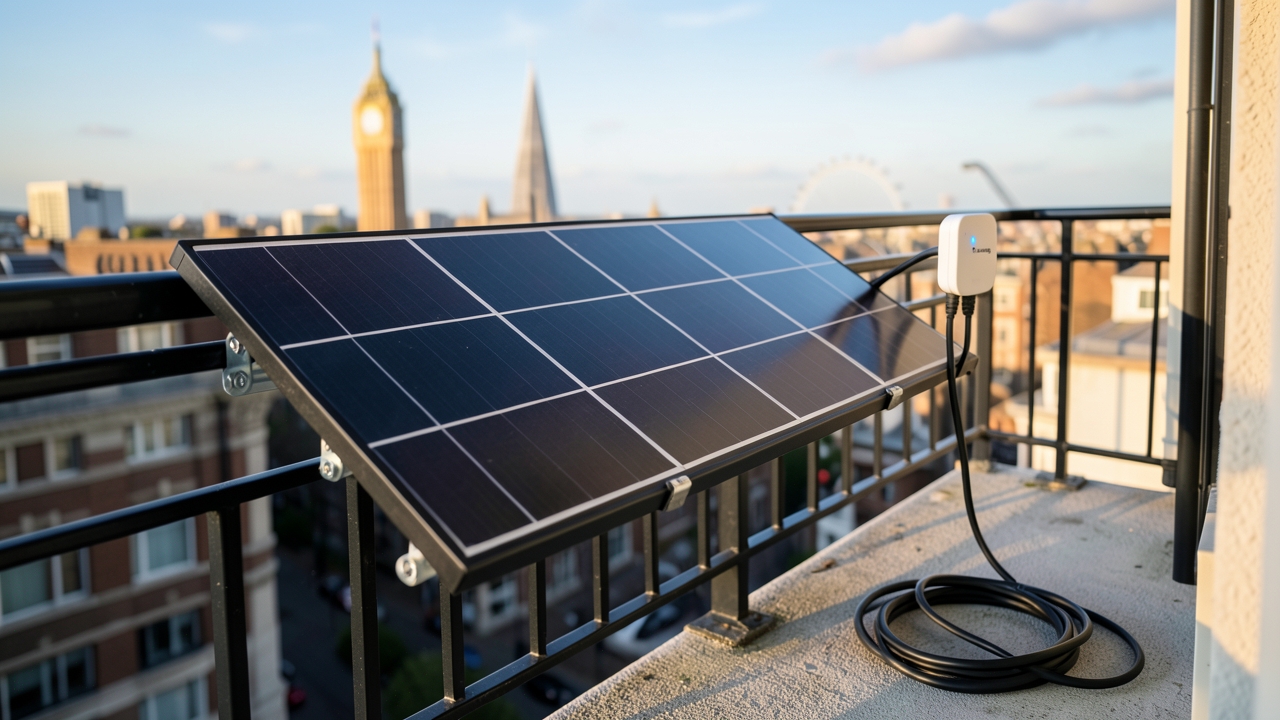
Living in a UK flat need not stop you from generating your own clean electricity. Balcony solar panels have surged in popularity across British cities, and many residents now want to track every watt they produce. A solar smart plug UK solution offers one of the simplest and most affordable ways to monitor real-time energy generation and consumption from a compact flat-roof or balcony setup. In this guide, we explore how these devices work, where they fall short, and what flat dwellers should know before buying one.
Furthermore, we cover UK-specific pricing, integration challenges unique to apartment living, and how to get the most accurate data from your setup. Whether you have just purchased your first balcony solar kit or you are weighing up options, this article will help you make an informed decision.
Why Balcony Solar Panel Owners Need Energy Monitoring
Balcony solar panels typically generate between 300W and 800W of power under ideal UK conditions. That may sound modest, but over a year it can save a flat owner between £50 and £150 on electricity bills, according to estimates from the Energy Saving Trust. Without monitoring, however, you have no way of knowing whether your panels are performing optimally.
Meanwhile, many flat residents cannot install a full-scale solar inverter with a built-in monitoring app. Landlords may restrict structural modifications, and building management rules often limit what you can attach to external walls. Consequently, a non-invasive, plug-and-play monitoring solution becomes essential.
A solar smart plug sits between your solar panel output and the appliance or socket it feeds. It measures voltage, current, and power flow in real time. In addition, most models connect to your home Wi-Fi and send data to a smartphone app, giving you a clear picture of daily and weekly generation.
What Is a Solar Smart Plug in the UK?
A solar smart plug is essentially an energy-monitoring smart plug adapted for use with small solar panel systems. Unlike a standard smart plug designed for toggling lamps or fans, a solar-focused model measures the power flowing into your home from a balcony solar panel or micro-inverter setup.
Most devices available in the UK market in 2026 cost between £15 and £45. Popular brands include Shelly, TP-Link, Tapo, and Sonoff. Many of these support the Tuya or Shelly Cloud ecosystem, which allows you to view generation data on a mobile app or even integrate with home automation platforms such as Home Assistant.
Key Features to Look For
- Real-time wattage display — Essential for tracking instantaneous solar output.
- Historical energy logging — Daily, weekly, and monthly kWh summaries help you understand seasonal trends.
- Wi-Fi or Zigbee connectivity — Wi-Fi models are simpler; Zigbee models require a hub but use less power.
- Surge protection — Important for outdoor or balcony setups exposed to weather.
- App compatibility — Look for Works with Google Home or Alexa certification for voice control.
How a Solar Smart Plug Works in a Flat
In a typical flat setup, your balcony solar panels connect to a micro-inverter or a small DC-to-AC converter. The AC output then feeds into a standard 13A UK plug socket. You place the solar smart plug between the inverter output and the socket. The device then measures how much power flows through it.
For example, if your Shelly Plug S is rated at 3,500W maximum and your balcony panel array produces 600W on a sunny June afternoon, the smart plug will display that 600W figure in its app. Over the course of the day, it累计 the total energy generated and express it in kilowatt-hours (kWh).
However, there is a catch that many flat owners overlook. Most smart plugs measure power flowing through the device in one direction only. If your setup feeds solar electricity into a multi-socket extension lead alongside other devices, the plug may not distinguish between solar-generated power and grid electricity. Therefore, careful placement of the smart plug is critical for accurate readings.
Integration Challenges for Flat Dwellers
Using a solar smart plug in a UK flat presents several unique challenges. Understanding these upfront will save you frustration later.
1. Wiring Restrictions
Most UK flats have limited outdoor-rated sockets on balconies. As a result, many residents run extension leads from an indoor socket through a window or door. This arrangement can introduce safety risks, especially in wet weather. The UK Government guidance on electrical safety in rented homes recommends that landlords ensure all electrical installations meet the standards outlined in BS 7671. As a tenant, you should avoid permanent alterations to the wiring without permission.
2. Wi-Fi Signal on Balconies
Smart plugs rely on a stable Wi-Fi connection. If your balcony is at the far end of a large flat or faces away from your router, signal strength may be weak. In such cases, consider a Wi-Fi range extender or a Zigbee-based smart plug paired with a hub placed closer to the balcony.
3. No Net Metering for Micro-Generation
Unlike homes with a full solar PV installation and a smart meter, balcony solar owners in the UK generally cannot export excess electricity to the grid for credit. Most micro-inverters used with balcony systems do not connect to your electricity meter. Therefore, the solar smart plug becomes your primary data source for understanding how much energy you actually use from your panels versus how much you draw from the grid.
Data Accuracy: What to Expect from a Solar Smart Plug
Accuracy is a common concern. Dedicated solar monitoring systems, such as those bundled with Enphase or SolarEdge inverters, typically offer accuracy within 1-2%. In contrast, most affordable smart plugs in the UK market advertise accuracy of around 3-5%.
For a balcony setup generating 500W, a 5% margin of error means your reading could be off by roughly 25W. In practice, this level of accuracy is perfectly adequate for tracking trends and understanding your energy habits. It is not, however, precise enough to claim Feed-in Tariff (FiT) or Smart Export Guarantee (SEG) payments. Fortunately, balcony solar systems are too small to qualify for SEG anyway.
Furthermore, temperature and voltage fluctuations can influence readings. On very hot summer days, the resistance within the smart plug itself may shift slightly. Most manufacturers account for this in their calibration, but the effect is worth noting if you compare smart plug data against your inverteru2019s own output figures.
Best Solar Smart Plugs for UK Flats in 2026
Below are three popular options available to UK buyers right now, with approximate pricing.
Shelly Plug S (Wi-Fi)
Price: approximately £20u2013£25. The Shelly Plug S offers real-time monitoring through the Shelly app and supports local API access for advanced users. It handles up to 3,500W and provides energy logging with hourly, daily, and monthly breakdowns. Furthermore, it integrates with Home Assistant, making it ideal for tech-savvy flat owners.
Tapo P110 (Wi-Fi)
Price: approximately £12u2013£15. The TP-Link Tapo P110 is one of the most affordable energy-monitoring smart plugs in the UK. It provides detailed energy consumption data in the Tapo app and supports scheduling. On the other hand, it does not offer a local API, so data is locked into TP-Linku2019s cloud ecosystem.
Sonoff S31 (Wi-Fi, flashed with Tasmota)
Price: approximately £8u2013£12. The Sonoff S31 is a budget favourite among home automation enthusiasts. While the stock firmware is basic, flashing it with open-source Tasmota firmware unlocks detailed energy monitoring, MQTT support, and local control. However, flashing requires technical knowledge and is not recommended for beginners.
Step-by-Step: Setting Up Your Solar Smart Plug in a Flat
Follow these steps to get your monitoring setup running quickly and safely.
- Mount your balcony solar panels securely using the manufactureru2019s brackets. Ensure they face south or south-west for maximum UK exposure.
- Connect the panels to your micro-inverter or DC-to-AC converter using the supplied cables.
- Plug the solar smart plug into a UK 13A socket that is rated for outdoor use or protected from rain.
- Connect your inverter output to the smart plug. Do not daisy-chain through extension leads if possible.
- Download the manufactureru2019s app and pair the smart plug with your Wi-Fi network.
- Monitor your first dayu2019s output. Compare the kWh figure with expected generation for the season and weather conditions.
As a result, you will have a real-time dashboard showing exactly how much electricity your balcony panels produce each day. Over weeks and months, the data reveals useful patterns that help you shift high-energy activities — such as running a washing machine or charging an e-bike — to peak solar hours.
Smart Plugs vs Dedicated Solar Monitors
It is worth comparing smart plugs against dedicated solar monitoring devices. Dedicated monitors such as the Sense Energy Monitor or the GivEnergy Cloud system offer whole-home monitoring with solar import/export tracking. However, they typically cost between £150 and £300 and often require professional installation.
For balcony solar owners, a solar smart plug UK solution offers a far more cost-effective entry point. You can get started for under £25 and install it yourself in minutes. The trade-off is that you monitor only the solar output — not your entire homeu2019s consumption. If you want a fuller picture later, you can always add a whole-home energy monitor alongside your smart plug setup.
Furthermore, dedicated monitors usually integrate with your utility meter and smart meter data. Smart plugs, by contrast, operate independently. On the other hand, this independence is actually an advantage for renters who cannot modify their homeu2019s electrical infrastructure.
Cost Breakdown: Monitoring Your Balcony Solar on a Budget
Here is a realistic cost estimate for a basic solar smart plug monitoring setup in the UK:
- Solar smart plug (e.g., Shelly Plug S): £20u2013£25
- Wi-Fi range extender (if needed): £15u2013£30
- Weatherproof outdoor extension lead (13A, IP44 rated): £12u2013£20
- Total setup cost: £47u2013£75
Compare that with the potential annual savings of £50u2013£150 from your balcony solar panels, and the monitoring setup pays for itself within the first year. In addition, the data you gather helps you optimise usage patterns and squeeze even more value from your panels over time.
UK Regulations and Safety Considerations
As of 2026, the UK does not require formal planning permission for most balcony solar panel installations. However, your buildingu2019s freeholder or management company may impose restrictions under the terms of your lease. Always check before drilling into external walls or railings.
From an electrical safety standpoint, the Which? guide to smart plugs recommends only using devices that carry a UKCA or CE marking and are rated for the load you intend to connect. Never exceed the smart plugu2019s maximum wattage rating, and always use RCD-protected sockets for outdoor connections.
Additionally, if you live in a listed building or a conservation area, check with your local council before mounting external solar panels. Some boroughs require Listed Building Consent for visible alterations, even for temporary or removable fixtures.
Maximising Your Solar Smart Plug Data
Collecting data is only useful if you act on it. Here are practical tips for turning your solar smart plug readings into real savings.
- Time your energy-heavy tasks — Run your washing machine, dishwasher, or tumble dryer during peak solar hours, typically between 11am and 3pm on clear days.
- Charge devices from solar — Plug phone chargers, laptop adapters, and e-bike chargers directly into your solar circuit during sunny periods.
- Track seasonal patterns — Your summer output will be two to three times higher than winter output in the UK. Use this data to plan battery purchases or adjust expectations.
- Set up alerts — Many smart plug apps let you set notifications for when generation drops below a threshold, signalling a possible panel fault or shading issue.
In addition, if you pair your solar smart plug with a home energy monitor like those offered through ocentrum.com, you can build a comprehensive picture of how solar generation interacts with your flatu2019s overall electricity consumption.
Common Questions About Solar Smart Plugs in UK Flats
Below are answers to the most frequent questions we receive from UK flat owners.
Can I use a solar smart plug with any balcony solar panel?
Yes, provided your panels output AC power through a micro-inverter or DC-to-AC converter with a standard UK plug. Pure DC panels without an inverter cannot connect directly to a smart plug.
Will a solar smart plug work with my solar battery?
If your balcony system includes a small battery, such as a portable power station, the smart plug can monitor the output from the battery inverter. However, it will not distinguish between solar-charged battery power and grid-charged battery power.
Is it safe to use a smart plug outdoors?
Only use smart plugs rated IP44 or higher in outdoor or semi-outdoor locations such as balconies. Placed inside a weatherproof enclosure, most standard smart plugs are fine. Never expose an unrated device directly to rain.
Can my landlord prevent me from using one?
A solar smart plug is a portable, plug-in device. It does not alter the propertyu2019s wiring. Your landlord can reasonably ask you not to drill holes for solar panels, but a smart plug simply plugs into an existing socket. That said, always check your tenancy agreement for any specific clauses about electrical devices.
Final Thoughts: Is a Solar Smart Plug Right for Your Flat?
For flat owners across the UK who have invested in balcony solar panels, a solar smart plug offers a simple, affordable way to understand and optimise energy generation. It will not give you the precision of a dedicated solar monitoring system, but for under £25 it provides surprisingly useful data that can lead to meaningful bill savings over time.
Furthermore, as balcony solar technology matures and more UK urban residents embrace micro-generation, the demand for accessible monitoring tools will only grow. Starting with a smart plug today means you will already have the data habits in place when you eventually scale up your system.
Have you tried using a solar smart plug to monitor your balcony panels? What data surprised you the most? Share your experience in the comments below, or explore our full range of balcony solar panels and energy monitoring solutions at ocentrum.com.
Smart Plug Energy Savings Calculator
Find out how much standby power costs you — and what a smart plug could save.