
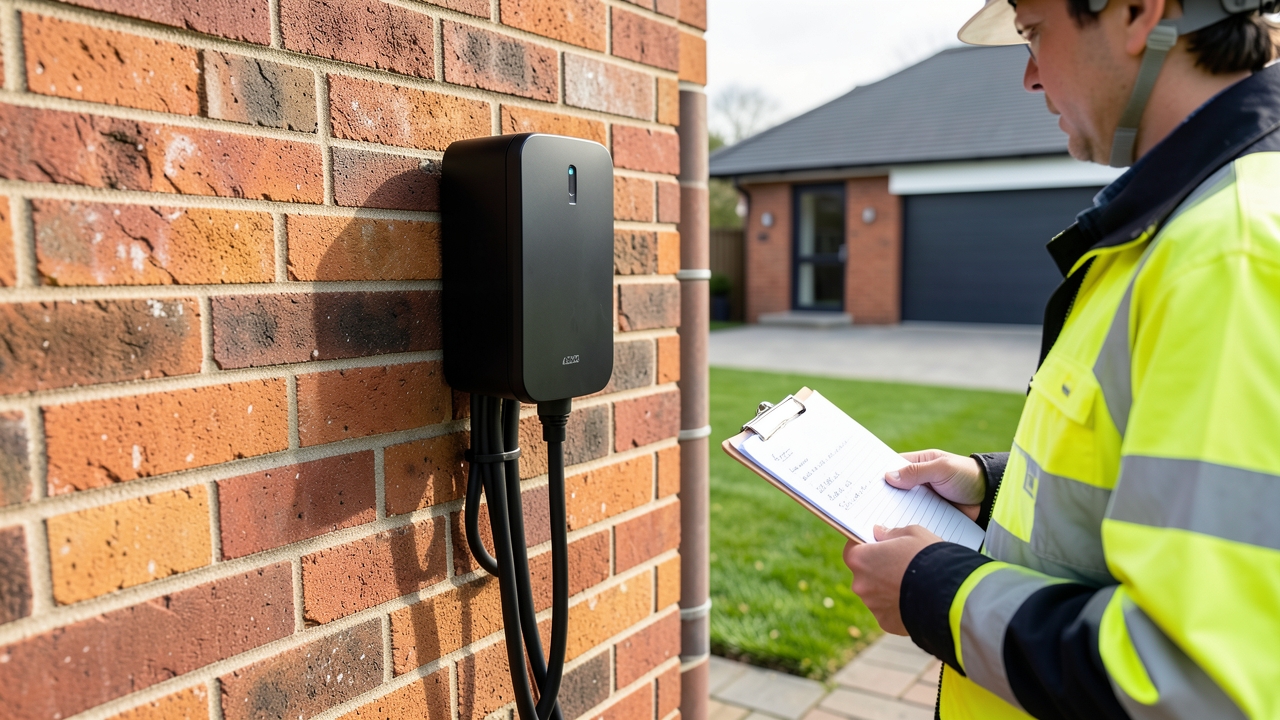
DIY EV charger installation UK is a tempting prospect for many homeowners looking to save money and gain independence. However, the legal and safety landscape is complex. In 2026, understanding the precise regulations is not just smart—it’s a legal necessity. This guide explores the strict rules around self-installing a home EV charger, focusing on Part P building regulations and essential certifications.
Can you legally install an EV charger yourself in the UK?
The short answer is: not directly. Since 2005, UK building regulations have included Part P, which governs electrical safety. This regulation explicitly covers the installation of EV charging points. For your own safety and legal compliance, you cannot simply install a charger as a standalone DIY project.
However, there is a structured path for homeowners who want to be involved in the process. The regulations allow for a “self-certification” route. This means you can act as the “building owner” who takes responsibility for the work, but you must use a competent person who is registered with a government-approved scheme.
What does Part P require for EV charger installation?
Part P requires that any new electrical installation in a domestic property is safe. For an EV charger, this includes:
- Using a Type B RCD (Residual Current Device) for protection.
- Ensuring the installation is protected against overcurrent.
- Proper earthing and bonding of the installation.
- The work must be done to BS 7671 (the IET Wiring Regulations) standards.
Furthermore, since April 2022, all new home chargers must have built-in smart functionality and security features. This allows them to communicate with the grid and supports off-peak charging, which is crucial for grid stability. This is outlined in the government’s smart charging regulations. Any charger installed in 2026 must comply.
The “DIY” Route: Self-Certification and Competent Persons
The only way to legally undertake a DIY EV charger installation UK homeowners can use is through a competent person scheme. Organisations like the National Inspection Council for Electrical Installation Contracting (NICEIC) or NAPIT have members who can self-certify their work.
This means the electrician registers the completed installation with your local building control department for you, ensuring it meets all regulations. You are not permitted to self-certify your own work unless you are individually registered with such a scheme.
Key steps for the homeowner:
- Hire a competent, registered electrician. Verify their credentials on the scheme’s register.
- Discuss the installation. You can agree that you will supply the charger hardware (to save money) while the electrician provides the installation service and certification.
- The electrician installs, tests, and certifies. They will issue you an Electrical Installation Certificate (EIC).
- The certificate is filed with local building control. The electrician handles this step.
This approach lets you control hardware costs while ensuring the critical electrical work is done legally and safely. Exploring our guide to the best EV chargers can help you choose a model to purchase yourself.
Cost comparison: DIY versus professional installation
The primary motivation for considering a DIY approach is cost. Let’s break down the realistic figures for 2026.
A typical home charger costs between £450 and £1,200 for the unit itself. Professional installation fees usually range from £400 to £800. This covers labour, cable, a dedicated circuit from your consumer unit, and certification. Therefore, a complete professional package is typically £850 to £2,000.
If you buy the charger yourself and only pay for a certified electrician to install and certify it, you might pay £400 to £600 for the service alone. The total cost becomes the charger price plus this fee. The saving is often marginal compared to the risk and effort.
However, you must factor in the cost of the EV Homecharge Scheme (EVHS), if still available in 2026. This grant has historically covered up to 75% of the cost, capped at £350. Crucially, the grant is only available for installations completed by an OZEV-approved installer. A self-supplied charger installed via a competent person may not be eligible. Always check current grant criteria.
Cost Snapshot (2026 Estimates):
Full Professional Service: £850 – £2,000 (includes unit, labour, certification, potential grant)
Self-Supply + Certified Install: £850 – £1,800 (charger £450-£1200 + install fee £400-£600, unlikely grant)
The potential saving is often less than £200, but the homeowner assumes more logistical responsibility.
Critical safety certifications and what they mean
When your installation is complete, you must receive an Electrical Installation Certificate (EIC). This is a legal document proving the work was tested and meets BS 7671. Without it, your home insurance could be void, and you could face issues when selling your property.
A reputable installer will also register your charger for its warranty. For example, manufacturers like Ohme or Zappi often require professional installation to validate the product guarantee. Attempting a DIY wiring job will almost certainly invalidate any manufacturer warranty.
Additional safety notes for UK homes:
- Dedicated circuit: Your EV charger must have its own dedicated circuit from your consumer unit (fuse box). This often requires an upgrade if your consumer unit is old.
- Cable run: The cable from your consumer unit to the charger must be of the correct thickness (typically 6mm or 10mm twin and earth) and protected correctly.
- Location: The charger must be installed outside or in a well-ventilated area, away from windows and doors, as per manufacturer instructions.
The verdict: Is it worth the hassle in 2026?
For most UK homeowners, a full DIY EV charger installation is legally prohibited and extremely risky. The “DIY” route—supplying the unit yourself while hiring a certified installer—offers a small potential saving but adds complexity and may forfeit grant eligibility and warranty.
The safest, simplest, and often most cost-effective solution remains using an OZEV-approved installer from start to finish. They handle the hardware, the complex electrical work, the certification, and the grant application. You gain peace of mind, a full warranty, and full legal compliance. The minor cost saving of a self-supply model rarely justifies the administrative and safety overhead.
Have you considered the self-supply route for your EV charger? Share your thoughts or questions in the comments below!
EV Charger Cost Calculator
Estimate your installation cost and annual charging bill — free, no sign-up.