
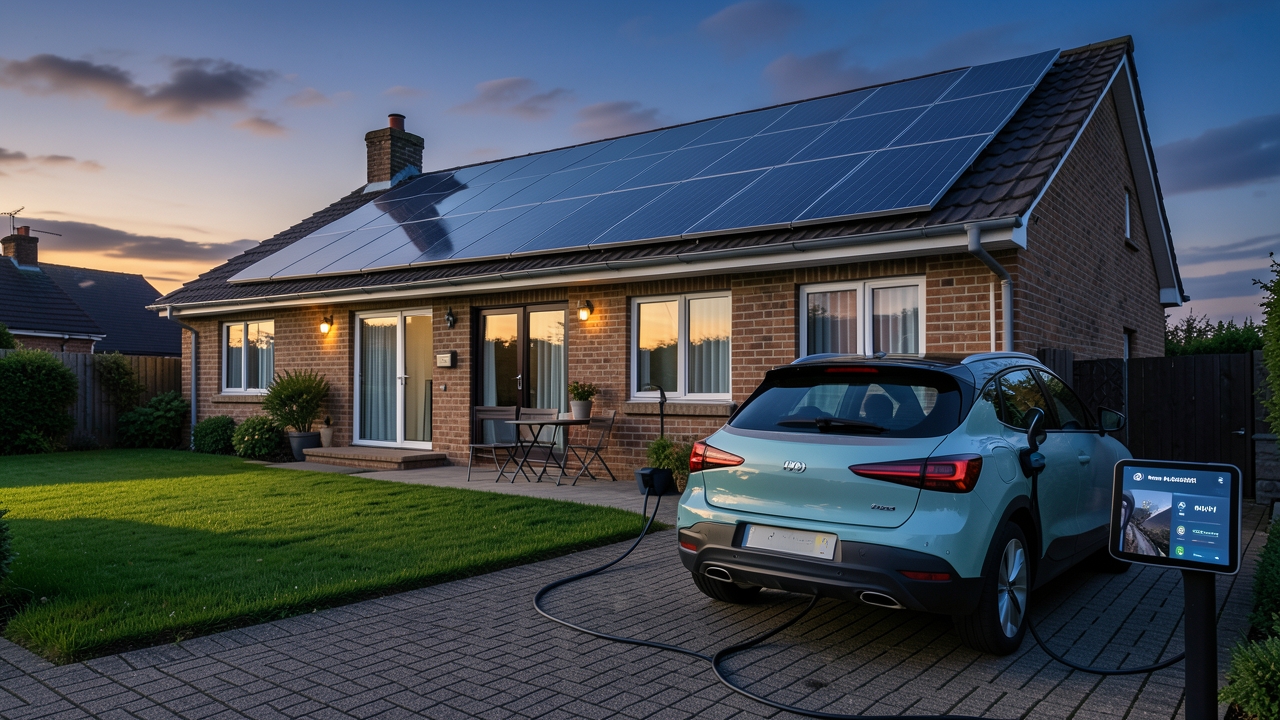
In 2026, Home Assistant EV charging automation is transforming how UK homeowners power their electric vehicles. By integrating solar panels with Home Assistant, you can prioritise renewable energy and off-peak tariffs. This reduces both costs and carbon footprint significantly.
Furthermore, this setup allows for intelligent scheduling based on real-time data. For instance, you can charge your EV when solar generation peaks or electricity rates drop. Consequently, you maximise savings while supporting a greener grid.
Why Choose Home Assistant EV Charging Automation in the UK?
Home Assistant is an open-source platform that centralises smart home control. When combined with solar panels and an EV charger, it creates a dynamic energy ecosystem. This is especially valuable in the UK, where energy prices and carbon intensity vary throughout the day.
Moreover, UK homeowners can benefit from government incentives like the Electric Vehicle Homecharge Scheme (EVHS), which covers up to £350 towards charger installation. Therefore, integrating Home Assistant adds flexibility beyond basic smart charging.
Key Benefits for UK Households
- Cost Reduction: Automate charging during off-peak hours, such as Octopus Energy’s Agile tariff, saving up to 15p per kWh.
- Carbon Savings: Prioritise solar energy use, cutting reliance on fossil-fuel-generated electricity.
- Convenience: Set rules in Home Assistant to charge based on solar output, battery levels, or grid signals.
- Future-Proofing: Adapt to evolving technologies like vehicle-to-grid (V2G) integration.
However, achieving this requires compatible devices. You’ll need a solar panel system, a smart EV charger, and a Home Assistant hub. Fortunately, many UK-focused products are available.
Setting Up Home Assistant EV Charging Automation
The process involves connecting your solar inverter, EV charger, and Home Assistant. Start by installing Home Assistant on a device like a Raspberry Pi or dedicated hardware. Then, add integrations for your solar system and charger.
For example, brands like Zappi or Myenergi offer solar-compatible chargers that work with Home Assistant. In addition, you can use custom components to enhance functionality. Here’s a basic step-by-step:
- Install Home Assistant: Use the Home Assistant Operating System for reliability.
- Add Solar Integration: Connect your solar inverter via brands like SolarEdge or Huawei.
- Integrate EV Charger: Add your charger through its API or MQTT protocol.
- Create Automations: Set rules, such as “Charge EV when solar production exceeds 3kW” or “Start charging after 11 PM for off-peak rates.”
- Monitor Dashboard: Use Home Assistant’s dashboard to track energy flow, costs, and carbon data.
Consequently, you gain full control over your energy usage. Furthermore, Home Assistant supports voice assistants like Alexa or Google Home for easy command.
Optimising with Off-Peak Tariffs and Solar Energy
UK energy tariffs vary widely, making smart scheduling crucial. Off-peak rates, such as those from Intelligent Octopus Go, can be as low as 10p per kWh compared to 34.5p peak. Therefore, Home Assistant EV charging automation can shift charging to these windows automatically.
Meanwhile, solar panels generate electricity during daylight hours. In 2026, a typical 4kW UK solar system produces around 3,400 kWh annually. By using Home Assistant, you can prioritise this solar energy for EV charging, reducing grid dependence.
“Integrating Home Assistant with solar panels allows homeowners to achieve up to 70% self-sufficiency in EV charging, according to the Energy Saving Trust.”
On the other hand, cloudy days or high usage might require grid power. Home Assistant can monitor battery storage levels and adjust charging times accordingly. For instance, if your home battery is below 20%, it might delay charging until solar production resumes.
Practical Automation Examples
- Solar-Priority Charging: “If solar power > 2kW and EV battery < 80%, start charging."
- Off-Peak Charging: “Every day at 11 PM, charge EV to 90% using grid power.”
- Battery Buffer: “If home battery > 50%, use excess solar to charge EV before exporting to grid.”
These automations can be created via Home Assistant’s visual editor or YAML code. Furthermore, you can integrate weather forecasts to predict solar output and plan ahead.
UK Regulations and Incentives for 2026
The UK government continues to support EV adoption and renewable energy. The EVHS grant, although changing, remains available for eligible homeowners. Additionally, the Smart Export Guarantee (SEG) pays you for exporting excess solar energy to the grid.
However, regulations around EV charger installation require a qualified electrician and notification to your Distribution Network Operator (DNO). It’s essential to comply with Part S of the Building Regulations. For the latest updates, refer to GOV.UK’s EVHS page.
Consequently, integrating Home Assistant adds a layer of smart control that aligns with these schemes. Moreover, using renewable energy might qualify you for additional benefits, such as reduced home insurance premiums.
Cost Analysis and ROI for Home Assistant EV Charging Automation
Let’s break down costs. A typical Home Assistant setup costs £100-£300 for hardware. Smart EV chargers like Zappi range from £900-£1,500 installed. Solar panel systems in the UK cost £5,000-£8,000 for a 4kW system, but grants can reduce this.
However, the return on investment comes from energy savings. For example, if you charge 30kWh daily, switching from peak to off-peak rates saves about £1.50 per day. Over a year, that’s £547.50. Adding solar energy can further cut costs by 20-30%.
Therefore, the payback period for the entire system might be 4-6 years. In addition, home values can increase with smart and green technologies, as noted by Which? reports.
Example Cost Breakdown
- Home Assistant Hub: £150
- Smart EV Charger (Zappi): £1,200 (after £350 EVHS grant)
- Solar Panels (4kW): £6,000 (after SEG earnings)
- Total Initial Cost: Approximately £7,350
- Annual Savings: £800-£1,000 from reduced energy bills
On the other hand, if you already have solar panels, the cost is lower. You only need to add Home Assistant and a compatible charger. For more details on solar options, check our guide on balcony solar panels.
Real-World Example: A UK Homeowner’s Journey
Meet Sarah, a homeowner in Manchester. In 2026, she installed a 4kW solar system and a Zappi charger. Using Home Assistant, she automated charging to run during solar peaks and off-peak nights.
As a result, her EV charging costs dropped from £400 annually to under £100. Furthermore, she reduced her carbon emissions by 1.5 tonnes yearly. Sarah’s setup paid for itself in just 3.5 years.
On the other hand, initial setup required some technical know-how. She used online forums and resources like the Smart EV Charger reviews on ocentrum.com to choose devices.
Conclusion: Embrace Home Assistant EV Charging Automation Today
In summary, Home Assistant EV charging automation offers UK homeowners a powerful way to save money and support sustainability. By integrating solar panels and smart tariffs, you gain control over energy costs and reduce your environmental impact.
With declining costs and increasing incentives, 2026 is the perfect time to adopt this technology. Whether you’re new to EVs or a seasoned user, Home Assistant provides flexibility and future-proofing.
Have you considered automating your EV charging with solar panels? Share your thoughts or questions in the comments below—we’d love to hear about your setup!