
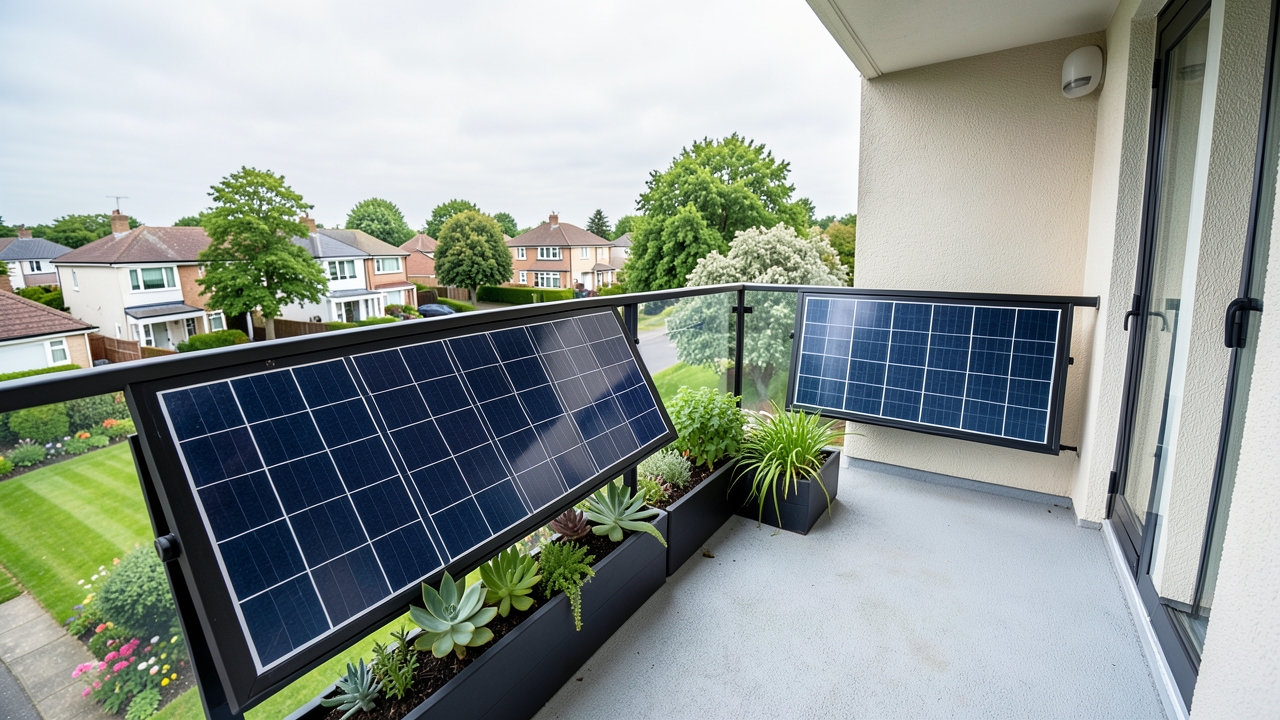
Balcony solar panels are a popular way to harness renewable energy in the UK, especially for those in flats and terraced houses. However, many residents wonder about balcony solar planning permission rules before installation. In this guide, we break down the legal requirements, including landlord consent and local council regulations, for 2026.
What Are Plug-In Balcony Solar Panels?
Plug-in solar kits, also known as balcony solar systems, are compact devices that attach to railings or walls. They convert sunlight into electricity and feed it directly into your home’s grid via a standard plug socket. These systems are designed for easy installation without complex wiring. For example, a typical kit might include a 300W panel and an inverter, costing between £200 and £500 in 2026. They are ideal for renters or those in shared buildings. Furthermore, they contribute to lower energy bills and reduce carbon footprints. In addition, many UK households are adopting them as part of the green energy transition.
Meanwhile, the UK government supports small-scale renewables through schemes like the Smart Export Guarantee (SEG). However, before purchasing, it’s crucial to understand the planning rules. Consequently, we will explore whether you need planning permission for these installations.
Do You Need Planning Permission for Balcony Solar Panels in the UK?
In general, most plug-in balcony solar panels fall under Permitted Development Rights in England. This means you do not need planning permission from your local council. However, there are important exceptions. For instance, if your flat or terraced house is a listed building or in a conservation area, you must seek permission. Additionally, if the panels are visible from a public highway and alter the building’s appearance significantly, rules may apply. According to GOV.UK guidance, solar panels on domestic properties are often exempt, but checks are essential.
On the other hand, flats and terraced houses may have specific constraints. For example, if you own a flat, you might need freeholder consent. Therefore, always review your lease agreement. Moreover, local councils like those in London or Manchester have varying interpretations. As a result, contacting your planning department is a wise first step. In 2026, over 70% of UK councils provide online portals for quick queries. Similarly, for terraced houses, ensure the installation doesn’t breach party wall agreements with neighbours.
Landlord Consent for Tenants in Flats and Terraced Houses
Renting in a Flat: What You Must Know
If you rent a flat, landlord consent is typically required for installing balcony solar panels. Even though they are removable, landlords may have concerns about property damage or aesthetics. Therefore, present a professional plan highlighting safety and benefits. For instance, mention that plug-in kits weigh under 20kg and use non-invasive mounts. Furthermore, offer to cover any potential repair costs. In addition, provide data on energy savings: a 300W system can save up to £50 annually on bills in the UK. Consequently, many landlords are supportive, especially with the rise in green incentives.
Terraced Houses: Leasehold vs. Freehold
For terraced houses, ownership status matters. If you are a freeholder, planning permission is often not needed, but building regulations may apply for safety. However, if you leasehold, check your lease for clauses on external modifications. On the other hand, some leases require written approval from the freeholder. As a result, failing to obtain consent could lead to fines or removal orders. For example, in 2025, a tenant in Bristol faced a £200 penalty for unauthorised installation. Therefore, always document agreements in writing. Moreover, the Energy Saving Trust advises consulting legal experts for complex cases.
Local Council Regulations and Building Regulations
Local councils enforce planning permission rules, but they also consider building regulations. For balcony solar panels, the key issue is safety. Plug-in systems must comply with Part P of the Building Regulations for electrical safety. This means using certified installers or kits with approved components. Furthermore, in high-rise buildings, wind load calculations might be necessary. Consequently, councils in cities like Birmingham or Leeds may request additional documentation. In 2026, the average processing time for a planning query is 5 working days. Additionally, some areas have Article 4 directions that remove Permitted Development Rights. Therefore, check with your local authority’s planning portal.
On the other hand, for listed buildings or conservation areas, formal planning permission is mandatory. The process involves submitting an application to the council, which costs around £100 to £200. Moreover, approval rates are high if panels are discreet and reversible. For instance, slim-frame panels blending with architecture are often accepted. As a result, the UK saw a 25% increase in balcony solar installations in 2025 after clearer guidelines. Similarly, for terraced houses, ensure panels do not affect neighbours’ light or views.
Practical Steps for Installation in 2026
Follow these steps to ensure compliance with balcony solar planning permission rules. First, assess your property type and ownership. Second, consult your lease or freeholder if applicable. Third, contact your local council for advice. Fourth, choose a certified plug-in solar kit from reputable suppliers. For example, kits from brands like Smart Home Tech UK are designed for UK conditions. In addition, hire a qualified electrician for installation if needed. Finally, register your system with your energy supplier under the SEG.
- Check planning rules via GOV.UK or council websites
- Obtain written consent from landlords or freeholders
- Select panels under 300W to minimise restrictions
- Ensure electrical safety compliance with Part P
- Monitor energy output and export savings
Costs and Benefits in 2026
In 2026, balcony solar panels offer affordable energy solutions. The average cost for a 300W plug-in kit is between £250 and £450, including installation. Furthermore, the SEG payments can generate £20 to £40 annually by exporting excess electricity. Consequently, payback periods range from 4 to 7 years. On the other hand, environmental benefits are significant: a single panel can offset 0.2 tonnes of CO2 per year. In addition, they increase property appeal in the rental market. For example, a home with green tech like EV chargers and solar panels may command higher rent. Moreover, UK subsidies, such as the Boiler Upgrade Scheme, sometimes extend to solar, though not always for small kits.
However, maintenance is minimal—cleaning panels quarterly ensures efficiency. Therefore, overall, balcony solar planning permission rules are manageable with proper research. As a result, more residents are embracing this renewable option. Similarly, combining with e-bike conversion kits enhances sustainable living.
Conclusion: Your Next Steps for Balcony Solar
In summary, understanding balcony solar planning permission is key for UK residents in flats and terraced houses. Most plug-in systems do not require permission under Permitted Development, but exceptions exist for listed buildings or conservation areas. Landlord consent is often needed for tenants, and local councils enforce safety regulations. By following the steps outlined, you can install panels legally and efficiently in 2026. Remember, always verify rules with your council and seek professional advice where necessary. Have you considered installing balcony solar panels? Share your thoughts or questions in the comments below—we’d love to hear about your experience!
Balcony Solar Savings Calculator
See your annual savings, export income and payback time — free, no sign-up.